Which magnesium is the best? Forms, bioavailability and recommendation
Table of Contents
- Magnesium Forms: Organic or Inorganic
- Bioavailability of Magnesium
- Magnesium Bisglycinate and Magnesium Taurate
- Magnesium Citrate and Magnesium Gluconate
- Magnesium L-Threonate
- Magnesium Oxide and Magnesium Carbonate
- Magnesium Bioavailability: Table
- What Is Liposomal Magnesium?
- Conclusion and Recommendation: Which Magnesium Has the Best Bioavailability?
- Suitable FormMed Supplements
- References
Magnesium is one of the most important minerals. It supports energy metabolism, contributes to the normal function of muscles and nerves, and helps reduce tiredness. However, not all magnesium is the same: there are many forms, for example magnesium salts or magnesium chelates.
Learn about the different types of magnesium compounds, how organic and inorganic forms differ, and which form may best suit your needs.
Magnesium Forms: Organic or Inorganic
In micronutrient supplements, magnesium is never present in isolation but always bound to another substance – for example as a magnesium salt or a magnesium chelate. Magnesium salts are compounds with acids, such as citric acid (magnesium citrate) or carbonic acid (magnesium carbonate). In a magnesium chelate, an amino acid is part of the compound, such as glycine (magnesium bisglycinate).
In general, there are two types of magnesium forms:
- Organic magnesium compounds are bound to organic acids or amino acids. These include magnesium citrate and magnesium bisglycinate.
- Inorganic magnesium compounds are bound to inorganic molecules. These include magnesium oxide and magnesium carbonate.
Bioavailability of Magnesium
Bioavailability describes how efficiently a nutrient from food or a supplement reaches its target location – for example the bloodstream, or, in the case of medications, the site of action. For the bioavailability of magnesium, the specific compound is crucial, as not all forms are absorbed by the body equally well:
- Organic magnesium has better bioavailability than inorganic forms. The reason: Organic salts and chelates are more water-soluble and reach the small intestine in dissolved form. This allows them to be absorbed more easily through the intestinal lining.
- Inorganic magnesium must first be separated from its compound in the stomach by gastric acid.
In addition, individual factors influence the bioavailability of magnesium – such as the pH level of stomach acid, concurrent food intake, and individual needs, since the body increases absorption when levels are low.
Magnesium Bisglycinate and Magnesium Taurate
Magnesium bisglycinate and magnesium taurate belong to the magnesium chelates, in which the mineral is bound to an amino acid. This type of binding is naturally absorbed in the intestine via transport mechanisms for amino acids, allowing for particularly efficient uptake.
Magnesium bisglycinate is a compound of magnesium and glycine – a non-essential amino acid with various functions in metabolism. Endogenous glycine, for example, has an effect on the psyche and nervous system, as it acts as a messenger molecule.
In magnesium taurate, magnesium is bound to taurine. Taurine, in turn, is formed from the amino acids cysteine and methionine. It is found in many organs – with especially high concentrations in heart muscle cells and nerve tissue.
Magnesium Citrate and Magnesium Gluconate
Well-bioavailable organic magnesium salts include magnesium citrate and magnesium gluconate. While magnesium citrate is a compound with citric acid, the magnesium in magnesium gluconate is bound to gluconic acid.
Both forms are quickly absorbed by the body and are particularly suitable for individuals who want to replenish their magnesium levels rapidly – for example during periods of increased physical exertion or demanding everyday situations.
At the same time, magnesium gluconate in particular does not remain in the digestive tract for long – a special advantage for people with sensitive digestion.
Magnesium L-Threonate
Magnesium L-threonate is a relatively new and specialized magnesium compound in which magnesium is bound to L-threonic acid – a breakdown product of vitamin C. This form is also classified as an organic magnesium salt and has good bioavailability.
What makes magnesium L-threonate special is that early studies suggest it may cross the blood–brain barrier more effectively than other magnesium forms. This means magnesium L-threonate could potentially reach the central nervous system more directly.
Magnesium Oxide and Magnesium Carbonate
Magnesium oxide and magnesium carbonate are inorganic compounds. Although they have lower bioavailability, they also offer certain advantages:
Magnesium oxide provides the highest amount of elemental magnesium, with up to 60 percent. It is ideal when a high dosage is desired but you prefer not to take many capsules. To be absorbed, magnesium oxide must first be dissolved by stomach acid. Because magnesium is absorbed more slowly this way, it may affect digestion in sensitive individuals. At the same time, this natural effect can be useful when digestion is sluggish.
Magnesium carbonate also contains a high amount of elemental magnesium. In the stomach, it reacts with gastric acid and is converted into magnesium chloride, which is then absorbed in the intestine. Due to this conversion step, absorption is slower; however, magnesium carbonate therefore has an acid-neutralizing effect. It is ideal for short-term use.
Magnesium Bioavailability: Table
The following table summarizes how the various magnesium compounds differ in terms of bioavailability and areas of application:
| Magnesium Compound | Type | Bioavailability | Characteristics | Application Area |
| Magnesium Bisglycinate | Organic (chelate) | High | Rapid absorption, does not remain long in the digestive tract, ideal for long-term use | Nervous system and mental wellbeing, sensitive digestion |
| Magnesium Taurate | Organic (chelate) | High | Rapid absorption, also provides taurine | Muscle function, for example heart muscle |
| Magnesium Citrate | Organic (salt) | High | Rapid absorption, ideal for long-term use | General coverage |
| Magnesium Gluconate | Organic (salt) | High | Rapid absorption, ideal for long-term use | General coverage |
| Magnesium L-Threonate | Organic (salt) | High | May cross the blood–brain barrier | Nervous system |
| Magnesium Carbonate | Inorganic | Low to medium | Good acid-binding capacity, ideal for short-term use | Acid-sensitive stomach |
| Magnesium Oxide | Inorganic | Low to medium | High magnesium content but poorly soluble | General coverage, high dosage possible, for example for athletes |
To learn which dosage is appropriate for everyday use and the best time to take magnesium, see our article “Magnesium: Intake and Dosage.”
What Is Liposomal Magnesium?
Liposomal magnesium is not a compound but a special delivery form in which magnesium is embedded in tiny fat droplets – so-called liposomes. Liposomes consist of phospholipids that resemble cell membranes in their structure. This allows micronutrients to be absorbed by the body particularly efficiently.
Another advantage of liposomes is that liposomal magnesium does not come into direct contact with the stomach lining. This makes it potentially interesting for individuals with sensitive digestion.
Conclusion and Recommendation: Which Magnesium Has the Best Bioavailability?
Not all magnesium is the same – the compound is decisive for absorption in the intestine. Organic magnesium forms such as magnesium bisglycinate and magnesium citrate perform best in terms of bioavailability. They are water-soluble and absorbed quickly. However, inorganic forms such as magnesium oxide can also help support magnesium levels effectively – they are usually absorbed more slowly.
Those who wish to set a functional focus – for example on the nervous system or the heart – may choose specific compounds such as magnesium bisglycinate or magnesium L-threonate, or magnesium taurate. For a well-grounded recommendation, it is helpful to seek advice from a therapist.
For daily foundational intake without a specific focus, a high-quality magnesium complex with several organic compounds is useful. A good complex contains citrate, gluconate and bisglycinate, covering different absorption mechanisms. At the same time, a basic (alkalizing) magnesium complex helps neutralize acids and is ideal in phases of an unbalanced diet or stress. For those who want broad and well-rounded support, an organic and basic magnesium complex is therefore the best choice.
Suitable FormMed Supplements
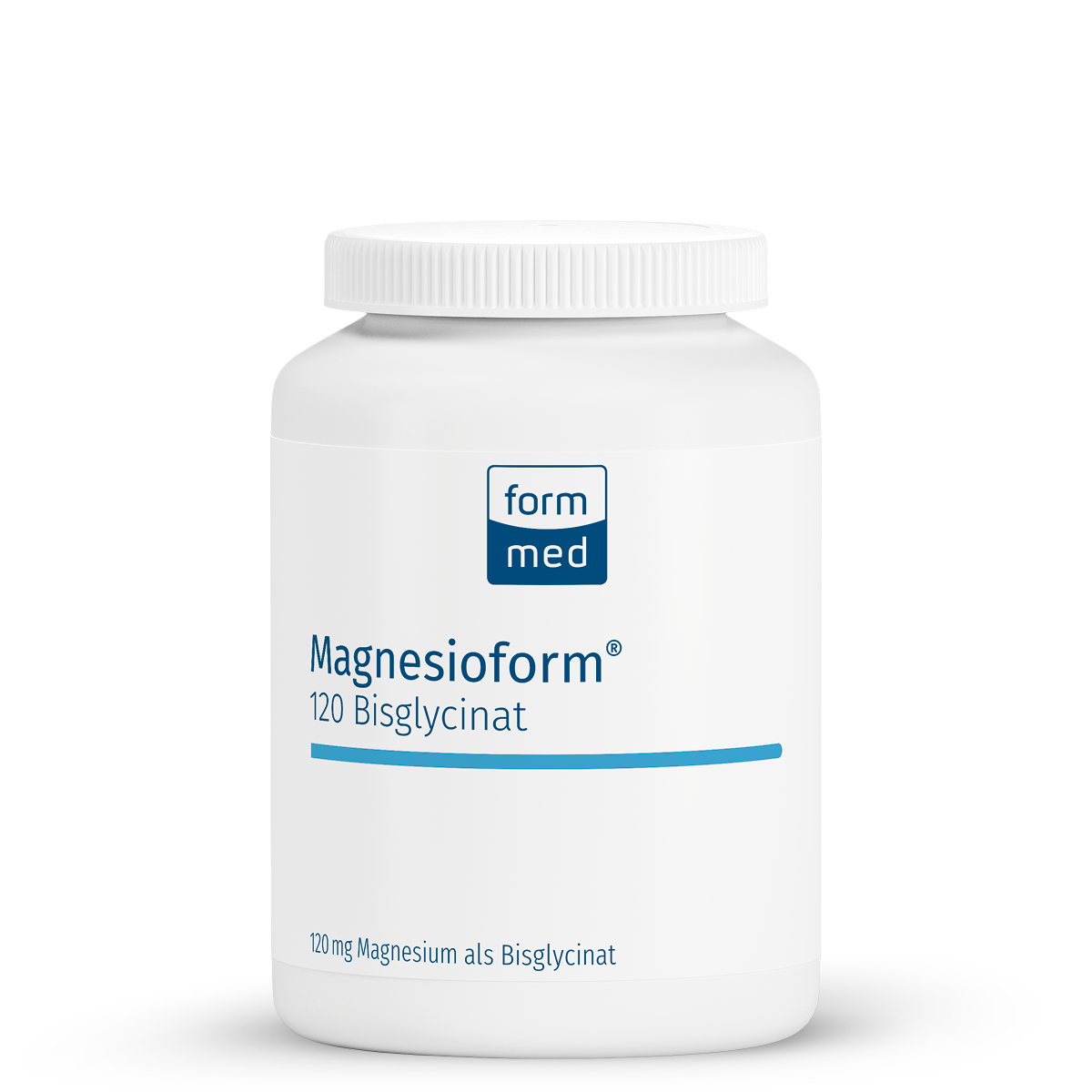
120 mg highly bioavailable Magnesium as pure Bisglycinate
Ready for immediate dispatch - Delivery time approx. 1-3 days
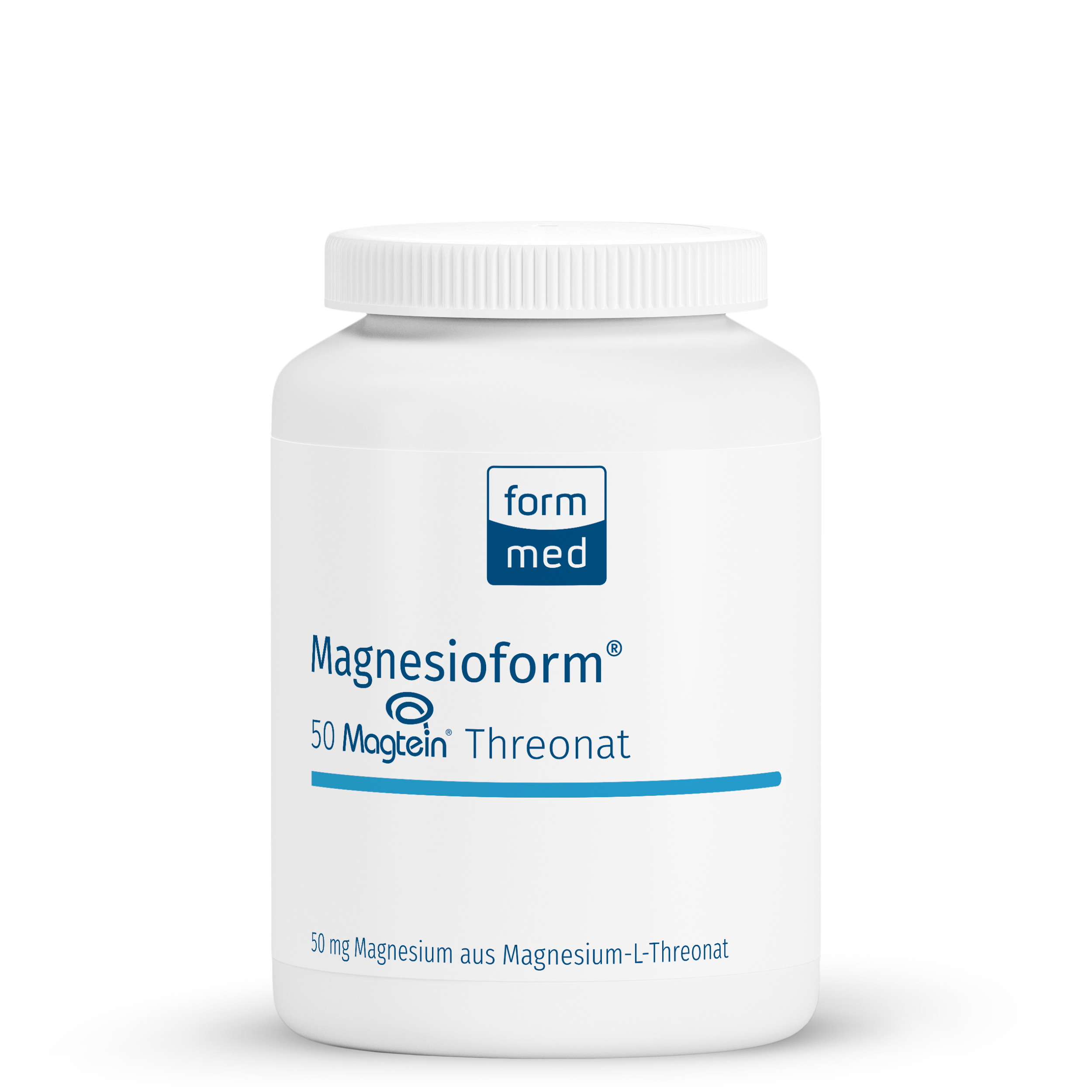
Ready for immediate dispatch - Delivery time approx. 1-3 days

150 mg highly bioavailable Magnesium in a basic-organic 4-complex
Ready for immediate dispatch - Delivery time approx. 1-3 days
References
Ates, M. et al. (2019): Dose-Dependent Absorption Profile of Different Magnesium Compounds. Biol Trace Elem Res. 192(2):244-251. https://pubmed.ncbi.nlm.nih.gov/30761462/
Hausenblas, H. A. et al. (2024): Magnesium-L-threonate improves sleep quality and daytime functioning in adults with self-reported sleep problems: A randomized controlled trial. Sleep Med X. 8:100121. https://pubmed.ncbi.nlm.nih.gov/39252819/
Ko, J. et al. (2023): Pharmacokinetic Analyses of Liposomal and Non-Liposomal Multivitamin/Mineral Formulations. Nutrients. 15(13):3073. https://pubmed.ncbi.nlm.nih.gov/37447400/
Pardo, M. R. et al. (2021): Bioavailability of magnesium food supplements: A systematic review. Nutrition. 89:111294. https://pubmed.ncbi.nlm.nih.gov/34111673/
Uysal, N. et al. (2019): Timeline (Bioavailability) of Magnesium Compounds in Hours: Which Magnesium Compound Works Best? Biol Trace Elem Res. 187(1):128-136. https://pubmed.ncbi.nlm.nih.gov/29679349/
Yamori, Y. et al. (2017): Taurine Intake with Magnesium Reduces Cardiometabolic Risks. Adv Exp Med Biol. 975 Pt 2:1011-1020. https://pubmed.ncbi.nlm.nih.gov/28849518/
Zhang, C. et al. (2022): A Magtein®, Magnesium L-Threonate, -Based Formula Improves Brain Cognitive Functions in Healthy Chinese Adults. Nutrients. 14(24):5235. https://pmc.ncbi.nlm.nih.gov/articles/PMC9786204/