Magnesium intake and dosage: when and how much magnesium per day?
Table of Contents
- When Is It Useful to Take Magnesium?
- Magnesium Dosage: How Much Per Day?
- When to Take Magnesium – Morning or Evening, Before or After Meals?
- How Long Can You Take Magnesium?
- When Should You Avoid Taking Magnesium?
- Other Micronutrients – What Should Not Be Taken Together with Magnesium?
- Conclusion: Taking and Dosing Magnesium Correctly
- Suitable FormMed Supplements
- References
Magnesium is part of our daily lives—whether we need energy for the day, use our muscles, challenge our nerves, or seek inner calm. It’s no surprise that magnesium is one of the most popular micronutrients and plays a regular role in daily supplementation for many people. That’s why questions like “When should you take magnesium?”, “What is the right dosage?”, and “How long can you take magnesium?” frequently come up.
Learn in which situations supplementation may be beneficial, how to take it most effectively, and what magnesium dosage is recommended.
When Is It Useful to Take Magnesium?
Whether a magnesium supplement is useful depends on your individual life situation. While a sufficient intake is usually possible through diet, there are situations in which meeting your needs can be difficult.
When taking magnesium makes sense …
- With a one-sided diet: Those who rarely consume magnesium-rich foods such as whole grains, nuts, legumes, or mineral water can reliably support their intake with a magnesium supplement.
- When there is an increased need: Physical activity, heavy sweating, chronic stress, illness, or special life phases such as pregnancy and breastfeeding increase magnesium demand. In such cases, additional magnesium intake can be beneficial.
- With regular medication use: Certain medications act as “magnesium robbers”—including diuretics, corticosteroids, and acid blockers. Supplementation may help compensate, but consulting a doctor, therapist, or pharmacist is recommended.
- In older age: As we age, magnesium absorption in the intestines may decrease. At the same time, needs remain stable or even increase due to illness and medications. A magnesium supplement can help ensure adequate intake.
- For targeted support: Therapists often recommend magnesium when muscles, nerves, mental health, or energy metabolism are under strain.
- In case of a confirmed deficiency: If a doctor diagnoses a deficiency, a high-quality magnesium supplement can help restore optimal levels.
Magnesium Dosage: How Much Per Day?
According to estimates by the German Nutrition Society (DGE), the daily magnesium requirement for adults is around 300 to 350 milligrams—with men needing slightly more and women slightly less.
For those who wish to take a supplement, a magnesium dosage of 150 to 300 milligrams per day is considered reasonable. Especially for individuals with sensitive digestion or when taking higher doses, it's advisable to split the intake into two portions throughout the day. Ideally, you should consult a micronutrient expert to determine the optimal dosage, as the amount of magnesium needed daily can vary from person to person.
The maximum value allowed in the European Union for long-term intake from supplements is 250 milligrams of magnesium per day. At around 300 milligrams, individuals with sensitive digestion may experience side effects such as soft stools, diarrhea, or other gastrointestinal issues.
However, what matters is not only the dosage but also the form in which magnesium is supplied—it affects bioavailability. You can learn more about this in our article on magnesium compounds.
When to Take Magnesium – Morning or Evening, Before or After Meals?
Many people wonder whether it's better to take magnesium in the morning or evening—or whether timing even matters at all. In general, the time of day is less important than maintaining a consistent intake that fits your daily habits:
- Some people prefer taking magnesium in the morning so they are covered throughout the day—for example, during physical activity.
- Others find it pleasant to take magnesium in the evening, as part of a relaxing bedtime routine, to support muscle, nerve, and mental function.
The same applies to the question of whether to take magnesium before or after meals: both are possible. However, individuals with sensitive digestion may experience gastrointestinal discomfort on an empty stomach. For this reason, it is usually recommended to take magnesium with meals or directly afterward—ideally spread throughout the day.
Whether in the morning or evening, before or after meals—magnesium is generally flexible in its intake. What matters most is consistency.
How Long Can You Take Magnesium?
Magnesium is one of the essential minerals that the body needs daily through diet. Therefore, maintaining a good supply is not just important in the short term, but over the long term as well.
That’s why magnesium can generally be taken for a longer period of time—what matters is the dosage, which should be tailored to your individual needs. If magnesium is recommended for targeted support by a healthcare practitioner, they will determine how long it should be taken.
Anyone supplementing magnesium over an extended period or unsure about the correct dosage can have their blood levels checked by a healthcare provider—ideally in whole blood, since only a small portion of magnesium is present in serum. Most of it is stored in the body’s cells. A whole blood test therefore provides a more realistic picture of actual magnesium status.
When Should You Avoid Taking Magnesium?
Magnesium is a safe supplement for most people. However, there are certain situations where caution is advised, or where magnesium should not be taken without medical consultation. These include:
- Kidney dysfunction: If the kidneys are not functioning properly (kidney insufficiency), excess magnesium may not be excreted efficiently. Without medical supervision, this can lead to a buildup of magnesium in the body.
- Use of certain medications: Some drugs—such as antibiotics and osteoporosis medications—can have their effectiveness reduced by magnesium. It is therefore recommended to maintain a gap of at least two hours between taking these medications and magnesium.
To be on the safe side, anyone with health conditions or taking long-term medications should consult their doctor, therapist, or pharmacist before taking magnesium.
Other Micronutrients – What Should Not Be Taken Together with Magnesium?
In most cases, magnesium can be easily combined with other micronutrients. For general nutritional support, taking them at the same time is usually not a problem. However, it’s different when addressing a specific deficiency or taking high doses of a particular mineral.
In case of a deficiency, avoid taking the following together:
- Iron and magnesium: Both minerals use similar transport pathways in the intestines. When taken together, iron absorption can be reduced. A time gap of at least two hours is recommended.
- Zinc and magnesium: Some studies suggest that zinc and magnesium may also compete for absorption in the gut at higher doses. To prevent this, it’s best to leave at least a two-hour interval between them.
Some micronutrients complement each other especially well:
- Calcium and magnesium: These two minerals act as counterparts in muscle function—calcium enables contraction, while magnesium supports relaxation. Together, they also contribute to bone health. When taken in normal doses, they can be safely combined.
- Potassium and magnesium: These support related bodily functions—such as muscle activity and electrolyte balance. They can be effectively combined, especially in applications like heart health.
- Selenium and magnesium: These minerals may also have synergistic effects. Selenium supports antioxidant cell protection, while magnesium is important for cell division and energy metabolism within the cells.
- Vitamin D and magnesium: Both are essential for bone health. Vitamin D promotes calcium absorption in the intestines, while magnesium is a key building block of bone tissue.
Conclusion: Taking and Dosing Magnesium Correctly
Magnesium is an essential mineral. While adequate intake is usually achieved through diet, in certain situations supplementation can be beneficial—such as during frequent stress, physical activity, aging, or during pregnancy and breastfeeding.
Whether taken in the morning or evening, before or after meals—the most important factor is ensuring the body is regularly supplied with magnesium. An optimal magnesium dosage typically ranges between 150 and 300 milligrams per day.
Magnesium can generally be taken over a longer period, as long as the dosage is tailored to individual needs. For targeted therapeutic use, a healthcare professional will determine the appropriate duration. Testing blood levels—ideally in whole blood—can offer additional reassurance. Anyone taking medications or facing health concerns should consult with a medical expert. This way, magnesium becomes part of a modern micronutrient-based approach to medicine—scientifically grounded and individually supportive.
Suitable FormMed Supplements

150 mg highly bioavailable Magnesium in a basic-organic 4-complex
Ready for immediate dispatch - Delivery time approx. 1-3 days

300 mg Magnesium as 4-complex high dose
Ready for immediate dispatch - Delivery time approx. 1-3 days
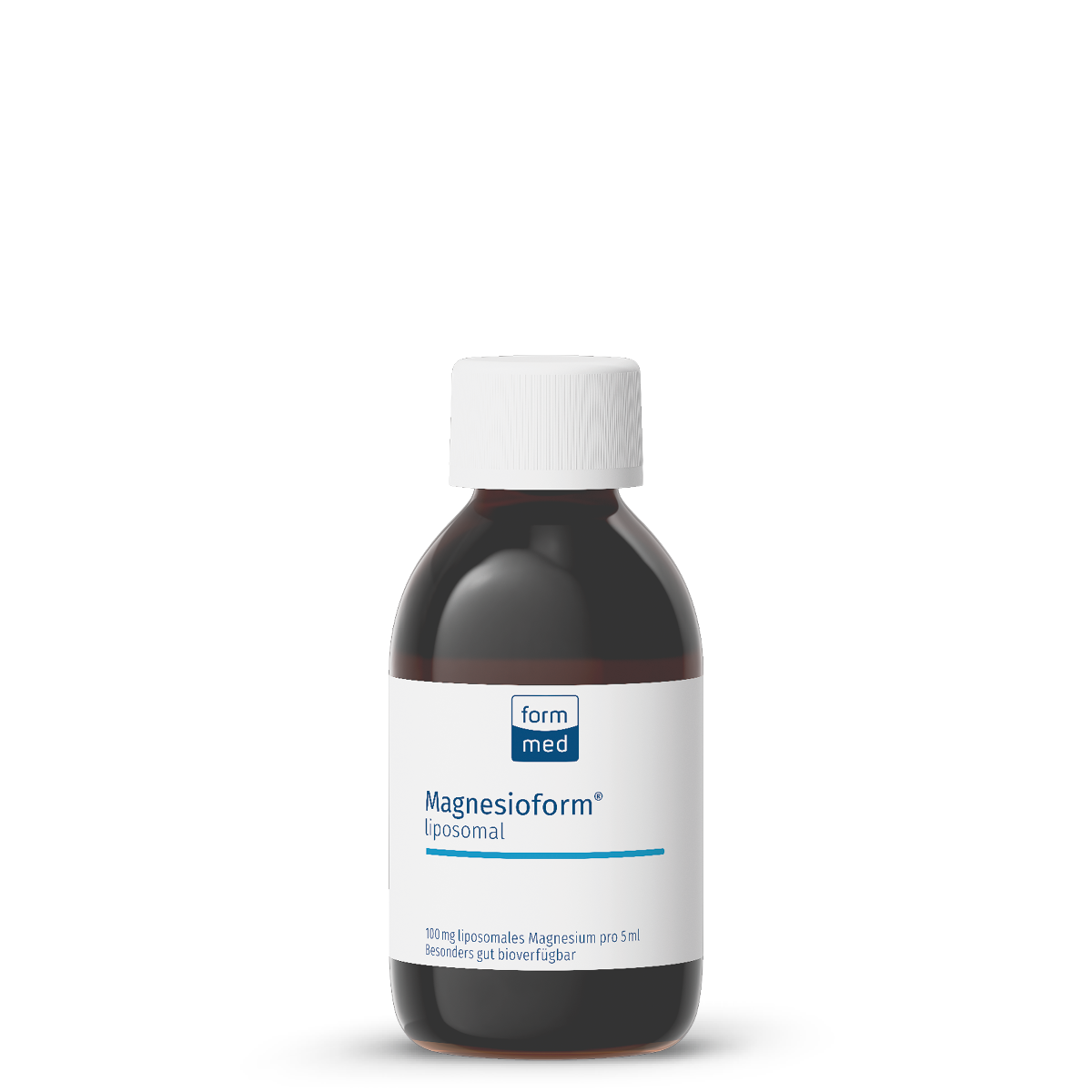
Highly bioavailable magnesium as pure, basic citrate
Ready for immediate dispatch - Delivery time approx. 1-3 days
References
Bundesinstitut für Risikobewertung (2024): Höchstmengenvorschläge für Magnesium in Lebensmitteln inklusive Nahrungsergänzungsmitteln. https://www.bfr.bund.de/lebensmittel-und-futtermittelsicherheit/bewertung-der-stofflichen-risiken-von-lebensmitteln/bewertung-von-lebensmittelinhaltsstoffen/bewertung-von-vitaminen-und-mineralstoffen-in-lebensmitteln/, abgerufen am: 20.08.2025.
Deutsche Gesellschaft für Ernährung e. V. (2021). Referenzwerte für die Nährstoffzufuhr. Magnesium. https://www.dge.de/wissenschaft/referenzwerte/magnesium/, abgerufen am: 20.08.2025.
Fatima, G. et al. (2024): Magnesium Matters: A Comprehensive Review of Its Vital Role in Health and Diseases. Cureus. 16(10):e71392. https://pmc.ncbi.nlm.nih.gov/articles/PMC11557730/
Henriksen, C. & Aaseth, J. O. (2023): Magnesium: a scoping review for Nordic Nutrition Recommendations 2023. Food Nutr Res. 67:10.29219/fnr.v67.10314. https://pmc.ncbi.nlm.nih.gov/articles/PMC10710857/
National Institutes of Health (2022): Magnesium. Fact Sheet for Health Professionals. https://ods.od.nih.gov/factsheets/Magnesium-HealthProfessional/, abgerufen am: 20.08.2025.
Pardo, M. R. et al. (2021): Bioavailability of magnesium food supplements: A systematic review. Nutrition. 89:111294. https://pubmed.ncbi.nlm.nih.gov/34111673/
Veronese, N. et al. (2020): Magnesium and health outcomes: an umbrella review of systematic reviews and meta-analyses of observational and intervention studies. Eur J Nutr. 59(1):263-272. https://pubmed.ncbi.nlm.nih.gov/30684032/