Vitamin B Complex: Role in energy metabolism
Table of Contents
- Constantly Tired and Exhausted? How Low Energy and B Vitamins Are Connected
- Which B Vitamins Are Important for Energy Metabolism?
- Vitamin B Deficiency: Symptoms of Low Energy
- Taking B Vitamins – What Should You Pay Attention To?
- Conclusion: B Vitamins for More Energy in Everyday Life
- Suitable FormMed Supplements
- References
If you feel constantly tired and exhausted – despite regular exercise and a healthy diet – it may be worth taking a closer look at your micronutrient intake. B vitamins are especially important for energy metabolism: they play a central role in the mitochondria – the powerhouses of the cells – and help convert nutrients from food into usable energy.
In this guide, you will learn about the role B vitamins play in energy metabolism and why they are particularly important for athletes and for people who feel low in drive.
Constantly Tired and Exhausted? How Low Energy and B Vitamins Are Connected
Waking up exhausted even after a full night’s sleep? No energy during exercise or lacking drive in everyday life? This kind of fatigue affects many people and often cannot be explained by stress or lack of sleep. One possible reason: energy metabolism in the cells is not running optimally.
Mitochondria are the body’s energy centers: they convert sugar (glucose) and fatty acids into the universal energy carrier adenosine triphosphate (ATP). This process – the respiratory chain – takes place in several steps and requires numerous enzymes, coenzymes and micronutrients as additional helpers.
In particular, B vitamins are involved in almost all steps of energy production. They act as cofactors, activate enzymes or enable certain metabolic pathways to function in the first place.
Which B Vitamins Are Important for Energy Metabolism?
B vitamins do not work in isolation within energy metabolism but function together like interlocking gears. The following table shows the role each B vitamin plays in energy production:
| Vitamin | Role in Energy Metabolism |
| Vitamin B1 (Thiamine) | Supports carbohydrate metabolism, especially the conversion of glucose into energy. |
| Vitamin B2 (Riboflavin) | Component of the coenzymes FAD and FMN – essential for the mitochondrial respiratory chain. |
| Vitamin B3 (Niacin) | Essential for the coenzyme NAD – involved in numerous enzyme reactions for energy production. |
| Vitamin B5 (Pantothenic Acid) | Required for the formation of coenzyme A – indispensable for fat and energy metabolism. |
| Vitamin B6 (Pyridoxine) | Supports amino acid metabolism and energy production from proteins. |
| Vitamin B7 (Biotin) | Important for the body’s own formation of glucose (gluconeogenesis). |
| Vitamin B9 (Folic Acid) | Involved in homocysteine metabolism – indirectly important for mitochondrial function, as homocysteine can damage cells. |
| Vitamin B12 (Cobalamin) | Supports the conversion and transfer of metabolic products and the breakdown of fatty acids. |
Vitamin B Deficiency: Symptoms of Low Energy
During physical exertion, intense athletic activity or chronic stress, the need for B vitamins increases. This is because muscles, the brain and the nervous system consume more energy – and therefore require more cofactors such as B vitamins.
At the same time, certain lifestyles, such as a vegan diet, may limit the intake of specific B vitamins – especially vitamin B12. Medications such as acid blockers (proton pump inhibitors) and diabetes medications containing metformin may also impair absorption or utilization.
A vitamin B deficiency can manifest in the context of energy metabolism through the following symptoms:
- persistent fatigue despite adequate sleep
- muscle fatigue or poor recovery
- reduced performance
- concentration problems and irritability
Taking B Vitamins – What Should You Pay Attention To?
When energy demand is particularly high due to physical exertion or chronic stress, it may be useful to take B vitamins.
- Vitamin B Complex: Only a complete B complex supports all phases of energy metabolism. The individual B vitamins work synergistically.
- Daily intake: B vitamins are water-soluble and – with only a few exceptions – are not stored in significant amounts. Regular intake is therefore important.
- Needs-based dosage: A moderately increased dosage is suitable for daily support during periods of strain. For rebuilding phases – for example in the case of a deficiency – a high-dose B complex can be useful to replenish stores effectively.
- Bioactive vitamin forms: Vitamin B6 as P5P, vitamin B12 as methylcobalamin and folic acid as 5-MTHF (Metafolin®*) are directly available to the body.
Conclusion: B Vitamins for More Energy in Everyday Life
B vitamins are essential for energy metabolism: they support the utilization of carbohydrates and fats as well as actual energy production in the mitochondria. Especially during fatigue, physical exertion or stress, more energy is consumed and the need for B vitamins increases.
If you often feel tired, worn out or train intensively, you should ensure an adequate intake of all eight B vitamins. High-quality supplements containing a complete vitamin B complex in a balanced dosage can support energy metabolism in a targeted way – for sufficient energy in everyday life and during sports.
Suitable FormMed Supplements
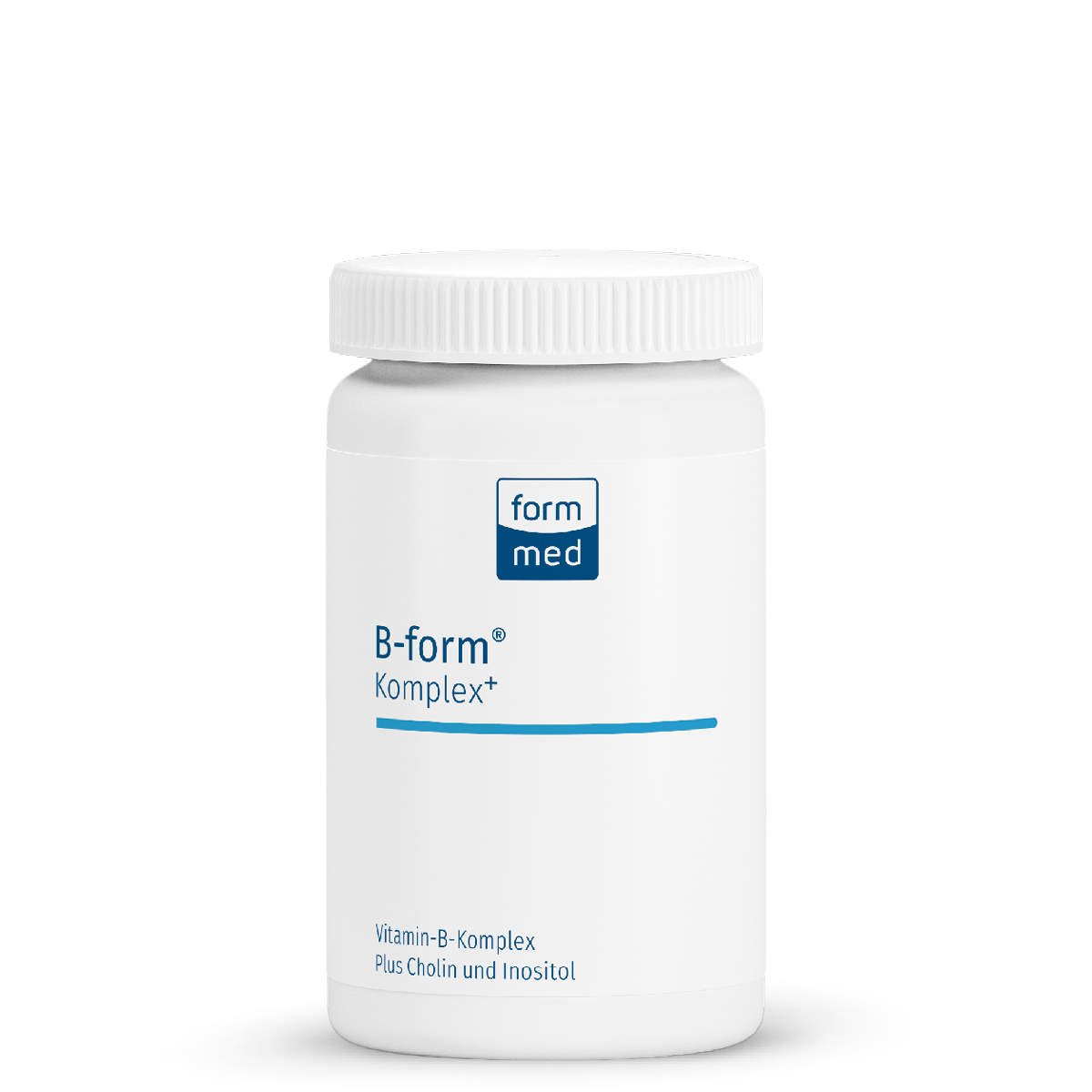
Highly bioavailable Vitamin B complex with Metafolin® – plus Inositol and Choline
Ready for immediate dispatch - Delivery time approx. 1-3 days

Ready for immediate dispatch - Delivery time approx. 1-3 days

Ready for immediate dispatch - Delivery time approx. 1-3 days
References
Hanna, M. et al. (2022): B Vitamins: Functions and Uses in Medicine. Perm J. 26(2):89–97. https://pmc.ncbi.nlm.nih.gov/articles/PMC9662251/
Lee, M.-C. et al. (2023): A functional evaluation of anti-fatigue and exercise performance improvement following vitamin B complex supplementation in healthy humans, a randomized double-blind trial. Int J Med Sci. 20(10):1272-1281. https://pubmed.ncbi.nlm.nih.gov/37786445/
Tardy, A.-L. et al. (2020): Vitamins and Minerals for Energy, Fatigue and Cognition: A Narrative Review of the Biochemical and Clinical Evidence. Nutrients. 12(1):228. https://pubmed.ncbi.nlm.nih.gov/31963141/