

Lowering blood pressure – the importance of vitamin B1, magnesium, and potassium
Table of Contents
- High Blood Pressure: Recognizing Symptoms Early
- What Is Considered a Normal Blood Pressure?
- High Blood Pressure – What Can You Do?
- Potassium, Magnesium and Vitamin B1 for Blood Pressure, Muscles and the Heart
- Natural Blood Pressure Reducers from Nutrition: Arginine, Q10, Omega-3, Cocoa and Natto
- Conclusion: Naturally Lowering Blood Pressure – Key Micronutrients
- Suitable FormMed Supplements
- References
A healthy blood pressure is not a given – yet it is one of the most important prerequisites for long-term cardiovascular health. In addition to physical activity, a mindful lifestyle, and medical supervision, nutrition also plays a crucial role in high blood pressure.
This guide explains how diet and micronutrients can naturally lower blood pressure, and which home remedies from food are also promising – including dark chocolate and natto.
High Blood Pressure: Recognizing Symptoms Early
Blood pressure refers to the force with which blood flows through the vessels. If it remains elevated over time, the blood vessels are under constant strain. What makes high blood pressure particularly dangerous is that it often goes unnoticed for a long time. This is because symptoms usually appear only when blood pressure is significantly elevated. Possible signs include morning headaches, dizziness, ringing in the ears, nervousness, sleep disturbances, and nosebleeds.
Symptoms can differ between women and men: While men more often report head pressure or visual disturbances, high blood pressure in women tends to present more nonspecifically – such as fatigue and inner restlessness. The risk increases for women especially during menopause.
Over the long term, high blood pressure increases the risk of heart attack, stroke, and kidney disease. That’s why it’s so important to take early action.
What Is Considered a Normal Blood Pressure?
Normal blood pressure falls within a range that does not overload the cardiovascular system, while still maintaining stable circulation. The readings consist of two numbers: the systolic and diastolic values. The following table shows the standard values according to the German Hypertension League:
| Systolic Value (mmHg) | Diastolic Value (mmHg) | |
| Optimal Blood Pressure | below 120 | below 80 |
| Normal Blood Pressure | 120–129 | 80–84 |
| Elevated Blood Pressure | 130–139 | 85–89 |
| High Blood Pressure (Hypertension) | from 140 | from 90 |
High Blood Pressure – What Can You Do?
As long as there is no severe hypertension, blood pressure can be lowered naturally – through targeted lifestyle changes. Important starting points include
- Adjust your diet: Less salt, more vegetables, whole grains, and legumes support healthy blood pressure – as does good intake of vitamins and minerals.
- Exercise regularly: Just 30 minutes of moderate endurance exercise per day, such as walking, can help stabilize blood pressure over the long term.
- Lose excess weight: Every kilo lost relieves the heart and reduces pressure on the blood vessels.
- Reduce stress: Yoga, breathing exercises, or mindful breaks strengthen the autonomic nervous system – a central regulator of blood pressure.
It’s also important to keep an eye on your values: Those who monitor their blood pressure regularly can detect changes early and consult a doctor who may prescribe medication if needed.
Potassium, Magnesium and Vitamin B1 for Blood Pressure, Muscles and the Heart
Healthy blood pressure starts inside the cells – this is where micronutrients come into play:
Potassium helps regulate blood pressure. A deficiency, on the other hand, can trigger high blood pressure. Potassium acts as a counterpart to sodium and helps eliminate excess salt through the kidneys – this reduces pressure in the blood vessels. Foods rich in potassium include bananas, spinach, potatoes and legumes.
Magnesium supports the function of nerves and muscles – including the heart muscle. Good sources of magnesium are whole grains, nuts, seeds and leafy green vegetables.
Vitamin B1 is important for energy metabolism. It ensures the heart is continuously supplied with energy so it can function properly. Vitamin B1 is mainly found in whole grains, legumes and rolled oats.
Natural Blood Pressure Reducers from Nutrition: Arginine, Q10, Omega-3, Cocoa and Natto
In addition to classic vitamins and minerals, other bioactive substances from nutrition can also play a role:
Arginine is an amino acid needed by the body to produce nitric oxide (NO) – an important signaling molecule that dilates blood vessels. With age, the production of NO naturally declines. Especially then, a deficiency in arginine should be avoided. Foods particularly rich in arginine include nuts, legumes, oats, and poultry.
Coenzyme Q10 is a vitamin-like substance found in the mitochondria – the energy powerhouses of the cells. The heart, in particular, is an energy-intensive organ. Coenzyme Q10 naturally occurs in fatty fish as well as in meat and organ meats. The body can produce CoQ10 on its own, but production decreases with age.
The omega-3 fatty acids EPA and DHA from fatty fish like salmon or from vegan algae oil contribute to normal heart function. A healthy heart is, in turn, important for maintaining normal blood pressure.
Cocoa polyphenols from dark chocolate can support the function of the endothelium – the innermost layer of blood vessels. The quality of the cocoa is crucial: in a study, participants who ate dark, minimally processed chocolate saw a reduction in blood pressure compared to those who consumed white chocolate.
Nattokinase is an enzyme from fermented soybeans (natto) – a traditional food that has long been valued in Japan for its effects on heart health. Researchers are therefore investigating whether natto can promote circulation and help regulate blood pressure.
Conclusion: Naturally Lowering Blood Pressure – Key Micronutrients
High blood pressure often develops gradually – but the consequences can be serious. Taking early action can do a lot for cardiovascular health. In addition to exercise, stress reduction, and a healthy diet, micronutrients play an important role.
Potassium helps excrete salt, thereby lowering blood pressure. Magnesium supports the function of nerves and muscles – including the heart. Vitamin B1 is involved in the energy metabolism of heart muscle cells and supports their function. In addition, bioactive substances from the diet such as arginine, coenzyme Q10, omega-3, cocoa polyphenols, and nattokinase are considered natural remedies for high blood pressure: They may provide nutritional support for the cardiovascular system.
Whether through diet or targeted high-quality supplements: A good supply of micronutrients can help maintain blood pressure within a healthy range.
Suitable FormMed Supplements
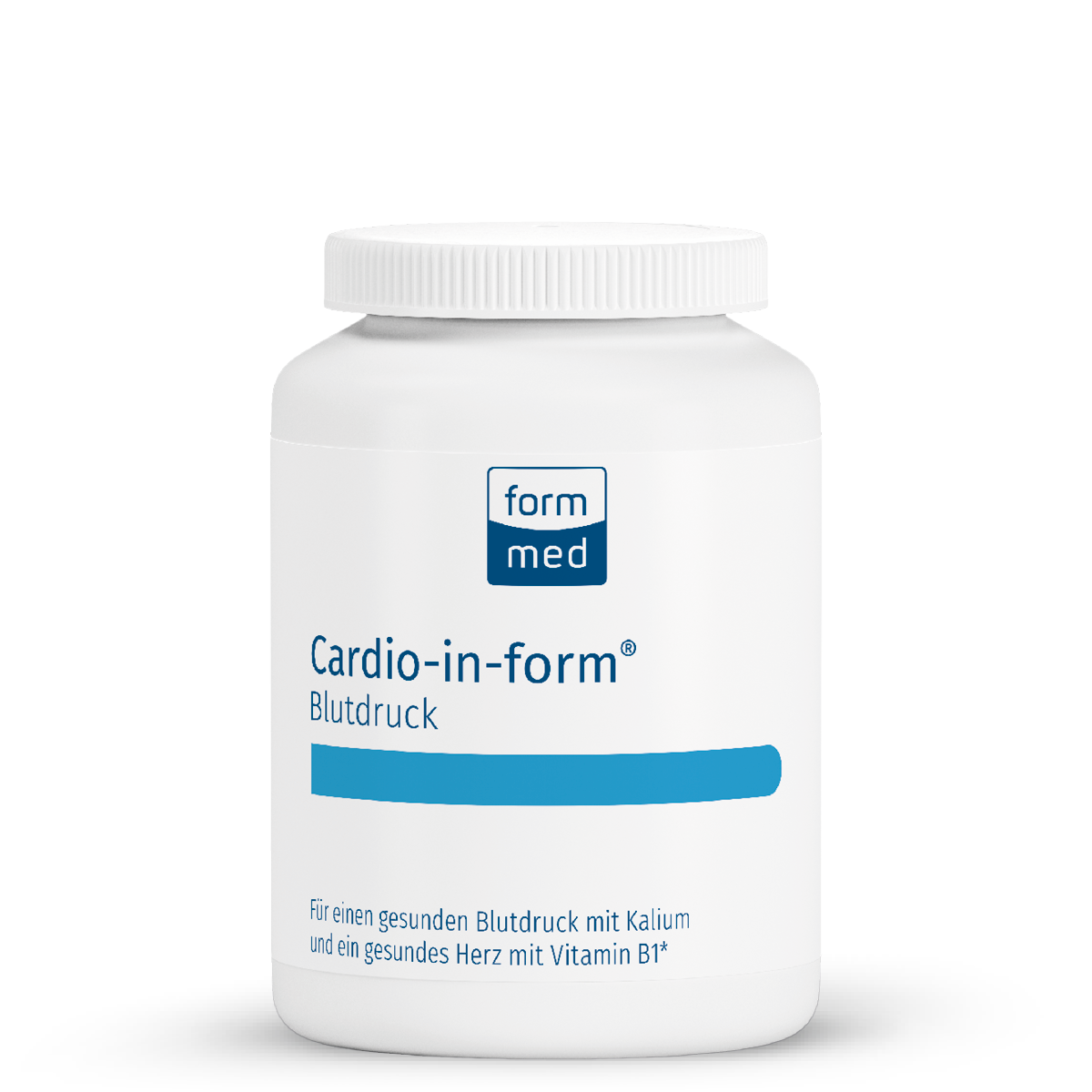
Ready for immediate dispatch - Delivery time approx. 1-3 days
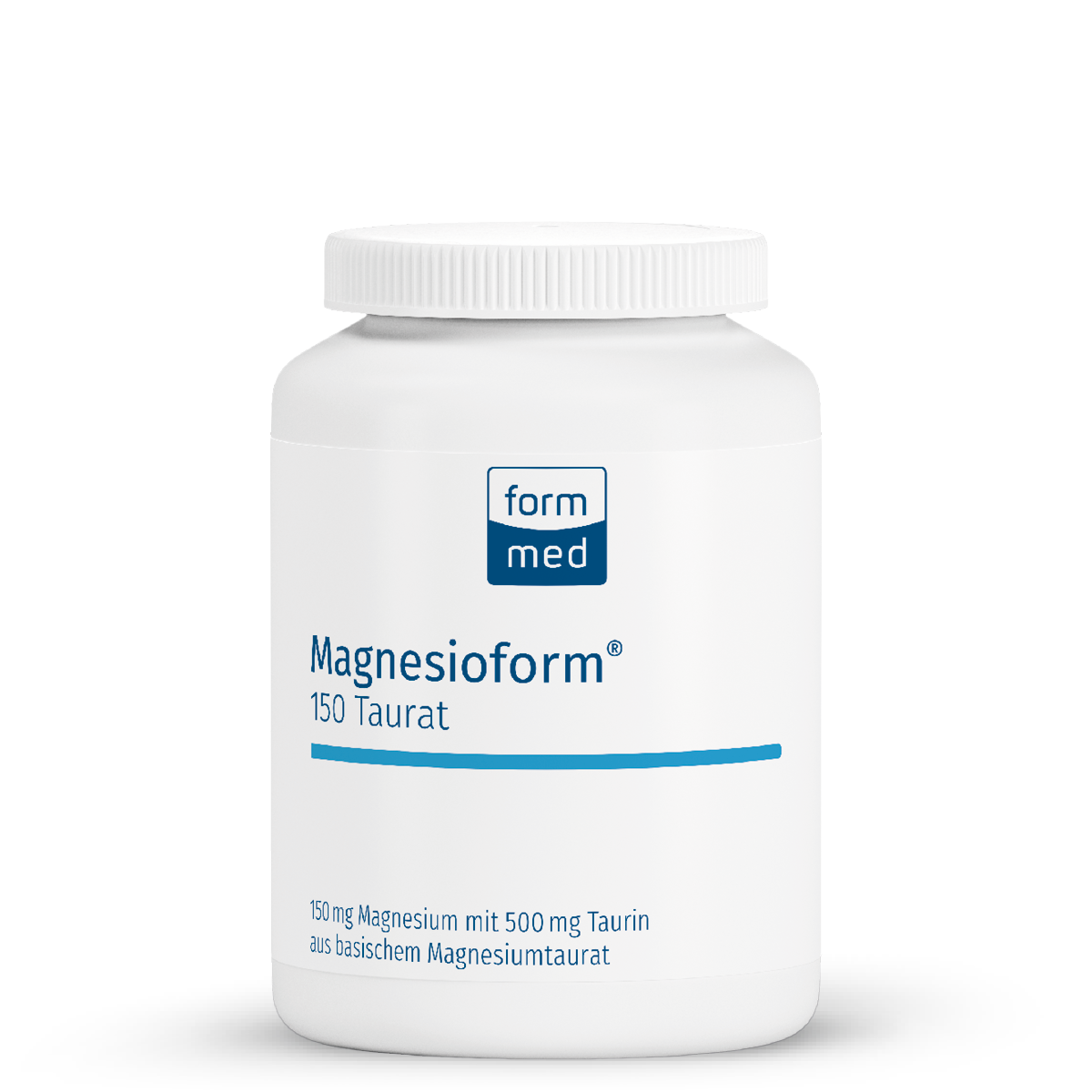
150 mg Magnesium with 500 mg Taurine from basic Magnesium Taurate
Ready for immediate dispatch - Delivery time approx. 1-3 days

375 mg purest Omega-3 fatty acids rich in EPA – particularly bioavailable from certified sustainable wild catch
Ready for immediate dispatch - Delivery time approx. 1-3 days
References
Deutsche Hochdruckliga e.V (2025): Bluthochdruck bei Erwachsenen. https://www.hochdruckliga.de/betroffene/bluthochdruck/bluthochdruck-bei-erwachsenen, abgerufen am: 15.07.2025.
Filippini, T. et al. (2020): Potassium Intake and Blood Pressure: A Dose-Response Meta-Analysis of Randomized Controlled Trials. J Am Heart Assoc. 9(12):e015719. https://pubmed.ncbi.nlm.nih.gov/32500831/
Gargiulo, L. et al. (2025): The Acute Effect of Dark Chocolate on Blood Pressure and Renal Hemodynamics as Assessed With Doppler Ultrasound in Healthy Volunteers. J Ren Nutr. 28:S1051-2276(25)00020-2. https://pubmed.ncbi.nlm.nih.gov/40024389/
Karimi, M. et al. (2025): Effects of coenzyme Q10 administration on blood pressure and heart rate in adults: A systematic review and meta-analysis of randomized controlled trials. Int J Cardiol Cardiovasc Risk Prev. 26:200424. https://pubmed.ncbi.nlm.nih.gov/40495903/
Nozue, M. et al. (2017): Fermented Soy Product Intake Is Inversely Associated with the Development of High Blood Pressure: The Japan Public Health Center-Based Prospective Study. J Nutr. 147(9):1749-1756. https://pubmed.ncbi.nlm.nih.gov/28724661/
Shiraseb, F. et al. (2022): Effect of l-Arginine Supplementation on Blood Pressure in Adults: A Systematic Review and Dose-Response Meta-analysis of Randomized Clinical Trials. Adv Nutr. 13(4):1226-1242. https://pubmed.ncbi.nlm.nih.gov/34967840/
Wen, H. et al. (2023): Association of vitamin B1 with cardiovascular diseases, all-cause and cardiovascular mortality in US adults. Front Nutr. 10:1175961. https://pmc.ncbi.nlm.nih.gov/articles/PMC10502219/
Zhang, X. et al. (2022): Omega‐3 Polyunsaturated Fatty Acids Intake and Blood Pressure: A Dose‐Response Meta‐Analysis of Randomized Controlled Trials. J Am Heart Assoc. 11(11):e025071. https://pmc.ncbi.nlm.nih.gov/articles/PMC9238708/


