

Lowering Cortisol – What Really Helps with Chronic Stress
Table of Contents
- Ist Cortisol wirklich „böse"? Die Wahrheit über das Stresshormon
- Typische Symptome: Woran merkt man, dass der Cortisolspiegel chronisch zu hoch ist?
- Cortisol natürlich senken: Die 3 wichtigsten Säulen
- Mikronährstoffe bei Stress: Wie Vitamine und Co. das Nervensystem unterstützen
- Fazit: Cortisol senken – mit der richtigen Strategie
- Häufig gestellte Fragen zum Thema Cortisol senken
- Gut versorgt bei Dauerstress
- Literatur
Lowering cortisol – hardly any topic is currently being discussed as intensely. Yet cortisol is not an enemy, but a vital hormone: It wakes you up in the morning, sharpens your responsiveness in stressful moments and provides energy when you need it. The real problem only arises when levels remain permanently elevated and never drop again. Chronic stress is what drains the body – not cortisol itself.
In this guide, you will learn what functions cortisol has in the body, how to recognize permanently elevated levels, how you can lower cortisol – and what role micronutrients play in this.
Is cortisol really “bad”? The truth about the stress hormone
Cortisol is not a defective product of the body – it is a hormone produced in the adrenal cortex and belongs to the glucocorticoids. Its most important task is to prepare the body for performance.
In the morning, cortisol levels reach their natural peak – the cortisol awakening response. This morning peak helps you wake up, mobilize energy and start the day focused. Over the course of the day, levels decline until they reach their natural minimum in the evening – a healthy rhythm that supports the sleep-wake cycle.
The problem arises when this rhythm gets out of sync: persistent stress – professional, emotional or physical – keeps cortisol levels permanently elevated. Evening comes, but cortisol remains high. The body cannot enter the resting phase.
Current reviews show: If cortisol levels remain permanently elevated, the body’s own stress regulation system – the so-called HPA axis – gets out of balance. In the long term, this can affect health.
Myth cortisol: Why you should not completely block the stress hormone
A completely suppressed cortisol level would be dangerous. Cortisol has important tasks: It regulates blood sugar, dampens excessive inflammatory reactions, controls blood pressure and supports the immune system. People with pathologically low cortisol levels – for example in Addison’s disease – suffer, among other things, from extreme fatigue and depend on hormone replacement therapy. The goal is therefore not a low cortisol level, but a healthy rhythm: active in the morning, calm in the evening.
Typical symptoms: How do you notice that cortisol levels are chronically too high?
Chronically elevated cortisol rarely makes itself noticeable through one single clear sign. Instead, nonspecific symptoms gradually appear and are often attributed to other causes.
Possible signs of permanently elevated cortisol levels include:
- Exhaustion despite sleep: Anyone who never really switches off does not recover – not even at night
- Sleep disorders: difficulty falling asleep or restless sleep because cortisol is too high in the evening
- Inner restlessness and nervousness: The body remains in alarm mode even though there is no acute danger
- Mood swings and irritability: The nervous system is permanently running at full speed
- Concentration problems and memory gaps: Chronic stress affects cognitive performance
- Cravings for sweets: Cortisol raises blood sugar and increases carbohydrate cravings during stress
- Increased susceptibility to infections: Permanently elevated cortisol can impair immune function
If symptoms persist, medical evaluation is recommended.
Cortisol too high – specific symptoms in women
Women respond hormonally to chronic stress differently than men, and this is also reflected in the symptoms. Typical in women with too much cortisol are:
- Cycle changes: Irregular, missed or particularly painful periods
- Increased PMS symptoms: Mood swings, irritability and water retention before the period can intensify under chronic stress
- Weight gain in the abdominal area: Chronically elevated cortisol promotes fat storage in the abdominal and hip area
- Hair loss: Persistently elevated cortisol levels can disrupt the hair cycle and promote diffuse hair loss
- Skin changes: Impure skin or adult acne are often associated with hormonal stress
- Worsened menopausal symptoms: During perimenopause, the hormone system reacts particularly sensitively to stress – hot flashes and low mood can intensify due to elevated cortisol
The reason: Cortisol and the female sex hormones estrogen and progesterone influence each other. If cortisol levels remain permanently elevated, this can disrupt hormonal balance.
What is “cortisol face” all about?
The term “cortisol face” often circulates on social media. It refers to a puffy, round-looking face allegedly caused by too much cortisol.
The medical classification: A truly cortisol-related moon face is a classic feature of Cushing’s syndrome – a rare condition involving excessive cortisol production or a side effect of high-dose cortisone therapies. This affects very few people.
What is actually behind a puffy face in most cases: water retention due to lack of sleep, a high-salt diet, alcohol or hormonal fluctuations. This is not “cortisol face” in the clinical sense – even though chronic stress influences sleep quality and eating habits.
Lower cortisol naturally: The 3 most important pillars
Permanently lowering cortisol levels does not work with a single measure – but through the interplay of sleep, nutrition and exercise. These three pillars are not trends; they are the foundation of stress physiology.
It does not have to involve complex therapies: Many of the most effective home remedies against too much cortisol are simple everyday habits – a regular sleep rhythm, a walk during the lunch break, a warm cup of herbal tea in the evening. A current systematic review confirms that this works: targeted relaxation and mindfulness exercises can measurably influence cortisol levels.
1. Sleep and rhythm: Why the evening is decisive
Cortisol levels follow a circadian rhythm: They are high in the morning and low in the evening. Anyone who has too much cortisol in the blood in the evening sleeps poorly. Anyone who sleeps poorly produces more cortisol the next day – a vicious cycle.
The evening is therefore especially important: The brain needs clear signals that the day is over. Bright light, screens and racing thoughts keep the nervous system awake and delay the natural drop in cortisol.
Tips for a healthy sleep rhythm
- Regular sleep and wake times – even on weekends
- Avoid caffeine from early afternoon onward
- No intense workouts after 8 p.m.
- Reduce screen light in the evening, as blue light inhibits melatonin
- Establish a calm evening routine such as reading, walking and breathing exercises
- Keep the bedroom cool and dark
2. Nutrition and blood sugar: How meals influence cortisol levels
What many people do not know: blood sugar fluctuations are a direct cortisol trigger. If blood sugar drops – for example between meals or after sugary snacks – the body releases cortisol to make glucose available from its own reserves. Anyone who eats irregularly or relies heavily on sugar and white flour thereby keeps a constant cortisol pulse going.
Tips for a cortisol-friendly diet
- Regular, balanced meals – no long fasting gaps
- Reduce sugar and highly processed foods
- Sufficient protein and healthy fats with each meal
- Prefer vegetables, legumes and whole grain products
- Minimize alcohol
- Use caffeine consciously
3. The right exercise: Why too much sport can be counterproductive during chronic stress
Exercise is one of the most effective means against stress – but type and intensity are decisive. Intense interval training (HIIT) and heavy strength sessions are themselves a short-term cortisol stimulus: They trigger a physiological stress response that the body has to reduce after training.
Anyone who already suffers from chronic stress may drive levels even higher with too many intense sessions instead of lowering them. Systematic data show: moderate morning exercise has the most favorable influence on the circadian cortisol rhythm, while evening high-intensity training can delay melatonin release and impair sleep.
Tips for the right exercise during chronic stress:
- Plan daily walks – 20 to 30 minutes at a moderate pace are enough
- Choose gentle endurance activities such as swimming or calm cycling
- Try yoga or tai chi – they activate the parasympathetic nervous system and have a calming effect
- Exercise preferably in the morning or at midday – intensive training in the evening can disturb sleep
- Limit intensive sessions to a maximum of 2 to 3 per week
- Plan sufficient recovery time between sessions
Micronutrients during stress: How vitamins and others support the nervous system
Chronic stress places high demands on the body not only psychologically, but also biochemically. The consumption of certain micronutrients increases, while intake often decreases due to stress-related dietary changes – for example because there is less time to cook and more ready meals.
Important: No micronutrient directly lowers cortisol. But certain vitamins and others support the nervous system as well as energy metabolism – and thereby create the biochemical basis for coping well with stress.
B vitamins: Support for the nervous system
B vitamins – especially B1, B6, B12 and folic acid – are essential for the function of the nervous system and energy metabolism. They play a central role in the synthesis of neurotransmitters such as serotonin and dopamine, which are significantly involved in mood regulation – this applies above all to vitamin B6. Vitamin B12 and folic acid are also important for the formation of myelin – the protective layer that surrounds nerve fibers and enables smooth signal transmission.
Because B vitamins are water-soluble and are not stored by the body, a particularly regular intake through diet or supplementation is important during phases of stress.
Vitamin C: Antioxidant during stressful phases
Vitamin C is an important antioxidant: It protects cells from oxidative stress, which increases in the body during chronic stress. It is no coincidence that the highest vitamin C concentrations in the entire body are found in the adrenal cortex, where cortisol is produced. Vitamin C is directly involved in cortisol synthesis there.
In addition, vitamin C is involved in the function of the immune system and supports energy production in the cells – both areas that are particularly challenged under chronic stress.
Magnesium: Mineral for nerves and muscles
Magnesium is involved in more than 300 enzymatic reactions in the body – including energy production in the cells, the transmission of nerve impulses and the regulation of muscle function. Magnesium acts like a kind of natural brake in the nervous system: It regulates the excitability of nerve cells and helps dampen excessive stress reactions.
Current research shows that a magnesium deficiency is associated with a more strongly activated nervous system and increased stress reactivity – a vicious cycle, because increased sweating during stress leads to greater mineral losses.
FormMed tip – the right magnesium compound
Which magnesium compound is particularly useful for the nervous system and what matters in terms of bioavailability can be found in our guide “Which magnesium is the best?”.
Ashwagandha and cortisol – what current research shows
Adaptogens are plant compounds intended to help the body adapt better to stress. They have been used in traditional medicine for centuries and are increasingly becoming the focus of science. One of the best-studied is ashwagandha (Withania somnifera):
Researchers evaluated the data from randomized controlled trials in two current meta-analyses. Both show that cortisol levels in blood serum decreased significantly in the ashwagandha group compared with placebo. What is interesting here: Although cortisol levels decreased, participants did not feel less stressed. This shows: Ashwagandha is not a cure-all for stress, but as part of a comprehensive strategy it is scientifically interesting.
Not every product is the same: Simple ashwagandha powders without a defined active ingredient content are not comparable with the standardized extracts used in studies. Anyone who wants to benefit from the research should therefore specifically look for a high-quality, standardized preparation.
Conclusion: Lowering cortisol – with the right strategy
Cortisol is not an enemy – it is a vital hormone that only becomes a problem when it remains permanently elevated and the natural rhythm gets out of sync. Chronic stress is the real problem here, not cortisol itself.
The good news is: Cortisol levels can be influenced – not with one single measure, but through the interplay of the three pillars sleep, nutrition and exercise. Anyone who consciously shapes the evening, keeps blood sugar stable and doses intensive stressors creates the basis for a healthy cortisol rhythm.
Micronutrients such as B vitamins, magnesium and vitamin C can support this process – not by directly lowering cortisol, but because they create the biochemical basis. Standardized plant extracts such as ashwagandha are a scientifically interesting addition – but not a substitute for a healthy lifestyle. Quality is always decisive: scientifically grounded formulations, well-bioavailable micronutrient forms and avoiding unnecessary additives.
Frequently asked questions about lowering cortisol
Staying Healthy Under Constant Stress

Ready for immediate dispatch - Delivery time approx. 1-3 days

Ready for immediate dispatch - Delivery time approx. 1-3 days
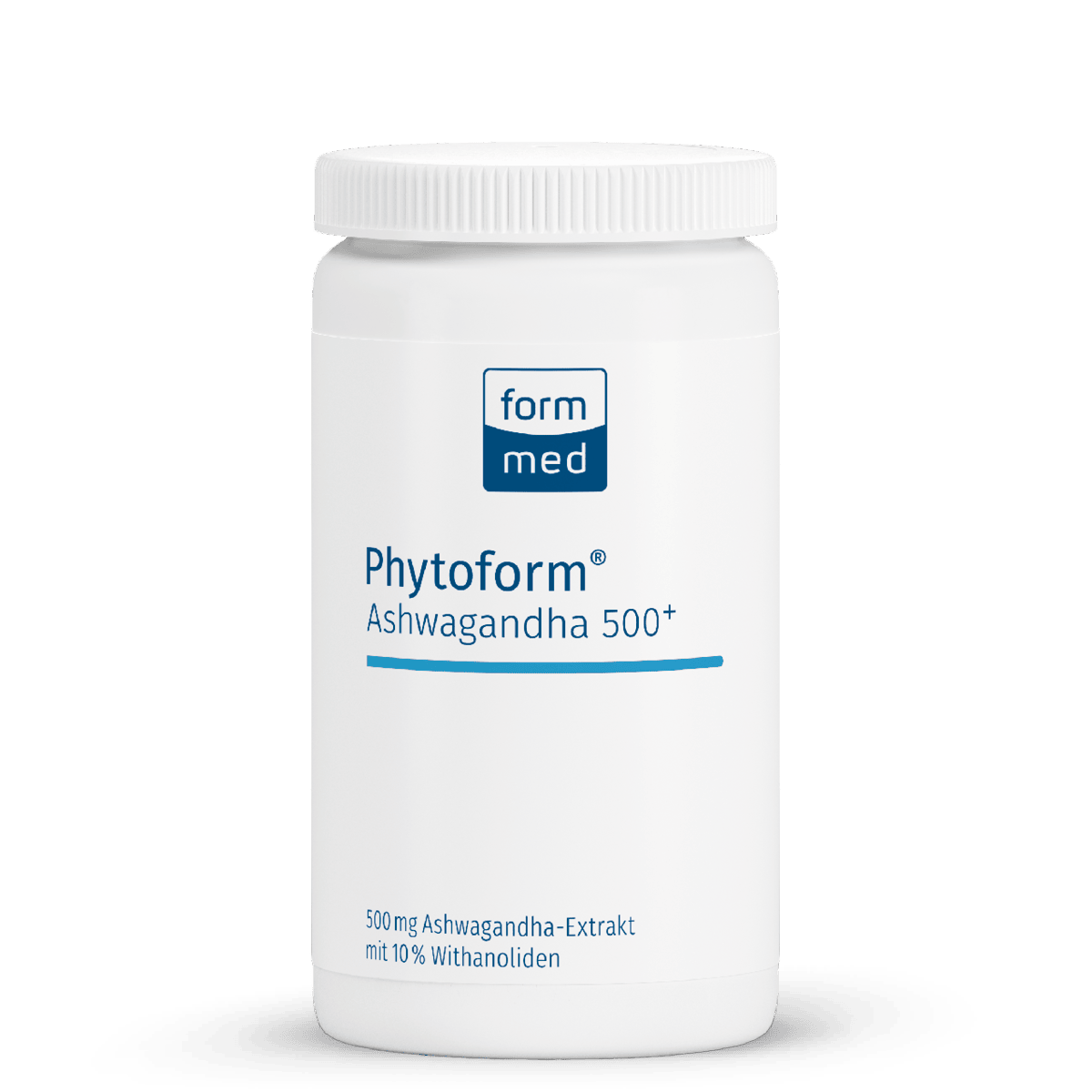
500 mg Ashwagandha extract with high Withanolides content
Ready for immediate dispatch - Delivery time approx. 1-3 days
Literature
Albalawi, A. A. (2025): Dual impact of Ashwagandha: Significant cortisol reduction but no effects on perceived stress – A systematic review and meta-analysis. Nutr Health. 31(4):1395–1408. https://pubmed.ncbi.nlm.nih.gov/40746175/
Arumugam, V. et al. (2024): Effects of Ashwagandha (Withania somnifera) on stress and anxiety: A systematic review and meta-analysis. Explore (NY). 20(6):103062. https://pubmed.ncbi.nlm.nih.gov/39348746/
Kim, N. et al. (2023): Effects of exercise timing and intensity on physiological circadian rhythm and sleep quality: a systematic review. Phys Act Nutr. 27(3):52–63. https://pubmed.ncbi.nlm.nih.gov/37946447/
Knezevic, E. et al. (2023): The Role of Cortisol in Chronic Stress, Neurodegenerative Diseases, and Psychological Disorders. Cells. 12(23):2726. https://pubmed.ncbi.nlm.nih.gov/38067154/
Kumar, A. et al. (2024): Magnesium (Mg2+): Essential Mineral for Neuronal Health: From Cellular Biochemistry to Cognitive Health and Behavior Regulation. Curr Pharm Des. 30(39):3074–3107. https://pubmed.ncbi.nlm.nih.gov/39253923/
Lei, A. A. et al. (2025): Chronic Stress-Associated Depressive Disorders: The Impact of HPA Axis Dysregulation and Neuroinflammation on the Hippocampus-A Mini Review. Int J Mol Sci. 26(7):2940. https://pubmed.ncbi.nlm.nih.gov/40243556/
Lovallo, W. R. et al. (2005): Caffeine stimulation of cortisol secretion across the waking hours in relation to caffeine intake levels. Psychosom Med. 67(5):734–739. https://pubmed.ncbi.nlm.nih.gov/16204431/
Nunez, S. G. et al. (2025): Chronic Stress and Autoimmunity: The Role of HPA Axis and Cortisol Dysregulation. Int J Mol Sci. 26(20):9994. https://pubmed.ncbi.nlm.nih.gov/41155288/
Rogerson, O. et al. (2023): Effectiveness of stress management interventions to change cortisol levels: a systematic review and meta-analysis. Psychoneuroendocrinology. 159:106415. https://pubmed.ncbi.nlm.nih.gov/37879237/


