Sleep better with melatonin? Everything you need to know about its effects, dosage, and intake
Table of Contents
- Why Is Healthy Sleep Important?
- What Is Melatonin and How Does It Work?
- How Many mg of Melatonin Do You Need for Sleep and When Should You Take It?
- Dosage Form: Melatonin Spray or Capsules?
- Conclusion: Melatonin for Falling Asleep
- Häufig gestellte Fragen zu Melatonin
- Suitable FormMed Supplements
- References
Restful sleep is essential for performance, health, and well-being. Yet many people struggle with poor sleep—they toss and turn at night, unable to fall asleep, or wake up multiple times. Stress, irregular sleep schedules, and artificial light can all disrupt melatonin metabolism, potentially leading to sleep disorders. This sleep hormone regulates the sleep-wake cycle—and when taken correctly, it can help reduce the time it takes to fall asleep.
In this guide, you’ll learn how melatonin works, which dosage is recommended, and when melatonin spray or capsules may be beneficial.
Why Is Healthy Sleep Important?
During sleep, the body undergoes numerous regeneration processes—across almost all organ systems:
- Immune system: Immune cells are renewed, coordinated, and strengthened in their function. This helps the body defend itself effectively against pathogens.
- Metabolism: Blood sugar levels and hormonal balance are stabilized. Lack of sleep, on the other hand, can impair insulin sensitivity.
- Cardiovascular system: Heart rate and blood pressure decrease, easing the strain on the heart and supporting vascular health.
- Brain and nervous system: Experiences are processed, and new neural connections are formed. This is essential for memory, learning ability, and concentration.
- Mental health and emotions: The stress hormone cortisol decreases. At the same time, neurotransmitter balance in the brain is regulated, promoting emotional stability and resilience to psychological stress.
Persistent sleep disorders can therefore increase the risk of infections, concentration difficulties, and even cardiovascular disease. This makes it all the more important to support the body’s natural sleep mechanisms.
The answer to the question “How much sleep do you need?” varies from person to person. In general, adults are recommended to get 7 to 8 hours of sleep per night—depending on age, lifestyle, and individual predisposition. Sleep quality is also a key factor.
What Is Melatonin and How Does It Work?
Melatonin is a hormone naturally produced by the body that regulates the sleep-wake cycle. That’s why it’s often referred to as the “sleep hormone.” Melatonin is produced in the pineal gland of the brain during darkness, while daylight inhibits its release. Melatonin doesn’t directly cause drowsiness—it signals to the body that it’s time to rest, helping you fall asleep.
As we age, the body’s natural production of melatonin decreases. Irregular sleep patterns—such as from shift work—long-distance travel, or exposure to artificial light in the evening can also disrupt melatonin production. As a result, the natural sleep-wake rhythm becomes imbalanced and sleep quality suffers.
In such cases, melatonin supplementation may be helpful in reducing the time it takes to fall asleep—for example, in the form of capsules or melatonin spray.
How Many mg of Melatonin Do You Need for Sleep and When Should You Take It?
The typical melatonin dosage to support falling asleep ranges from 0.5 to 2 mg (milligrams). Often, small amounts are sufficient. Since individuals react differently, it may be helpful to start with a low dose and adjust it as needed—ideally in consultation with your healthcare provider. Higher doses, such as 5 mg, may be recommended by a practitioner in specific situations—such as severe jet lag or shift work.
How fast does melatonin work? Melatonin generally takes effect within 30 to 60 minutes after intake. That’s why it should be taken shortly before going to bed. If you experience ongoing sleep problems, it’s important to have them evaluated by a doctor to rule out other causes.
Melatonin is not addictive. Unlike many sleeping pills, melatonin does not lead to dependency. However, over time the body may develop a tolerance, meaning that the initial melatonin dosage may no longer be effective.
Dosage Form: Melatonin Spray or Capsules?
Melatonin is available not only in capsule form but also as an oral spray. This dosage form offers several practical advantages—especially for people who want flexibility at night.
Benefits – Why Melatonin Spray Can Be Useful:
- Can be taken without water – ideal for travel or while in bed at night
- Rapid absorption through the oral mucosa
- Flexible dosing depending on individual needs
- Particularly suitable for people with swallowing difficulties
Capsules, on the other hand, are tasteless and allow for easy combination of melatonin with other micronutrients such as magnesium. That’s why FormMed offers sleep support supplements tailored to individual needs and situations.
Conclusion: Melatonin for Falling Asleep
Restful sleep is the foundation for health, performance, and emotional balance. When the sleep-wake cycle is disrupted—due to stress or impaired melatonin metabolism—targeted supplementation with the sleep hormone can help. Melatonin contributes to reducing the time it takes to fall asleep without causing dependency. Proper dosage and timing are especially important—ideally 0.5 to 2 mg of melatonin taken about 30 minutes before bedtime.
Whether in spray or capsule form, high-quality supplements offer flexibility and can be tailored to your individual needs. Additionally, it’s important to choose tested, high-quality products—and to seek professional guidance if sleep problems persist.
Häufig gestellte Fragen zu Melatonin
Suitable FormMed Supplements
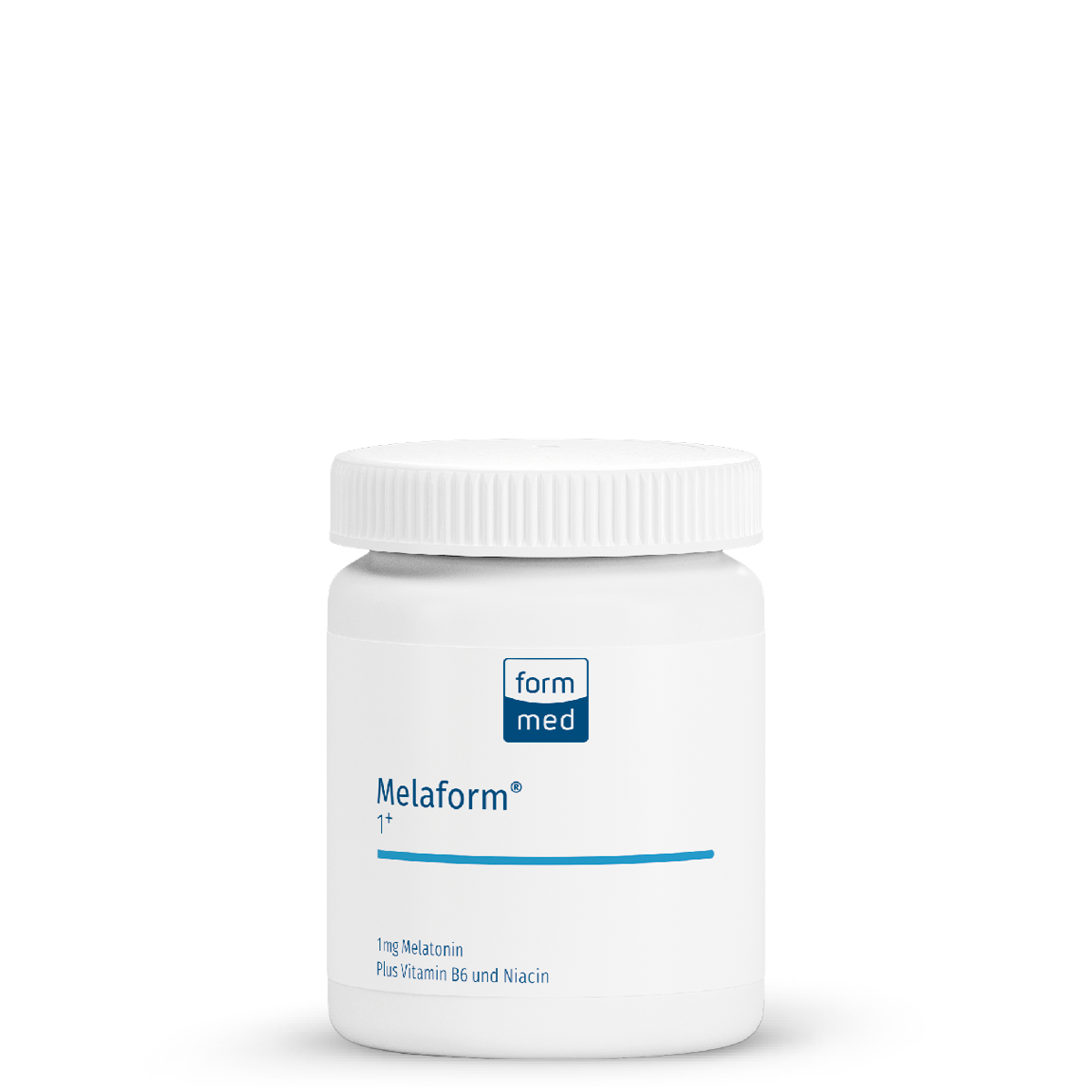
1.0 mg Melatonin for healthy sleep
Ready for immediate dispatch - Delivery time approx. 1-3 days
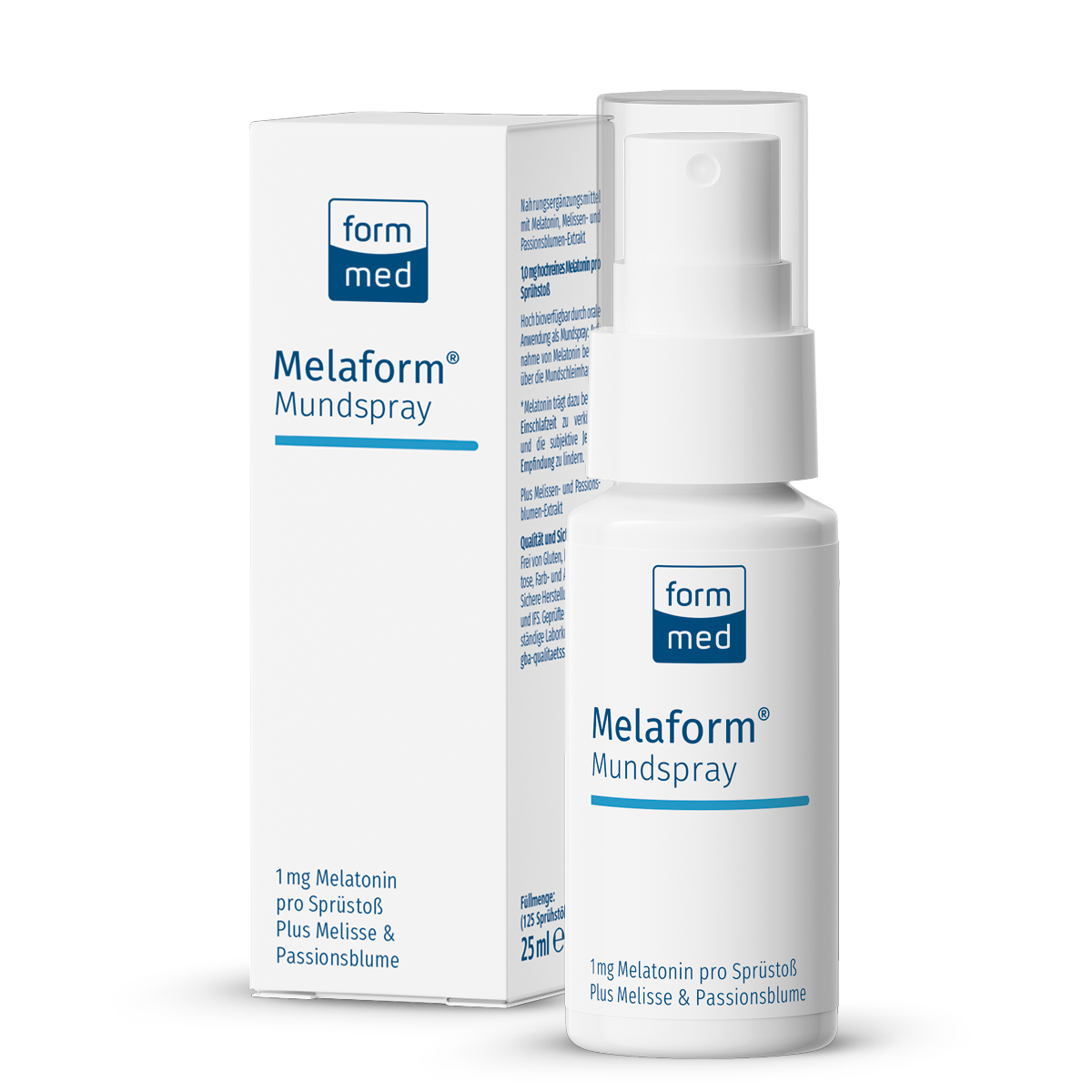
1.0 mg Melatonin per spray for healthy sleep
Ready for immediate dispatch - Delivery time approx. 1-3 days

Ready for immediate dispatch - Delivery time approx. 1-3 days
References
Baglioni, C. et al. (2020): A Systematic Review and Network Meta-Analysis of Randomized Controlled Trials Evaluating the Evidence Base of Melatonin, Light Exposure, Exercise, and Complementary and Alternative Medicine for Patients with Insomnia Disorder. J Clin Med. 9(6):1949. https://pubmed.ncbi.nlm.nih.gov/32580450/
Cruz-Sanabria, F. et al. (2024): Optimizing the Time and Dose of Melatonin as a Sleep-Promoting Drug: A Systematic Review of Randomized Controlled Trials and Dose-Response Meta-Analysis. J Pineal Res. 76(5):e12985. https://pubmed.ncbi.nlm.nih.gov/38888087/
Fatemeh, G. et al. (2022): Effect of melatonin supplementation on sleep quality: a systematic review and meta-analysis of randomized controlled trials. J Neurol. 269(1):205-216. https://pubmed.ncbi.nlm.nih.gov/33417003/
Salanitro, M. et al. (2022): Efficacy on sleep parameters and tolerability of melatonin in individuals with sleep or mental disorders: A systematic review and meta-analysis. Neurosci Biobehav Rev. 139:104723. https://pubmed.ncbi.nlm.nih.gov/35691474/