Adaptogens for stress: Ashwagandha, Rhodiola rosea, and Siberian ginseng
Table of Contents
- What Are Adaptogens and Do They Help with Stress?
- What Natural Adaptogens Are There?
- Indian Winter Cherry – What Is Ashwagandha Good For?
- Rhodiola: Plant Power of the Vikings
- Siberian Ginseng – What Are the Effects of Eleuthero?
- Conclusion: Ashwagandha, Rhodiola rosea and Eleuthero as Adaptogens
- Suitable FormMed Supplements
- References
For many people, stress is a part of everyday life—whether due to work pressure, family responsibilities, constant availability, or personal concerns such as financial insecurity, health challenges, or unresolved conflicts. Over time, however, stress can take a toll on both body and mind. That’s why it’s so important to take early action. In addition to relaxation techniques, exercise, and sufficient sleep, adaptogens are gaining attention—plant compounds that are believed to help the body cope more effectively with stress.
In this guide, you’ll learn how adaptogens affect the body and mind, and why rhodiola, eleuthero (Siberian ginseng), and ashwagandha are especially popular for managing stress.
What Are Adaptogens and Do They Help with Stress?
Adaptogens are plants believed to help the body adapt more effectively. Adaptogens for stress may therefore support the ability to cope with both mental and physical challenges.
While stimulants drive the body to perform, adaptogenic effects are focused on regulation: these plant compounds are said to support balance within the stress system and smooth out extreme fluctuations—both upward and downward.
Early studies suggest that adaptogens may have the following effects:
- influence the release of cortisol—the body’s primary stress hormone,
- improve the body’s adaptability in stressful situations,
- support the maintenance of energy, concentration, and inner balance.
What Natural Adaptogens Are There?
Rhodiola, Siberian ginseng (Eleuthero), and Ashwagandha are especially well known for their potential effects on the mind and nervous system. However, there is a wide range of other plant-based adaptogens that have been used in traditional medicine for centuries.
Additional adaptogens include the following:
- Ginseng (Panax ginseng)
- Maca (Lepidium meyenii)
- Gotu Kola (Centella asiatica) or Indian pennywort
- Water hyssop (Bacopa monnieri) or Brahmi
- Cordyceps (Cordyceps sinensis)
- Reishi (Ganoderma lucidum)
- Lion’s Mane (Hericium erinaceus)
Indian Winter Cherry – What Is Ashwagandha Good For?
Ashwagandha (Withania somnifera) is also known as Indian winter cherry. The plant is one of the most well-known adaptogens for stress. In Ayurvedic medicine, Ashwagandha has been used for centuries – especially for its supportive effects on the mind and nervous system.
The root contains numerous secondary plant compounds, including withanolides, alkaloids, and saponins. In particular, withanolides are considered the key active compounds in Ashwagandha. However, their concentration can vary greatly depending on origin, harvest time, and processing.
High-quality supplements therefore use a standardized Ashwagandha extract to ensure a precisely defined withanolide content. With Ashwagandha powder, on the other hand, a consistent composition cannot be guaranteed.
Rhodiola: Plant Power of the Vikings
Rhodiola (Rhodiola rosea) is a traditional adaptogen that primarily grows in cold regions of Europe and Asia. The Vikings already used Rhodiola rosea for its potential effects in helping to prevent physical and mental exhaustion.
The key active compounds are mainly rosavins and salidroside. These secondary plant substances are mostly found in the root and are characteristic of Rhodiola. As with other adaptogens, a standardized Rhodiola extract is crucial for ensuring quality and safety.
Siberian Ginseng – What Are the Effects of Eleuthero?
Eleuthero (Eleutherococcus senticosus), also known as Siberian ginseng, originates from the harsh forests of Siberia and has been used for centuries in traditional Russian and Chinese medicine to support the body during times of fatigue.
The key secondary plant compounds in eleuthero are called eleutherosides, which are primarily found in the root. For reliable quality, it is best to use a standardized extract rather than eleuthero tea or powder. This ensures that the amount of active plant compounds is precisely controlled.
Conclusion: Ashwagandha, Rhodiola rosea and Eleuthero as Adaptogens
Stress is ever-present – what matters is how we respond to it. Adaptogens offer a promising approach to support the body's adaptability and promote inner balance.
Ashwagandha, Rhodiola rosea (golden root), and eleuthero are particularly popular for supporting the mind and nervous system. They contain valuable secondary plant compounds that are made specifically usable in high-quality, standardized extracts. Anyone looking to use adaptogens for stress management should therefore ensure proven quality – and ideally seek advice from a healthcare professional to determine the appropriate dosage. This way, the natural potential of th
Suitable FormMed Supplements
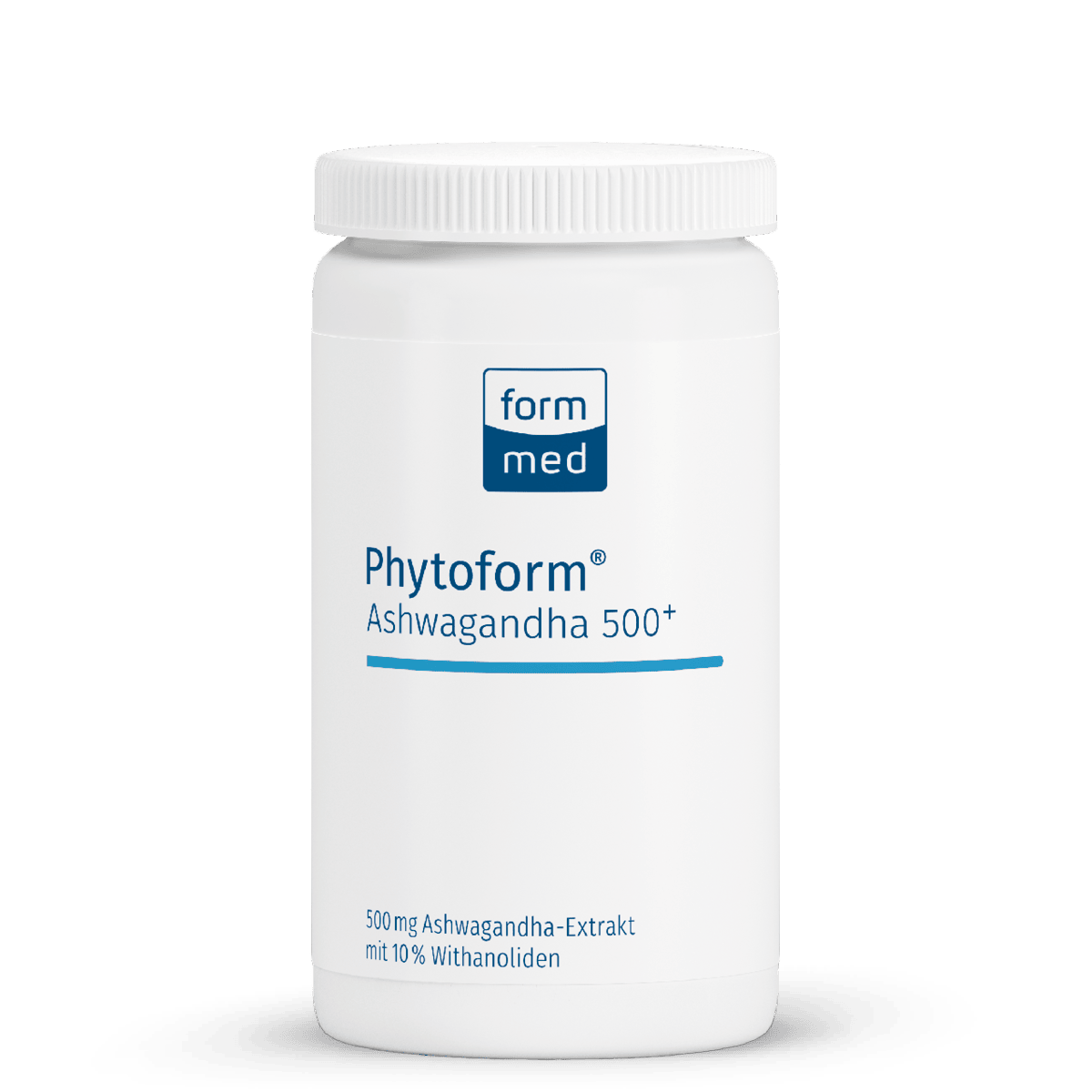
500 mg Ashwagandha extract with high Withanolides content
Ready for immediate dispatch - Delivery time approx. 1-3 days
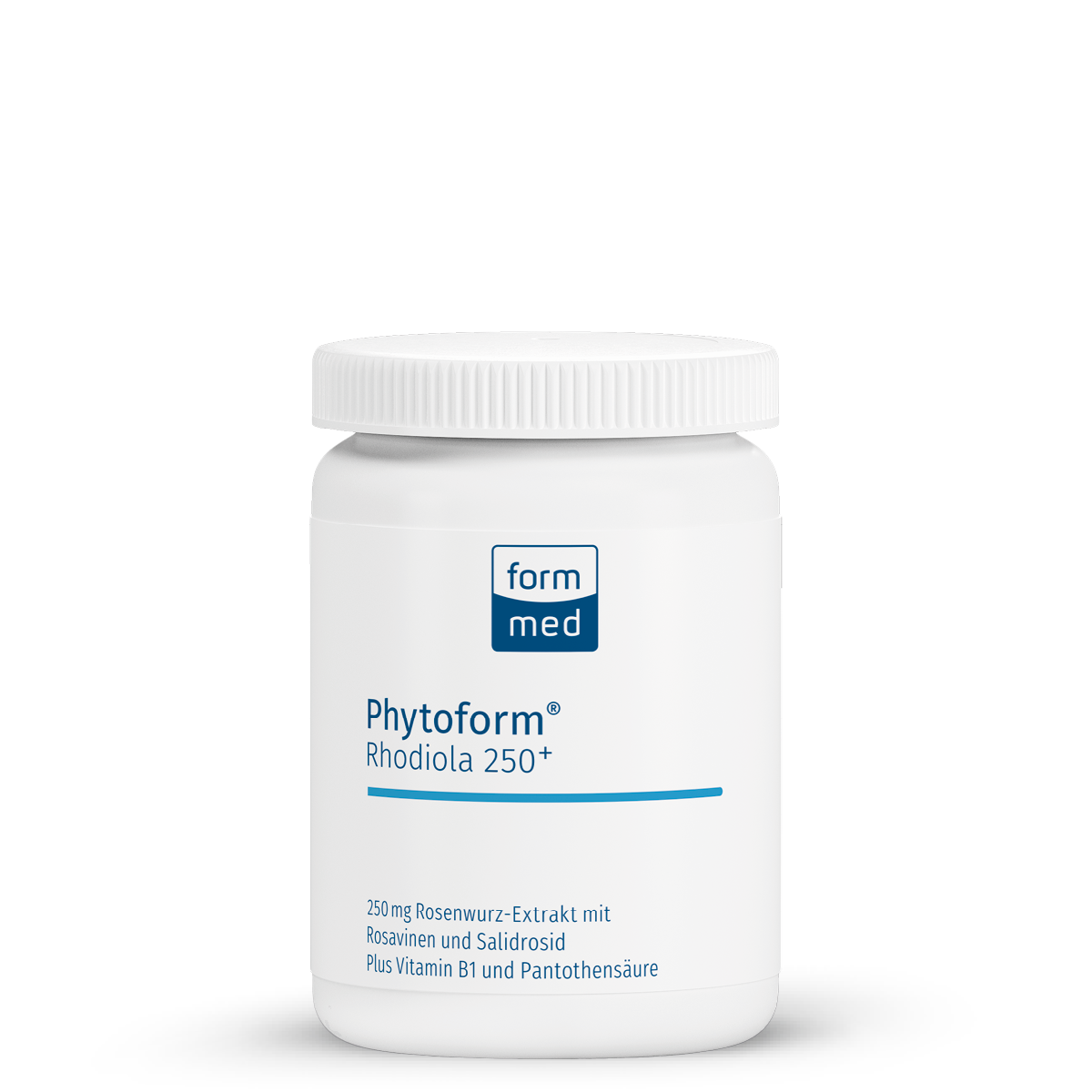
250 mg rhodiola root extract (plus vitamin B1 and pantothenic acid)
Ready for immediate dispatch - Delivery time approx. 1-3 days
Ready for immediate dispatch - Delivery time approx. 1-3 days
References
Anghelescu, I.-G. et al. (2018): Stress management and the role of Rhodiola rosea: a review. Int J Psychiatry Clin Pract. 22(4):242-252. https://pubmed.ncbi.nlm.nih.gov/29325481/
Arumugam, V. et al. (2024): Effects of Ashwagandha (Withania Somnifera) on stress and anxiety: A systematic review and meta-analysis. Explore (NY). 20(6):103062. https://pubmed.ncbi.nlm.nih.gov/39348746/
Llopis, I. et al. (2025): The Effects of Psychobiotics and Adaptogens on the Human Stress and Anxiety Response: A Systematic Review. Appl. Sci. 15(8), 4564. https://www.mdpi.com/2076-3417/15/8/4564
Pandit, S. et al. (2024): Effects of Withania somnifera Extract in Chronically Stressed Adults: A Randomized Controlled Trial. Nutrients. 16(9):1293. https://pubmed.ncbi.nlm.nih.gov/38732539/
Stojcheva, E. I. et al. (2022): The Effectiveness of Rhodiola rosea L. Preparations in Alleviating Various Aspects of Life-Stress Symptoms and Stress-Induced Conditions—Encouraging Clinical Evidence. Molecules. 7(12):3902. https://pmc.ncbi.nlm.nih.gov/articles/PMC9228580/
Sprengel, M. et al. (2025): Withania somnifera (Ashwagandha) supplementation: a review of its mechanisms, health benefits, and role in sports performance. Nutr Metab (Lond). 22(1):9. https://pubmed.ncbi.nlm.nih.gov/39910586/
Tóth-Mészáros, A. et al. (2023): The effect of adaptogenic plants on stress: A systematic review and meta-analysis. Journal of Functional Foods. 108:105695. https://www.sciencedirect.com/science/article/pii/S1756464623002955