

Migraine and tension headaches: Naturally preventing the storm in your head
Table of Contents
- Was passiert bei einer Migräne im Gehirn?
- Der Spannungskopfschmerz: wenn die Nacken- und Schultermuskulatur „dicht macht“
- Magnesium: Entspannung für Nerven und Muskeln
- Vitamin B2 (Riboflavin) und Coenzym Q10: das Energie-Duo der Zellen
- Mutterkraut: eine Pflanze mit langer Tradition in der Kopfschmerz-Forschung
- Lebensstil als Baustein der Vorbeugung
- Hausmittel: Was hilft gegen akute Migräne und Kopfschmerzen?
- Fazit: Mit Mikronährstoffen die Nervenzellen gezielt unterstützen
- Häufig gestellte Fragen zu Migräne und Spannungskopfschmerzen
- Gut versorgt mit Mikronährstoffen
- Literatur
Throbbing pain, tense muscles and days of incapacity: Migraines and tension headaches are among the most common neurological complaints. Acute painkillers or migraine medications relieve symptoms during an attack, but they do not change the underlying tendency toward recurring headaches. In this guide, you will learn how both types of headache develop and how magnesium, vitamin B2 and coenzyme Q10 support nerves and muscles.
What happens in the brain during a migraine?
Migraine is more than just a particularly severe form of headache and is not purely psychological – it is an independent neurological disorder with a clearly describable sequence.
It begins with altered electrical excitability of the nerve cells in the cerebral cortex, which spreads in a wave-like manner. This wave initially constricts the blood vessels in the brain. Afterwards, the vessels suddenly and painfully dilate again. At the same time, an inflammatory reaction develops at the nerve endings of the trigeminal nerve – the most important pain-sensing nerve in the head. This is precisely what is experienced as a severe, throbbing headache.
In some people, the actual headache phase is preceded by an aura.
What is a migraine aura?
About 15 to 20 percent of people with migraine experience an aura before the actual headache – a preliminary phase that usually develops over 10 to 30 minutes. Typical symptoms include visual disturbances such as jagged flashes of light or so-called scintillating scotomas – moving, flickering blind spots in the field of vision. Tingling in the arms or face and temporary speech difficulties may also occur.
The reason for this is a temporary reduction in blood flow and a change in electrical activity in certain areas of the brain. The aura usually disappears as soon as the actual headache begins.
Tension headaches: when the neck and shoulder muscles “seize up”
Migraine and tension headaches differ both in how the pain feels and in their cause. While migraine is usually one-sided and throbbing and is accompanied by symptoms such as nausea or sensitivity to light and sound, tension headache occurs on both sides and feels dull and pressing – comparable to wearing a helmet that is too tight.
Tension headaches are generally not caused by changes in the blood vessels, but by persistently contracted neck and shoulder muscles, often promoted by stress, one-sided posture or long periods of screen work.
When should you see a doctor about headaches?
In the vast majority of cases, headaches are harmless. However, certain warning signs should be medically assessed promptly. These include:
- A sudden, unusually severe headache (thunderclap headache)
- Headaches accompanied by fever or a stiff neck
- Visual or speech disturbances occurring for the first time or lasting unusually long
- Paralysis or impaired consciousness
- A significant change in the usual headache pattern
- New headaches occurring after the age of 50
- Headaches that persist for weeks despite regular use of painkillers
Magnesium: Relaxation for nerves and muscles
Magnesium plays an important role in nerves and muscles. In nerve cells, it acts as a natural antagonist to calcium: While calcium excites a nerve cell, magnesium slows this excitation down again. In this way, magnesium contributes to the normal functioning of the nervous system – it ensures that signals are transmitted in a controlled manner instead of nerve cells permanently overreacting.
This same interplay between tension and relaxation also determines how the muscles behave. This applies both to the striated muscles in the neck and shoulders and to the smooth muscles of the blood vessels in the brain. If sufficient magnesium is available, these muscles can relax again after contracting. If magnesium is lacking, they tend to remain tense and react more sensitively to stimuli.
For this reason, researchers are investigating whether and how a magnesium deficiency affects both the frequency of migraine attacks and the tendency toward tension headaches. The focus is on whether a poor magnesium supply makes nerve cells and blood vessels more sensitive to stimuli.
Magnesium is found in many foods – including nuts, pumpkin and sunflower seeds, whole grain products, legumes and green leafy vegetables such as spinach. A varied diet provides the foundation for a good magnesium supply. Anyone wishing to supplement magnesium should pay attention to the compound: Magnesium citrate or magnesium bisglycinate are absorbed more quickly in the bowel than poorly soluble compounds. The FormMed guide to magnesium compounds explains which magnesium compound is best suited to which application.
Vitamin B2 (riboflavin) and coenzyme Q10: the cellular energy duo
In people with migraine, specialized MRI examinations of the brain often show a reduced energy reserve in the nerve cells. A possible reason is impaired function of the mitochondria – the powerhouses of the cell. The brain has a particularly high and constant energy requirement in order to maintain the electrical activity of nerve cells. Two substances are the focus in this context: vitamin B2 and coenzyme Q10.
Vitamin B2 (riboflavin), as a component of the coenzymes FAD and FMN, is directly involved in the respiratory chain in the mitochondria, through which most cellular energy is obtained. In this way, vitamin B2 is important for energy metabolism. Researchers are therefore investigating whether a good supply of vitamin B2 can influence the frequency of migraine attacks.
Coenzyme Q10 is a substance produced naturally by the body and is also involved in energy production in the mitochondria. Scientists are investigating whether people with migraine have lower coenzyme Q10 levels than people without migraine and what role this plays in the energy supply of nerve cells.
Vitamin B2 is found primarily in milk and dairy products, eggs, whole grain products and green leafy vegetables. Meat and organ meats also provide appreciable amounts. Coenzyme Q10 is produced by the body itself, but is also found in fish, organ meats, nuts and, in smaller amounts, vegetable oils.
FormMed tip – a scientifically grounded micronutrient combination
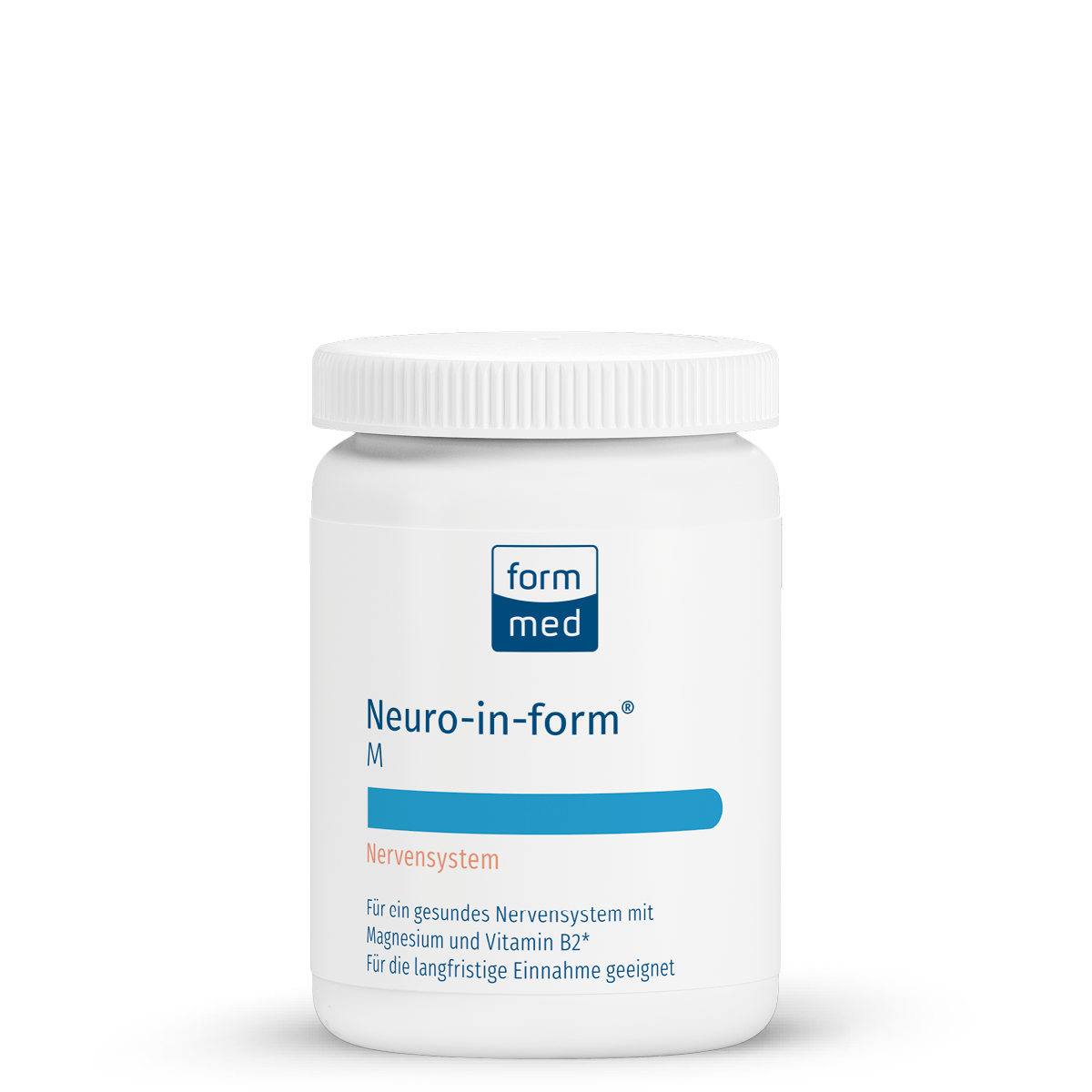
Neuro-in-form® M contains magnesium and vitamin B2 to support the normal functioning of the nervous system – supplemented with coenzyme Q10 and standardized plant extracts. Staggered intake according to the two-capsule principle ensures more even absorption over 24 hours.
Whether a nutrient can fully deliver its health benefits depends crucially on the quality of the raw materials. As with every FormMed preparation, the Q360+ quality promise therefore also applies to Neuro-in-form® M. This includes every batch being analyzed by the independent GBA Group.
Feverfew: a plant with a long tradition in headache research
Feverfew (Tanacetum parthenium) belongs to the daisy family and has been used for centuries in traditional herbal medicine for headaches and fever. The plant contains various secondary plant compounds, above all parthenolide – an ingredient found mainly in the leaves and at the center of most studies on feverfew.
Researchers are investigating whether parthenolide influences the release of certain messenger substances produced by the body that are involved in inflammatory reactions. Such inflammatory reactions also play a role in migraine. Scientific interest also focuses on the interaction of parthenolide with certain neurotransmitters and receptors that may contribute to triggering a migraine attack. Whether this results in a connection between feverfew and the frequency or progression of attacks is also the subject of research.
For such relationships to be examined reliably in studies, standardized extracts are important – they ensure that the parthenolide content remains the same from capsule to capsule, whereas it can vary considerably in fresh or powdered leaves.
Lifestyle as a component of prevention
In addition to micronutrient supply, everyday life also plays a role in prevention. Different factors are sometimes relevant for migraine and tension headaches.
A healthy sleep-wake rhythm is considered an important factor in migraine prevention: Both insufficient sleep and strongly fluctuating sleeping times at weekends can promote attacks. Longer gaps between meals and insufficient fluid intake are also common triggers. Regular endurance training is also associated in research with a lower frequency of attacks. A trigger diary in which diet, sleep, menstrual cycle or stress levels are recorded can additionally help identify individual triggers.
For tension headaches, relaxation acts more directly on the muscular cause: Progressive muscle relaxation according to Jacobson is one of the best-studied techniques in this area. Deliberate movement breaks during prolonged screen work can also help prevent persistent tension in the neck and shoulder muscles.
One common factor is stress: It is one of the most frequent triggers for both migraine and tension headaches – partly because chronic stress increases muscle tension and makes the nervous system more sensitive to stimuli. The FormMed guide “Lowering cortisol” explains how the body’s own stress hormone levels can be regulated.
Home remedies: What helps with acute migraine and headaches?
Once an attack has already started, prevention is no longer enough – the focus then shifts to acute relief. Because migraine and tension headaches develop differently, different home remedies may also help.
During a migraine attack
During the acute phase, a darkened, quiet room and avoiding further stimuli such as light or noise can help. Many people find a cooling compress on the neck or forehead pleasant, and it may relieve symptoms. Sufficient fluids support circulation. Caffeine can also provide short-term relief during the acute phase because it constricts blood vessels.
For tension headaches
Heat is usually more pleasant than cold for tension headaches: A hot water bottle or warm bath can loosen contracted muscles. Diluted peppermint oil, gently applied to the temples and forehead, is also frequently used as a home remedy for tension headaches. Gentle stretching exercises and movement breaks additionally counteract muscular tension.
Conclusion: Targeted support for nerve cells with micronutrients
Migraine and tension headaches develop through different mechanisms in the nervous system, but they share one common point of approach: the energy supply and excitability of nerve cells. An adequate supply of magnesium and vitamin B2 can create the physiological conditions for nerve cells and blood vessels to respond steadily to stimuli.
Because migraine is a complex neurological disorder with many influencing factors, attention should be paid not only to micronutrient supply, but also to sleep, nutrition, exercise and stress regulation. Once an attack has already started, targeted home remedies such as rest, cold or heat can help relieve the acute symptoms.
Frequently asked questions about migraine and tension headaches
Migraine develops through a combination of genetic predisposition and altered excitability of the brain, with dysregulation of energy metabolism in nerve cells and blood flow in certain areas of the brain at the center of current research.
Contributing factors such as lack of sleep, stress, hormonal fluctuations or certain foods may additionally act as triggers for individual attacks.
Yes, some people with migraine notice that histamine-rich foods such as red wine, cheese or smoked sausage can promote attacks. One possible reason is that the enzyme diamine oxidase, which breaks down histamine in the body, appears to be less active in these individuals. Whether there is actually a causal connection has not yet been conclusively established and continues to be investigated.
Yes, in a large proportion of affected women, there is a close relationship between estrogen levels and migraine frequency. The drop in estrogen before menstruation and hormonal changes during menopause are associated with more frequent and more severe attacks in many women.
A silent migraine is a migraine aura without the subsequent headache phase. Those affected therefore experience visual disturbances, tingling or other neurological symptoms without the typical headache occurring afterwards.
Migraine is a neurological reaction to an interplay of genetic predisposition and external and internal stimuli – not a deliberate message from the body. Knowing your own triggers, such as lack of sleep, stress or hormonal fluctuations, helps you specifically address the frequency of attacks.
Caffeine from coffee constricts blood vessels and can provide short-term relief during the acute phase of a migraine attack.
However, with regular, high coffee consumption, the body becomes accustomed to caffeine: If the usual amount is then missing, the blood vessels dilate again, which can trigger a so-called rebound headache. Conscious and moderate use of caffeine is therefore recommended.
During the acute phase, a darkened, quiet room, avoiding further stimuli and a cooling compress on the neck or forehead usually help.
Sufficient fluids and, depending on medical advice, taking the individually prescribed acute medication at an early stage can additionally reduce the severity of an attack.
The most common triggers of tension headaches are psychological stress, tense neck and shoulder muscles, one-sided posture at work, lack of sleep and insufficient fluid intake.
Magnesium plays an important role in relaxing the muscles. An insufficient supply is therefore discussed as a possible factor in muscle tension and tension headaches.
A deficiency of B vitamins is also being investigated in this context, as they are important for the energy supply of muscles and nerves.
Targeted stretching exercises for the neck and shoulders, heat applications and short movement breaks can loosen tense muscles and relieve symptoms. Relaxation techniques such as progressive muscle relaxation also act directly on the muscular cause.
The type of headache often provides initial clues to the cause. One-sided, throbbing pain accompanied by nausea or sensitivity to light and sound is more suggestive of migraine, while pain on both sides that feels dull and pressing is typical of tension headache.
Cluster headache, by contrast, manifests as extremely severe, usually one-sided attacks around one eye, often accompanied by a watery eye or a blocked nose on the same side. A dull headache on both sides that improves after drinking enough fluids is more likely to indicate a headache caused by insufficient fluid intake.
Headaches that are particularly severe in the morning or worsen when bending over may indicate increased pressure in the head and should be medically assessed.
Headaches require medical assessment if they occur suddenly and with unusual severity, change significantly in pattern or intensity, or are accompanied by symptoms such as fever, visual disturbances, speech difficulties or paralysis.
New headaches occurring after the age of 50 or headaches that persist for weeks despite regular use of painkillers should also be medically assessed.
Headaches accompanied by fever, a stiff neck, visual disturbances, speech or movement disorders are particularly concerning, as is a sudden, extremely severe headache. In these cases, prompt medical assessment is indicated.
Well-Supplied with Micronutrients
Ready for immediate dispatch - Delivery time approx. 1-3 days

25 mg high-dose Vitamin B2 plus Choline
Ready for immediate dispatch - Delivery time approx. 1-3 days

150 mg highly bioavailable Magnesium in a basic-organic 4-complex
Ready for immediate dispatch - Delivery time approx. 1-3 days
Literature
Chen, Y.-S. et al. (2021): Effect of Vitamin B2 supplementation on migraine prophylaxis: a systematic review and meta-analysis. Nutritional Neuroscience. 25(9):1801–1812. https://pubmed.ncbi.nlm.nih.gov/33779525/
Dominguez, L. J. et al. (2025): Magnesium and Migraine. Nutrients. 17(4):725. https://pubmed.ncbi.nlm.nih.gov/40005053/
Dörtkol, O. et al. (2026): Sex-specific clinical differences in cluster headache: A systematic review and meta-analysis. Clinical Neurology and Neurosurgery. 269:109542. https://pubmed.ncbi.nlm.nih.gov/42330586/
El-Ghoneimy, L. T. et al. (2026): Clinical characteristics of perimenopausal migraine and its correlation to hormonal levels. The Journal of Headache and Pain. 27(1). https://pubmed.ncbi.nlm.nih.gov/42304215/
Fajkiel-Madajczyk, A. et al. (2025): Evaluating the Role of Coenzyme Q10 in Migraine Therapy – A Narrative Review. Antioxidants. 14(3):318. https://pubmed.ncbi.nlm.nih.gov/40227290/
Frąckiewicz, J. & Szewczyk, K. (2025): Is There an Association Between Hydration Status, Beverage Consumption Frequency, Blood Pressure, Anthropometric Characteristics, and Urinary Biomarkers in Adults? Nutrients. 17(6):952. https://pubmed.ncbi.nlm.nih.gov/40289948/
Hajhashemy, Z. et al. (2024): Practical supplements for prevention and management of migraine attacks: a narrative review. Frontiers in Nutrition. 11:1433390. https://pubmed.ncbi.nlm.nih.gov/39539367/
Is, E. E. et al. (2024): The effectiveness of aerobic exercise and neck exercises in pediatric migraine treatment: a randomized controlled single-blind study. Irish Journal of Medical Science. 193(4):2011–2019. https://pubmed.ncbi.nlm.nih.gov/38459247/
Müller, B. et al. (2023): Interdisziplinäre multimodale Schmerztherapie bei Kopfschmerzerkrankungen. Der Schmerz. 38(2):80–88. https://pubmed.ncbi.nlm.nih.gov/37278838/
Talandashti, M. K. et al. (2024): Effects of selected dietary supplements on migraine prophylaxis: A systematic review and dose-response meta-analysis of randomized controlled trials. Neurological Sciences. 46(2):651–670. https://pubmed.ncbi.nlm.nih.gov/39404918/
Tepper, S. J. & Tepper, K. (2025): Nutraceuticals and Headache 2024: Riboflavin, Coenzyme Q10, Feverfew, Magnesium, Melatonin, and Butterbur. Current Pain and Headache Reports. 29(1):33. https://pubmed.ncbi.nlm.nih.gov/39853578/
Tobajas, Y. et al. (2023): Diamine Oxidase Interactions with Anti-Inflammatory and Anti-Migraine Medicines in the Treatment of Migraine. Journal of Clinical Medicine. 12(23):7502. https://pubmed.ncbi.nlm.nih.gov/38068554/


