

PMOS (formerly PCOS) and cycle irregularities: Supporting hormonal balance naturally
Table of Contents
- Was passiert beim PCO-Syndrom im Körper?
- Der unsichtbare Treiber: Insulinresistenz bei PCOS
- Myo-Inositol: Der zelluläre Türöffner
- Vitamin D, Folsäure, Pantothensäure, Chrom und Selen – das Begleitteam bei PCOS
- Ernährung und Bewegung: Was den Hormonhaushalt bei PCOS stabilisiert
- Fazit: PCOS verstehen und gezielt begleiten
- Häufig gestellte Fragen zur PMOS (früher PCOS)
- Gut versorgt mit Mikronährstoffen im Zykluschaos
- Literatur
Irregular or completely absent periods, difficulty conceiving, sudden hair loss and persistent weight gain: A diagnosis of PCOS – officially known as PMOS since May 2026 – initially causes uncertainty for many women. The contraceptive pill is often offered as the only solution, although this is not an option for women trying to conceive. In this guide, you will learn why insulin resistance is the underlying driver of hormonal imbalance in many affected women, what role the body’s own signaling molecule inositol plays in metabolism – and which micronutrients can support hormonal balance.
What happens in the body with polycystic ovary syndrome?
Polycystic ovary syndrome (PCOS), with an estimated prevalence of 10 to 15 percent, is one of the most common hormonal disorders in women of reproductive age. Since May 2026, it has officially had a new name: polyendocrinemetabolic ovarian syndrome – PMOS for short. The symptoms are so varied that diagnosis is often delayed for years.
The origin lies in the ovaries: In PMOS, they produce too many male sex hormones (androgens). This androgen excess disrupts egg cell maturation – ovulation does not occur, the immature ovarian follicles fail to mature completely and accumulate in the ovaries. On ultrasound images, they appear as a string-of-pearls arrangement of small fluid-filled follicles – hence the historical term “polycystic”, even though they are not true cysts in the medical sense.
The new name therefore makes visible what researchers have long confirmed: The syndrome is primarily a hormonal and metabolic disorder.
PCOS symptoms: More than a menstrual cycle problem
PCOS, now known as PMOS, is not merely a menstrual cycle disorder. It affects the entire hormonal system and can manifest in very different ways through the following symptoms:
- Menstrual irregularities: Irregular or completely absent menstrual cycles (oligomenorrhea or amenorrhea)
- Absent ovulation: A common cause of difficulty conceiving
- Increased androgen activity: Acne, increased body hair growth (hirsutism) and androgen-related hair loss
- Insulin resistance and weight problems: Persistent weight gain – especially around the abdomen –, blood sugar fluctuations and cravings for sweet foods
- Mood swings: An increased risk of depressive moods and anxiety
Not every affected woman has all of these symptoms. Diagnosis is based on the Rotterdam criteria, which assess three features: absent ovulation, elevated androgen levels and polycystic ovaries on ultrasound. If at least two of these are present, PMOS is considered confirmed.
PMOS (formerly PCOS) – when should you see a doctor?
If periods are absent for more than three months, pregnancy has not occurred after one year without contraception, or severe hair loss and acne occur together with menstrual irregularities, a gynecological or endocrinological assessment should be carried out.
PCOS or PMOS is a treatable condition. A reliable diagnosis is only possible through a clinical examination, blood hormone testing and ultrasound – self-diagnosis is not sufficient for well-founded treatment decisions.
From PCOS to PMOS – what the renaming means
For decades, the term PCOS suggested that the actual problem was located in the ovaries – in cysts that are not medically true cysts. This misconception had consequences: The metabolic dimension of the condition was often inadequately considered in diagnosis and treatment, which meant that many affected women waited years for a diagnosis.
In May 2026, the renaming was officially adopted by the Endocrine Society together with more than 50 professional and patient organizations and published in the medical journal Lancet. For affected women, this does not change the diagnosis or treatment. Both terms will be used in parallel until 2028 – which is why PCOS will continue to appear in medical consultations and search queries for a long time.
The invisible driver: Insulin resistance in PCOS
More than half of all women with PCOS or PMOS are affected by insulin resistance – often without knowing it. Insulin resistance is considered one of the central mechanisms through which the hormonal imbalance in PCOS can be explained. At the same time, it provides the biochemical answer to the common question of why affected women often find it difficult to lose weight despite a normal calorie intake.
Insulin is a hormone produced by the pancreas. Its most important function is the regulation of blood sugar: It acts like a key that signals the body’s cells to take up glucose from the blood.
With insulin resistance, the cells become increasingly insensitive to this signal – the locks become difficult to open. The pancreas responds by increasing insulin production: more keys for the same resistant locks.
The vicious cycle: Insulin and androgens
This chronically elevated insulin level has direct consequences for the ovaries. They contain the so-called theca cells, which are responsible for producing male hormones. Persistently high insulin levels stimulate these cells to release more androgens. The rising androgen level disrupts follicle maturation, prevents ovulation and further drives androgen production – a self-reinforcing cycle.
At the same time, elevated insulin reduces the liver’s production of SHBG (sex hormone-binding globulin). SHBG normally binds free androgens in the blood and thereby inactivates them. When SHBG falls, the concentration of biologically active androgens rises – worsening acne, hair loss and hirsutism.
This also explains why weight gain can worsen the PCOS pattern: Adipose tissue, particularly around the abdomen, is metabolically active and intensifies insulin resistance. Conversely, even a moderate reduction in body weight can improve insulin sensitivity and positively influence hormonal balance.
Why is it so difficult to lose weight with PCOS?
Permanently elevated insulin levels block fat breakdown in several ways: Insulin inhibits lipolysis – the release of fatty acids from fat stores – while simultaneously promoting fat storage, especially in the abdominal region.
The difficulty losing weight with PCOS or PMOS can therefore be explained biochemically and is not a question of willpower.
Myo-inositol: The cellular door opener
Inositol is a signaling molecule naturally produced by the body that is involved in transmitting hormonal signals within metabolism. It is regarded as a vitamin-like substance and was previously referred to as vitamin B8.
Inositol occurs in several variants, known as isomers. By far the most common of these is myo-inositol. The body produces it from glucose through several intermediate steps in the liver and kidneys. Myo-inositol is also obtained through food – for example from whole grains, legumes and citrus fruits.
An enzyme produced by the body converts part of the myo-inositol into D-chiro-inositol – another isomer that is also involved in insulin metabolism. An adequate intake of myo-inositol therefore also supplies the body with the starting substance for this second signaling pathway.
How does the body’s own myo-inositol work?
The body’s own myo-inositol acts as a “second messenger”: When a hormone binds to its receptor on the cell surface, myo-inositol transmits this signal into the cell and initiates the actual cellular response. Myo-inositol performs this function for several hormones – including insulin and follicle-stimulating hormone (FSH).
In insulin metabolism, myo-inositol transmits the signal that prompts the cell to absorb glucose from the blood. In the ovaries, it performs the same function for FSH in the granulosa cells – the cells that surround and nourish the maturing egg cell – and is therefore involved in follicle maturation.
Researchers are investigating whether targeted supplementation with myo-inositol can provide additional support for this signaling process in PCOS – with possible subsequent effects on hormonal overproduction in the ovaries and more regular ovulation.
Clinical studies have generally used daily doses of between 2 and 4 grams of myo-inositol, usually divided into two separate doses.
Myo-inositol when trying to conceive: What research shows
Myo-inositol is present in particularly high concentrations in the fluid surrounding the maturing egg cell in the ovary. Scientists are discussing whether the amount of myo-inositol in this fluid may provide information about the quality of the egg cell.
For women with PCOS who are trying to conceive, this is an obvious area of interest: Researchers are investigating whether targeted supplementation with myo-inositol can positively influence egg cell maturation and ovulation frequency. Its possible relationship with the success of assisted reproduction is also the subject of ongoing clinical studies.
Myo-inositol is therefore one of the substances naturally produced by the body that is being particularly intensively researched in connection with fertility. Anyone considering targeted supplementation should ideally discuss it with their treating gynecologist.
Vitamin D, folic acid, pantothenic acid, chromium and selenium – the supporting team for PCOS
In addition to inositol, traditional micronutrients also play an important role in hormonal balance and metabolism in PCOS or PMOS – particularly because insulin metabolism, hormone production and cellular protection are closely interconnected.
Vitamin D – far more than a bone vitamin
Vitamin D acts in the body in a similar way to a hormone: It binds to receptors in the cell nucleus and controls how certain genes are read within the cell. Through this pathway, vitamin D contributes to normal cell division – a mechanism that is also relevant to follicle maturation in the ovary, as corresponding vitamin D receptors have also been detected there.
Researchers are therefore investigating how vitamin D status is related to ovarian function in PCOS. As vitamin D deficiency is widespread in Central Europe, regular monitoring of blood vitamin D levels is advisable.
Folic acid – a building block for cell division
Folic acid also contributes to normal cell division and is involved in the synthesis of DNA building blocks. An adequate supply of folic acid is recommended especially when trying to conceive – ideally before pregnancy begins, as cell division during early pregnancy occurs particularly rapidly.
Pantothenic acid – a building block for hormone metabolism
Pantothenic acid (vitamin B5) is a component of coenzyme A, a central molecule in cellular energy metabolism. Coenzyme A is also required for the production of cholesterol – the common starting substance for all steroid hormones, including estrogen, progesterone and androgens.
Chromium – support for blood sugar metabolism
Chromium is a trace element that is involved in the action of insulin at the cellular level. It therefore contributes to the maintenance of normal blood sugar levels and supports the metabolism of carbohydrates, fats and proteins. As PCOS is frequently associated with impaired blood sugar metabolism, researchers are investigating what role chromium may play.
Selenium – thyroid function and cellular protection
Selenium is required for the activation of thyroid hormones and is therefore important for thyroid function – a connection that is particularly relevant in PCOS: Thyroid disorders occur more frequently in affected women and can cause similar symptoms, such as menstrual irregularities or weight changes. At the same time, selenium contributes to the protection of cells from oxidative stress by acting as a component of antioxidant enzymes.
Nutrition and exercise: What stabilizes hormonal balance in PCOS
An optimal diet for PCOS or PMOS is not primarily aimed at reducing calories, but at stabilizing blood sugar and insulin levels. This also has a beneficial effect on the ovaries: Less insulin means fewer signals stimulating the formation of male hormones and less disruption of follicle maturation.
Two measures play a central role:
Reducing the glycemic load
Carbohydrates do not need to be avoided completely in PCOS – what matters is their effect on blood sugar. Highly processed carbohydrates such as those found in white bread, sweets and sweetened drinks cause blood sugar to rise rapidly and trigger a strong insulin response. Whole grains, legumes and fiber-rich vegetables, by contrast, are metabolized more slowly and keep blood sugar more stable.
Through its effect on insulin levels, a low glycemic load also influences hormonal balance in the ovaries. A recent meta-analysis shows that a high-fiber diet with a low glycemic index increased levels of the binding protein SHBG in women with PCOS. SHBG captures free androgens in the blood and renders them inactive. As a result, the amount of biologically active androgens in the blood decreased. Insulin resistance and blood lipid levels also improved.
Regular exercise improves insulin sensitivity
Physical activity naturally improves the way cells respond to insulin. Muscle contractions enable glucose to be absorbed into muscle cells independently of insulin – through a transport mechanism activated by movement.
A combination of strength training and moderate endurance exercise is particularly effective: Researchers have shown that as little as 150 minutes of moderate exercise per week measurably improves insulin sensitivity – an effect that may also influence hormonal balance through the same mechanism.
Conclusion: Understanding PCOS and providing targeted support
PCOS – or PMOS, as it has officially been called since May 2026 – is more than a menstrual cycle problem. In many affected women, insulin resistance lies at the center of the condition and affects the ovaries through several pathways: It drives androgen production, reduces the protective binding protein SHBG and makes ovulation more difficult. This is precisely the mechanism behind scientific interest in myo-inositol: As a signaling molecule naturally produced by the body, it plays a role in both insulin metabolism and the ovaries.
Vitamin D, folic acid, pantothenic acid, chromium and selenium also contribute in different ways to metabolic and hormonal processes – from cell division and blood sugar metabolism to thyroid function. Combined with a low-glycemic-load diet and regular exercise, metabolism can receive additional support.
Frequently asked questions about PMOS (formerly PCOS)
PCOS often presents as a combination of irregular or absent menstrual cycles, signs of increased androgen activity such as acne, hair loss and increased body hair, as well as difficulty losing weight.
Because these symptoms can also occur individually and have other causes, a reliable diagnosis is only possible through a gynecological examination, blood hormone testing and ultrasound.
PCOS and PMOS refer to the same condition – only the name has changed. In May 2026, the Endocrine Society, together with more than 50 professional and patient organizations, officially renamed polycystic ovary syndrome as polyendocrine metabolic ovarian syndrome (PMOS).
The new name describes the condition more accurately: Instead of focusing on the frequently misunderstood “cysts” in the ovaries, it emphasizes the hormonal and metabolic components.
This does not change the diagnostic criteria, symptoms or treatment. Both terms will be used in parallel until 2028.
PCOS is usually diagnosed between the ages of 20 and 30. However, the underlying changes in the ovaries often begin during puberty.
Because irregular menstrual cycles are normal during the first few years after the first period, a confirmed diagnosis in adolescents is generally not made until at least two years after menarche.
Early signs such as irregular cycles and acne are also frequently attributed to puberty, meaning that the condition often remains undiagnosed for years. If untreated, PCOS generally persists until menopause.
If left untreated, PCOS can increase the long-term risk of type 2 diabetes, high blood pressure and cardiovascular disease – particularly when underlying insulin resistance is present.
The risk of endometrial cancer also increases when ovulation is absent over a prolonged period, because the lining of the uterus is not shed regularly and can therefore continue to grow unchecked for extended periods. Medical supervision is therefore important.
Inositol is an umbrella term for several chemically slightly different variants of the same basic substance.
By far the most common and most widespread form in the body is myo-inositol – it accounts for more than 90 percent of the body’s own inositol and is also the form most intensively studied in PCOS research. D-chiro-inositol is another relevant variant.
When people simply refer to “inositol”, they generally mean myo-inositol.
In clinical studies, a noticeable effect on the menstrual cycle generally appears after four to six weeks at the earliest – and frequently only after three to six months of regular use.
The timeframe varies depending on the individual hormonal status, the severity of insulin resistance and accompanying measures.
Yes, taking myo-inositol and folic acid at the same time is considered safe and is common in research. The two substances act through different mechanisms and do not interfere with each other’s absorption.
They are frequently combined, especially when trying to conceive: A low maternal folate status is considered a risk factor for neural tube defects in the unborn child. Many combination preparations therefore contain myo-inositol and folic acid in coordinated doses.
A direct effect of myo-inositol on body weight has not been scientifically proven. However, because chronically elevated insulin inhibits fat breakdown, researchers are investigating whether improved insulin sensitivity may indirectly have beneficial effects on metabolism. The foundation of sustainable weight management in PCOS remains a blood-sugar-stabilizing diet combined with regular exercise.
No, completely avoiding carbohydrates is neither necessary nor sensible in the long term. The selection is what matters: Fiber-rich, minimally processed carbohydrate sources cause blood sugar to rise more slowly and are preferable to highly processed foods.
Severe calorie restriction is also not recommended – it can increase stress hormone levels and place additional strain on hormonal balance.
Yes, most women with PCOS can become pregnant – including naturally, particularly when the menstrual cycle and ovulation are supported through an adapted lifestyle or targeted measures.
Although PCOS is one of the most common causes of reduced fertility, it does not mean infertility. If ovulation remains absent, medical treatment options are also available, including assisted reproduction. Gynecological support is recommended in every case when trying to conceive.
Well supplied with micronutrients during menstrual cycle irregularities
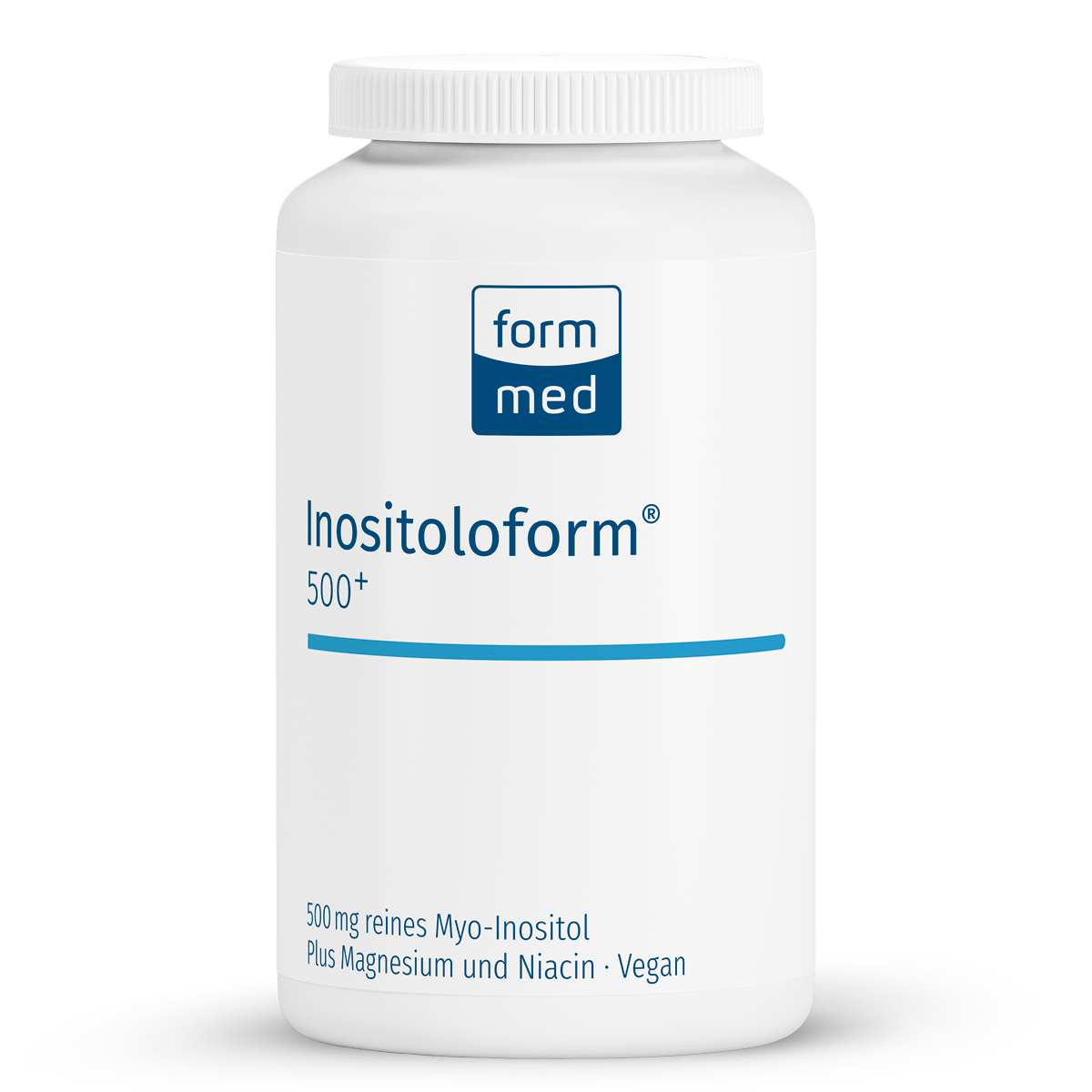
500 mg Myo-Inositol plus Magnesium and Niacin
Ready for immediate dispatch - Delivery time approx. 1-3 days
Ready for immediate dispatch - Delivery time approx. 1-3 days

2,000 I.U. (50 µg) natural Vitamin D3 with Vitamin K2 plus Pantothenic acid
Ready for immediate dispatch - Delivery time approx. 1-3 days
Literature
Dalamaga, M. (2026): What's in a name? From PCOS to polyendocrine metabolic ovarian syndrome: A metabolic reframing, promise, controversies, and challenges ahead. Metabolism Open. 30:100479. https://pubmed.ncbi.nlm.nih.gov/42327014/
Katyal, G. et al. (2024): Systematic Review of the roles of Inositol and Vitamin D in improving fertility among patients with Polycystic Ovary Syndrome. Clinical and Experimental Reproductive Medicine. 51(3):181-191. https://pubmed.ncbi.nlm.nih.gov/38599886/
Khalafi, M. et al. (2026): Comparative efficacy of exercise modes on cardiometabolic health in women with polycystic ovary syndrome: a systematic review with pairwise and network meta-analyses. BMC Women's Health. 26(1):70. https://pubmed.ncbi.nlm.nih.gov/41484603/
Neven, A. C. H. et al. (2026): Prevalence of polycystic ovary syndrome: a global and regional systematic review and meta-analysis. Human Reproduction Update. 32(3):277-312. https://pubmed.ncbi.nlm.nih.gov/41528735/
Szkodziak, P. et al. (2025): Insulin resistance in polycystic ovary syndrome phenotypes and the vicious cycle model in its etiology. Scientific Reports. 15(1):42649. https://pubmed.ncbi.nlm.nih.gov/41315368/
Teede, H. J. et al. (2026): Polyendocrine metabolic ovarian syndrome, the new name for polycystic ovary syndrome: a multistep global consensus process. The Lancet. 407(10545):2329-2339. https://pubmed.ncbi.nlm.nih.gov/42119588/
Ye, J. et al. (2026): Effectiveness of mineral supplements (magnesium, chromium, zinc, selenium, chromium picolinate) in reducing insulin resistance in polycystic ovary syndrome: a meta-analysis of randomized controlled trials. BMC Endocrine Disorders. 26(1). https://pubmed.ncbi.nlm.nih.gov/41580698/
Zhang, L. et al. (2025): Optimizing carbohydrate quality: a path to better health for women with PCOS. Frontiers in Nutrition. 12:1578459. https://pubmed.ncbi.nlm.nih.gov/40607019/
Zhang, Y. et al. (2026): Nutrients and bioactive compounds in polycystic ovary syndrome: updated insights into effects and underlying mechanisms. Frontiers in Nutrition. 13:1697275. https://pubmed.ncbi.nlm.nih.gov/41737338/


