Taking Vitamin D Correctly: When and How Should You Supplement It?
Table of Contents
- Wann sollte man Vitamin D einnehmen?
- Wie viel Vitamin D am Tag ist optimal?
- Sollte man Vitamin D täglich oder wöchentlich einnehmen?
- Zu welcher Tageszeit sollte man Vitamin D einnehmen?
- Wie sollte man Vitamin D einnehmen?
- Wie lange kann man Vitamin D einnehmen?
- Zusammenfassung: Vitamin D richtig einnehmen
- Häufig gestellte Fragen zur Vitamin-D-Einnahme
- Passende FormMed Präparate
- Literatur
Because vitamin D is produced primarily through sunlight and nutrition contributes only a small amount, targeted supplementation is beneficial for many people. This leads to the common question of how to take vitamin D correctly — since proper use supports optimal levels.
This article provides science-based answers to key questions such as: When should you take vitamin D — in the morning or evening? Should vitamin D be taken daily or weekly? And how long is supplementation advisable?
When Should You Take Vitamin D?
When vitamin D supplementation is useful depends mainly on the season, your lifestyle, and your individual life stage.
Your diet also plays a role: only a few foods — such as fatty fish — provide meaningful amounts of vitamin D. Since fish is eaten relatively infrequently, the body typically relies on vitamin D production through sunlight.
How Spring, Summer, Autumn, and Winter Affect Vitamin D Levels
The impact of the seasons on vitamin D status can be significant:
- Autumn and winter: The sun is too low in the sky for sufficient UV-B radiation to reach the skin, meaning the body produces virtually no vitamin D.
- Spring: After the darker months, vitamin D stores are often low until stronger UV-B radiation becomes sufficient again.
- Summer: Vitamin D production is reliable only if sunlight reaches uncovered skin on a regular basis.
Lifestyle and Vitamin D: What Reduces Natural Production
These factors can significantly reduce your body’s own vitamin D synthesis:
- Limited time spent outdoors
- Mainly indoor activities
- Consistent use of strong sunscreen
- Covering clothing
- Darker skin type
Vitamin D Needs in Different Life Stages
Certain life situations influence how much vitamin D the body requires:
- Older age: The skin produces less vitamin D as we age.
- Vegetarian or vegan diet: Fish, the main dietary source of vitamin D, is absent.
- Pregnancy and breastfeeding: The body needs more nutrients to support both mother and baby.
- Higher body fat percentage: Because vitamin D is fat-soluble, it distributes into adipose tissue — potentially increasing individual needs.
Conclusion: When Is Vitamin D Useful?
Vitamin D supplementation can be useful whenever natural production through sunlight and dietary intake are insufficient. Factors such as older age or a higher body fat percentage can further increase individual needs.
How Much Vitamin D Per Day Is Optimal?
The best way to determine how much vitamin D per day is appropriate is to have your blood levels tested. A doctor can assess how well your body is supplied and which vitamin D dosage provides optimal support.
If you do not know your levels, you can follow a simple rule of thumb: 1,000 to 2,000 IU (international units) of vitamin D per day is suitable for most adults.
Detailed recommendations can be found here: The right vitamin D dosage for adults and children.
Should You Take Vitamin D Daily or Weekly?
Researchers once assumed that it made no difference whether vitamin D was taken daily or weekly. However, newer studies show that daily intake is optimal because vitamin D3 (cholecalciferol) from food or sunlight has only a short residence time in the body. When taken weekly or monthly, vitamin D availability in tissues fluctuates significantly.
Why Daily Intake Is Better
Daily supplementation ensures that cholecalciferol is consistently available. This supports the body’s natural activation of vitamin D, which occurs not only in the liver and kidneys but also within individual tissues. For functions beyond bone metabolism, it is beneficial for the body to receive small, regular amounts of vitamin D.
Studies show, for example, that daily vitamin D intake supports the immune system more effectively than weekly intake.
Why Weekly or Monthly Intake Is Not Optimal Long Term
Very high single doses — for example, 70,000 IU per month — can temporarily slow vitamin D activation. Additionally, cholecalciferol levels drop quickly afterward because the body rapidly converts it into its storage form. This storage form is not always available to tissues in an optimal way.
Conclusion: Vitamin D Daily or Weekly?
Daily supplementation provides the most even vitamin D supply and reliably supports the diverse functions of vitamin D.
A therapist may recommend a somewhat higher initial dose — for example, in cases of deficiency. Afterwards, during the maintenance phase, daily intake is generally the best approach to ensure stable vitamin D levels over the long term.
What Time of Day Should You Take Vitamin D?
The time of day has little impact on how well vitamin D is absorbed in the gut — more important than timing is taking it regularly. However, choosing a consistent time can help establish a good routine. Many people prefer taking vitamin D in the morning after breakfast or with lunch, as this makes it easier to integrate into daily habits.
Why Should Some People Avoid Taking Vitamin D in the Evening?
Some prefer not to take vitamin D in the evening because it is suspected that vitamin D may stimulate serotonin production and potentially influence the sleep hormone melatonin.
However, there is no solid evidence that taking vitamin D at night causes sleep problems. Many people report noticing no difference at all.
Therefore, the best approach is to test for yourself which time of day feels most comfortable and build a consistent routine around it.
Conclusion: Vitamin D in the Morning or Evening?
The key factor is not the time of day but consistency: daily intake supports stable vitamin D levels — whether you take it in the morning, midday, or evening. Choose the time that best fits your daily routine.
How Should You Take Vitamin D?
Vitamin D is fat-soluble. This means the body absorbs it particularly well when vitamin D capsules are taken with a meal that contains some fat. Main meals — breakfast, lunch, or dinner — are ideal, as they typically provide more dietary fat than a small snack.
With vitamin D drops, the vitamin is already dissolved in oil. Vitamin D drops can therefore be taken with or without food. However, taking them with a meal may improve tolerance and help establish a consistent routine.
How Long Can You Take Vitamin D?
You can take vitamin D for an extended period — or even continuously — as long as the dosage matches your individual needs.
Because the body’s own production through sunlight varies greatly throughout the year in Central Europe, and the diet usually provides only small amounts, many people choose to supplement vitamin D year-round.
The ideal approach is to have your vitamin D level checked by a doctor. Based on the blood values, a healthcare professional can assess whether the current dosage remains appropriate.
Summary: How to Take Vitamin D Correctly
The body produces most of its vitamin D through sunlight on the skin. In autumn and winter, however, hardly any UV-B radiation reaches the skin, and modern lifestyles with lots of indoor time also reduce the body’s own production. Diet contributes only small amounts — fatty fish is one of the few meaningful sources. For many people, supplementation can therefore be useful.
The most reliable way to determine how much vitamin D you need is through a blood test. If no values are available, 1,000 to 2,000 IU per day are often recommended. Studies show that daily intake supports consistent vitamin D levels better than weekly or monthly dosing.
The time of day has little impact on absorption. What matters most is a consistent routine — whether in the morning, at midday, or in the evening. Vitamin D capsules are best taken with a meal containing some fat, while drops, already dissolved in oil, can be taken more flexibly.
Vitamin D can be taken long-term or even continuously, as long as the dosage is appropriate. Regular blood tests help ensure optimal vitamin D status.
Häufig gestellte Fragen zur Vitamin-D-Einnahme
Suitable FormMed Supplements
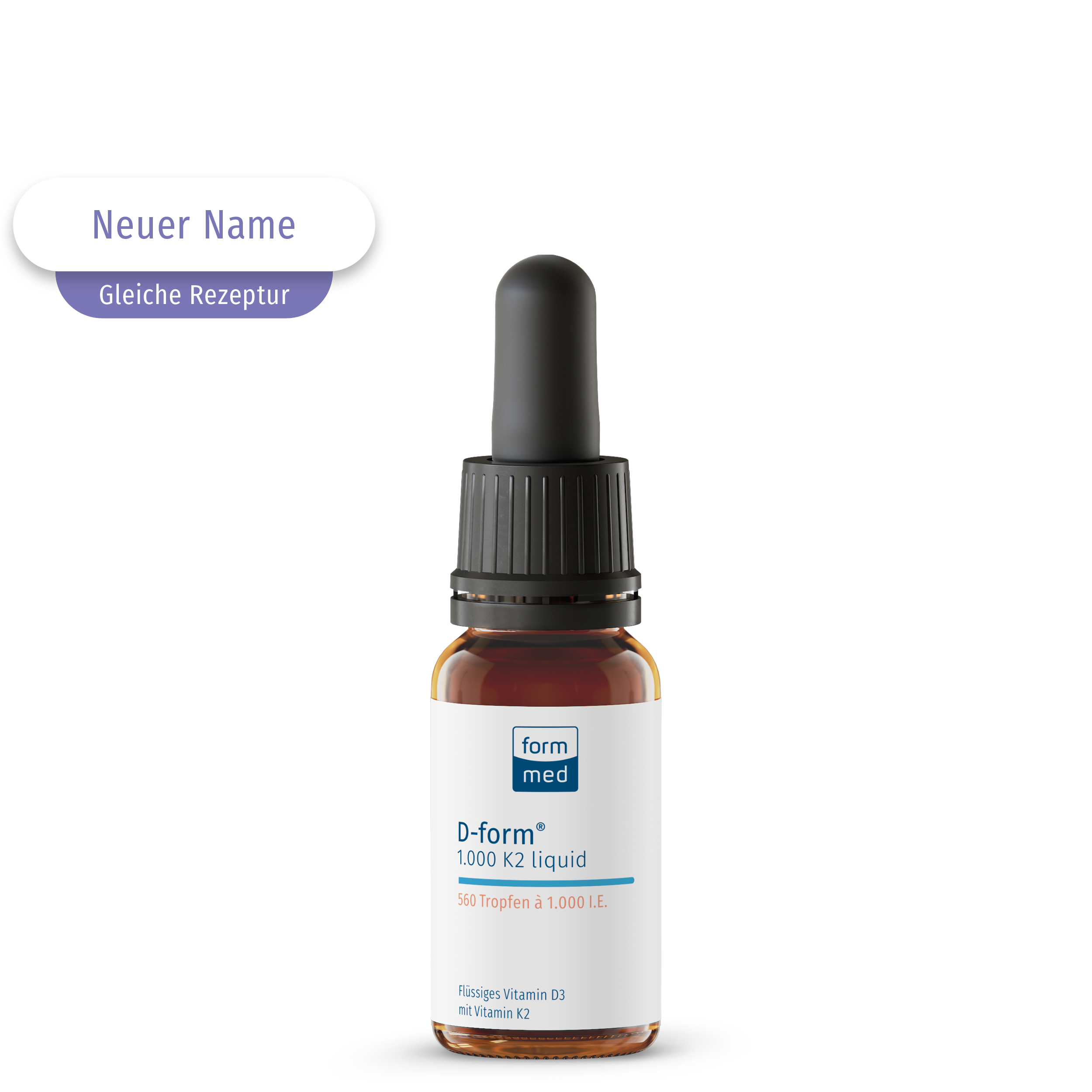
Flüssiges natürliches Vitamin D3 mit Vitamin K2
Ready for immediate dispatch - Delivery time approx. 1-3 days

2,000 I.U. (50 µg) Vitamin D3 plus Pantothenic acid
Ready for immediate dispatch - Delivery time approx. 1-3 days
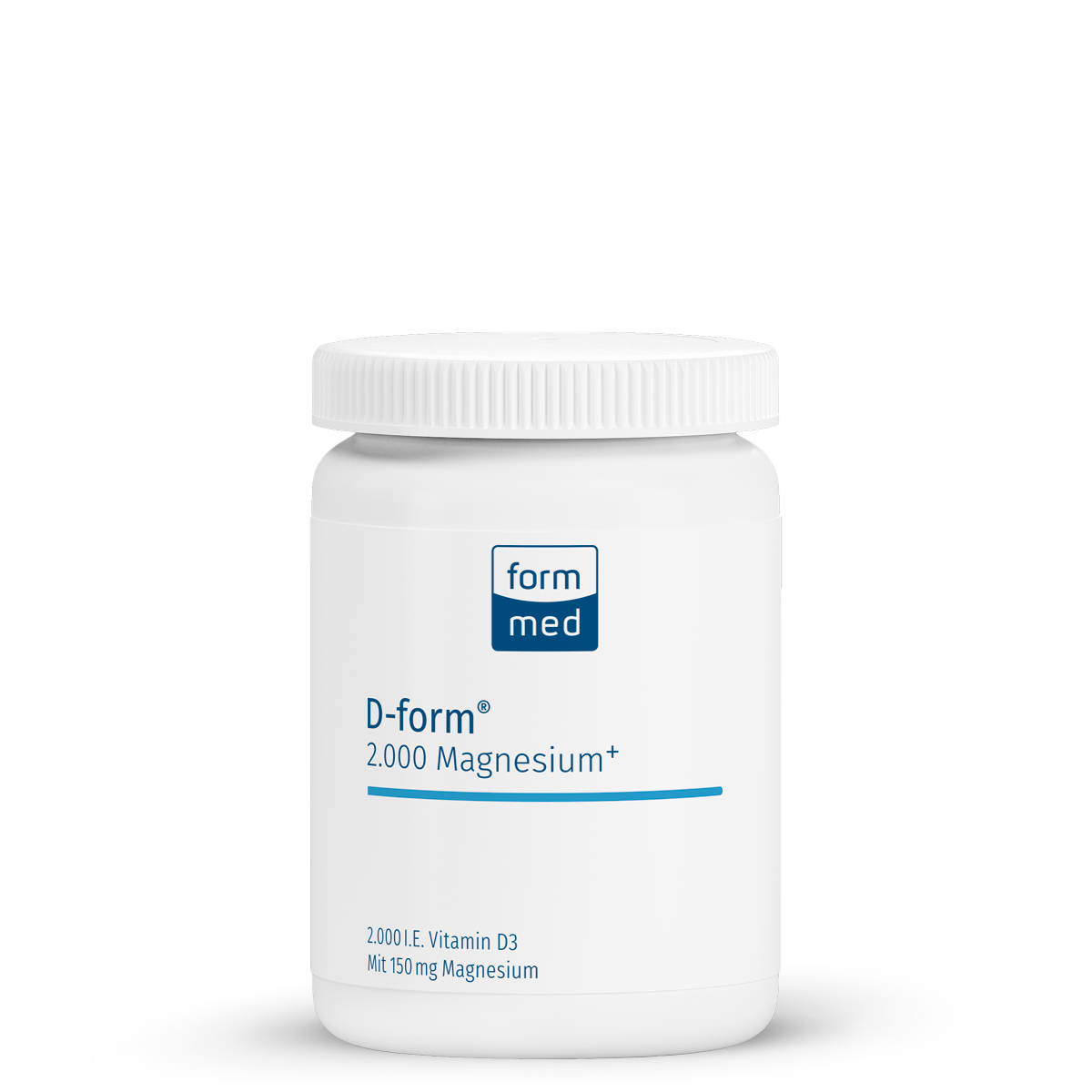
2,000 I.U. (50 µg) Vitamin D3 with 150 mg Magnesium plus Pantothenic acid
Ready for immediate dispatch - Delivery time approx. 1-3 days
References
De Niet, S. et al. (2018): A Randomized Study to Compare a Monthly to a Daily Administration of Vitamin D3 Supplementation. Nutrients.10(6): 659. https://www.ncbi.nlm.nih.gov/pmc/articles/PMC6024703/
Grant, W. B. et al. (2025): Vitamin D: Evidence-Based Health Benefits and Recommendations for Population Guidelines. Nutrients. 17(2):277. https://pubmed.ncbi.nlm.nih.gov/39861407/
Hollis, B. W. & Wagner, C. L. (2013): The Role of the Parent Compound Vitamin D with Respect to Metabolism and Function: Why Clinical Dose Intervals Can Affect Clinical Outcomes. J Clin Endocrinol Metab. 98(12): 4619–4628. https://pmc.ncbi.nlm.nih.gov/articles/PMC3849670/
Huiberts, L. M. et al. (2021): Effects of vitamin D on mood and sleep in the healthy population: Interpretations from the serotonergic pathway. Sleep Med Rev. 2021 Feb:55:101379. https://pubmed.ncbi.nlm.nih.gov/32987320/
Jolliffe, D. A. et al. (2021): Vitamin D supplementation to prevent acute respiratory infections: a systematic review and meta-analysis of aggregate data from randomised controlled trials. Lancet Diabetes Endocrinol. 9(5):276-292. https://pubmed.ncbi.nlm.nih.gov/33798465/
Ketha, H. et al. (2019): Comparison of the Effect of Daily Versus Bolus Dose Maternal Vitamin D3 Supplementation on the 24,25-dihydroxyvitamin D3 to 25-hydroxyvitamin D3 Ratio. Bone. 110: 321–325. https://www.ncbi.nlm.nih.gov/pmc/articles/PMC5878742/
Martineau, A. R. et al. (2017): Vitamin D supplementation to prevent acute respiratory tract infections: systematic review and meta-analysis of individual participant data. BMJ. 356:i6583. https://pubmed.ncbi.nlm.nih.gov/28202713/
Mazess R. B. et al. (2021): Vitamin D: Bolus Is Bogus—A Narrative Review. JBMR Plus. 5(12): e10567. https://www.ncbi.nlm.nih.gov/pmc/articles/PMC8674779/
Uwitonze, A. M. & Razzaque, M. S. (2018): Role of Magnesium in Vitamin D Activation and Function. J Am Osteopath Assoc. 118(3):181-189. https://pubmed.ncbi.nlm.nih.gov/29480918/