

Perimenopause: How does it manifest and what helps with symptoms?
Even though menopause may still seem far away, hormonal changes begin much earlier. Many women notice the first signs between their mid-30s and mid-40s: cycles become more irregular, mood swings occur more often and sleep disturbances increase. These are often indications of perimenopause – the transitional phase before menopause.
In this guide, you will learn what happens during perimenopause, which symptoms are typical, and what you can do to naturally support your body through this hormonal transition.
What Happens During Perimenopause?
Perimenopause is the first phase of the hormonal transition leading up to menopause. For many women, perimenopause begins at around40 years of age. It can also start earlier or later – most commonly between the ages of 35 and 45.
Although menstruation often still occurs regularly, the balance of female sex hormones begins to shift in the background: Progesterone production decreases first, while estrogen levels initially remain stable. Estrogen then begins to decline with the onset of what is referred to as the perimenopause.
Signs of perimenopause may include:
- Ovulation becomes less frequent.
- The menstrual cycle may shorten or lengthen.
- Hormone production becomes increasingly irregular.
- Initial symptoms may appear.
The duration of perimenopause also varies from person to person. It may last from several months to several years.
Perimenopause: Recognizing Symptoms
Hormonal changes affect not only the menstrual cycle. They can also influence physical and emotional wellbeing. Many women notice stronger premenstrual symptoms (PMS) during perimenopause – even if they never experienced them before.
Typical symptoms of perimenopause include:
- Irregular cycles – including shorter or longer cycles, as well as spotting
- Mood swings with irritability and nervousness
- Sleep disturbances such as difficulty falling asleep or frequent nighttime waking
- Hot flashes or night sweats
- Headaches and breast tenderness
- Difficulty concentrating
- Low energy and fatigue
Not every woman experiences all perimenopause symptoms – and their intensity can vary. Being mindful of these changes can help support the body in a targeted way.
What Helps During Perimenopause?
Regular physical activity, restorative sleep and a balanced diet form the foundation for physical and emotional wellbeing during perimenopause. Sugar and refined flour should be reduced as much as possible to help prevent blood sugar fluctuations and mood swings. Fresh vegetables, healthy fats, high-quality protein and fiber-rich whole grains, on the other hand, provide optimal nourishment.
Two micronutrients are particularly important:
- Vitamin B6 contributes to normal psychological and nervous system function as well as the regulation of hormonal activity – including progesterone. This is especially relevant during perimenopause, as additional hormonal fluctuations may intensify symptoms.
- Magnesium supports normal energy metabolism and helps reduce tiredness and fatigue. It also contributes to normal psychological, nervous system and muscle function and may help maintain emotional balance during perimenopause.
By the way: The sleep hormone melatonin helps reduce the time it takes to fall asleep – you can find more information in the corresponding FormMed guide.
Perimenopause: Herbal Remedies from Traditional Women’s Medicine
In addition to a balanced diet and targeted micronutrient support, certain plants can accompany the perimenopause. In traditional women’s medicine, various herbal remedies have been used for centuries to support women during hormonal transition phases.
Ashwagandha
Ashwagandha, also known as winter cherry, is considered an adaptogen – substances traditionally used to support the body during phases of increased demand. In Ayurvedic medicine, the root has long been used for inner restlessness and periods of heightened stress. For these reasons, Ashwagandha is also popular during the menopausal transition.
Lady’s Mantle
Lady’s mantle is a classic plant in traditional women’s medicine and has been used for generations during hormonal transition phases – particularly in the second half of the cycle. Research discussions around lady’s mantle explore potential effects on hormonal balance.
Chaste Tree (Vitex agnus-castus)
Chaste tree has been known since antiquity for use in connection with premenstrual symptoms (PMS) and irregular cycles. In monastic herb gardens, chaste tree was a staple remedy traditionally associated with natural progesterone balance and its potential influence on emotional wellbeing.
Yarrow
Yarrow is another traditional plant used in women’s herbal medicine – mainly in contexts related to hormones, the menstrual cycle, menstruation and emotional wellbeing.
Wild Yam
Wild yam contains the plant compound diosgenin, whose structure resembles that of the body’s own progesterone. For this reason, wild yam has long played a role in traditional women’s medicine, particularly in relation to hormonal topics and progesterone.
Conclusion: Supporting Perimenopause with Micronutrients
Perimenopause is the phase preceding menopause – marked by the first hormonal changes, which can appear differently and vary in intensity from woman to woman.
Alongside sufficient exercise, sleep and a balanced diet, targeted micronutrients play an important role, especially vitamin B6 and magnesium. They support hormonal balance, psychological wellbeing and the nervous system during perimenopause. Herbal remedies used in traditional women’s medicine have also proven valuable over generations – including lady’s mantle, chaste tree, yarrow and wild yam.
Because this transition often begins gradually, it is worthwhile to pay attention to early changes. Which micronutrients and plant extracts are suitable individually should ideally be discussed with a therapist – this ensures effective support during perimenopause.
Suitable FormMed Supplements
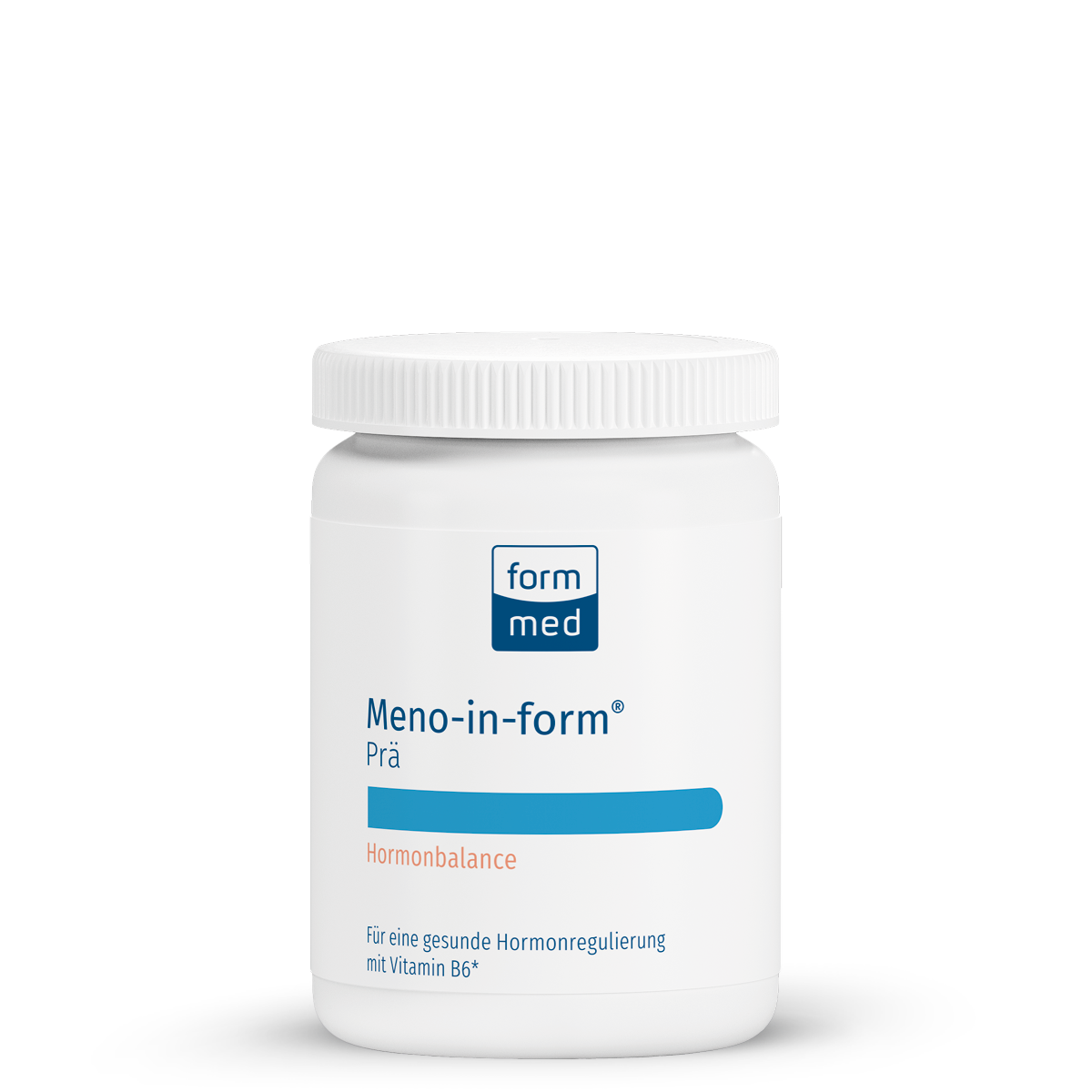
Micronutrients for women in the premenopause
Ready for immediate dispatch - Delivery time approx. 1-3 days

Ready for immediate dispatch - Delivery time approx. 1-3 days
Ready for immediate dispatch - Delivery time approx. 1-3 days
References
Csupor, D. et al. (2019): Vitex agnus-castus in premenstrual syndrome: A meta-analysis of double-blind randomised controlled trials. Complement Ther Med. 47:102190. https://pubmed.ncbi.nlm.nih.gov/31780016/
Depypere, H. T. et al. (2014): Herbal preparations for the menopause: beyond isoflavones and black cohosh. Maturitas. 77(2):191-4. https://pubmed.ncbi.nlm.nih.gov/24314619/
Erdélyi, A. et al. (2023): The Importance of Nutrition in Menopause and Perimenopause—A Review. Nutrients. 16(1):27. https://pmc.ncbi.nlm.nih.gov/articles/PMC10780928/
Far, B. F. et al. (2023): Achillea millefolium: Mechanism of action, pharmacokinetic, clinical drug-drug interactions and tolerability. Heliyon. 9(12):e22841. https://pmc.ncbi.nlm.nih.gov/articles/PMC10703637/
Gopal, S. et al. (2021): Effect of an ashwagandha (Withania Somnifera) root extract on climacteric symptoms in women during perimenopause: A randomized, double-blind, placebo-controlled study. J Obstet Gynaecol Res. 47(12):4414-4425. https://pubmed.ncbi.nlm.nih.gov/34553463/
Jakimiuk, K. & Tomczyk, M. (2024): A review of the traditional uses, phytochemistry, pharmacology, and clinical evidence for the use of the genus Alchemilla (Rosaceae). J Ethnopharmacol. 320:117439. https://pubmed.ncbi.nlm.nih.gov/37981119/
Mehrnoush, V. et al. (2021): Efficacy of the Complementary and Alternative Therapies for the Management of Psychological Symptoms of Menopause: A Systematic Review of Randomized Controlled Trials. J Menopausal Med. 27(3):115-131. https://pubmed.ncbi.nlm.nih.gov/34989185/
Naseri, R. et al. (2019): Comparison of Vitex agnus-castus Extracts with Placebo in Reducing Menopausal Symptoms: A Randomized Double-Blind Study. Korean J Fam Med. 40(6):362–367. https://pmc.ncbi.nlm.nih.gov/articles/PMC6887765/
Porri, D. et al. (2021): Effect of magnesium supplementation on women's health and well-being. NFS Journal. 23:30-36. https://www.sciencedirect.com/science/article/pii/S2352364621000079


