Strengthen your immune system – the 4 most important vitamins and minerals
Table of Contents
- How Can I Strengthen My Immune System?
- Vitamin C: Activating the Immune System and Protecting Cells
- Vitamin D Regulates the Immune System
- Zinc for the Immune System and Mucous Membranes
- Selenium for the Immune System: Antibodies and Cellular Protection
- Home Remedies for the Immune System: Beta-Glucan and Green Tea
- Conclusion: The Most Important Micronutrients for a Strong Immune System
- Suitable FormMed Supplements
- References
Whether it's flu season, cold winter months or a stressful daily routine – the immune system is challenged every day. While some people hardly ever get sick, others struggle with repeated infections. But why is that? One key factor is nutrition: for the immune system to function optimally, it relies on a variety of micronutrients. Vitamin C, Vitamin D, zinc and selenium are particularly well-studied in this regard.
In this guide, you’ll learn how to strengthen your immune system and which top micronutrients offer targeted support.
How Can I Strengthen My Immune System?
The immune system is not a rigid shield, but a highly complex, adaptive system that is challenged daily. It responds sensitively to everything we expose it to – but also to everything we use to strengthen it.
A healthy lifestyle is therefore one of the most important factors for a strong immune system:
- A balanced, plant-based diet provides vitamins, minerals, antioxidants, and phytonutrients – all essential for the immune system on a daily basis.
- Moderate endurance exercise has a particularly positive effect on the immune system. At the same time, physical activity helps reduce stress – a factor that is proven to weaken immune defenses.
- Proper rest and adequate sleep are essential for the body’s regeneration. Immune cells also require recovery phases in order to renew themselves.
Vitamin C: Activating the Immune System and Protecting Cells
Vitamin C supports the immune system by participating in the release of signaling molecules. These in turn attract immune cells like lymphocytes and macrophages to the site of action – activating the immune response.
At the same time, vitamin C helps protect cells from the effects of an infection: during immune defense, free radicals are produced to combat viruses and bacteria. To prevent excessive oxidative stress, antioxidants are essential – vitamin C supports antioxidant cell protection.
Good dietary sources of vitamin C include citrus fruits, rose hips, sea buckthorn, bell peppers, broccoli, kale, and spinach.
Vitamin D Regulates the Immune System
Vitamin D supports immune modulation. This means it specifically regulates the immune response and prevents both underreaction and overreaction of the immune system. Additionally, vitamin D is involved in the production of substances that directly eliminate viruses and bacteria (antimicrobial peptides).
Since vitamin D is primarily synthesized through the skin via sunlight exposure, vitamin D levels are often critically low in winter – precisely when the risk of catching a cold is high and the immune system is particularly challenged.
Zinc for the Immune System and Mucous Membranes
Zinc plays an essential role in cell division. Proper cell division is especially important when immune cells need to multiply quickly in acute situations. In this way, zinc is involved in the formation and activation of immune cells and supports the integrity of the skin and mucous membranes – the body’s first line of defense against pathogens like cold viruses.
Good dietary sources of zinc include meat and dairy products, as well as legumes, oats, and nuts. The body generally absorbs zinc better from animal-based foods. Plant-based foods contain a substance that inhibits zinc absorption in the intestines – so-called phytates.
Selenium for the Immune System: Antibodies and Cellular Protection
Selenium is important for the activity of certain immune cells – including natural killer cells. In addition, selenium is involved in the production of antibodies. Antibodies are specific proteins of the immune system that bind to pathogens to mark and neutralize them. Furthermore, selenium protects cells from oxidative stress.
Major dietary sources of selenium include Brazil nuts, meat, fish, and eggs. In many regions – particularly in Central and Northern Europe – soils are naturally low in selenium. As a result, plant-based foods often contain only small amounts of selenium, making it more difficult to meet the body’s requirements through diet alone.
Home Remedies for the Immune System: Beta-Glucan and Green Tea
In addition to classic micronutrients, there are other bioactive substances that may be of interest as part of a balanced diet. The following two home remedies from nutrition are believed to help strengthen the immune system:
- Beta-glucan is a dietary fiber with potential effects on the immune system. Studies show that beta-glucans interact with immune cells in the gut – provided they are specifically linked (beta-1,3/1,6-glucan). This applies to beta-glucans from yeast and medicinal mushrooms such as shiitake.
- Green tea provides a wide range of secondary plant compounds – especially catechins like EGCG (epigallocatechin gallate). Studies suggest that drinking just one cup of green tea a day or gargling with green tea may reduce the risk of upper respiratory tract infections such as colds or flu.
Conclusion: The Most Important Micronutrients for a Strong Immune System
A good supply of vitamin C, vitamin D, zinc, and selenium can support the immune system – this is scientifically confirmed. Especially during times of increased stress such as winter or stressful periods, it's worth taking a closer look at micronutrient intake. Valuable plant compounds that are part of a healthy diet also show promising effects in studies – including beta-glucans from yeast and medicinal mushrooms, as well as green tea.
High-quality micronutrient supplements can also help to specifically meet daily vitamin and mineral requirements. They make an important contribution to a strong immune system in everyday life.
Suitable FormMed Supplements

Ready for immediate dispatch - Delivery time approx. 1-3 days
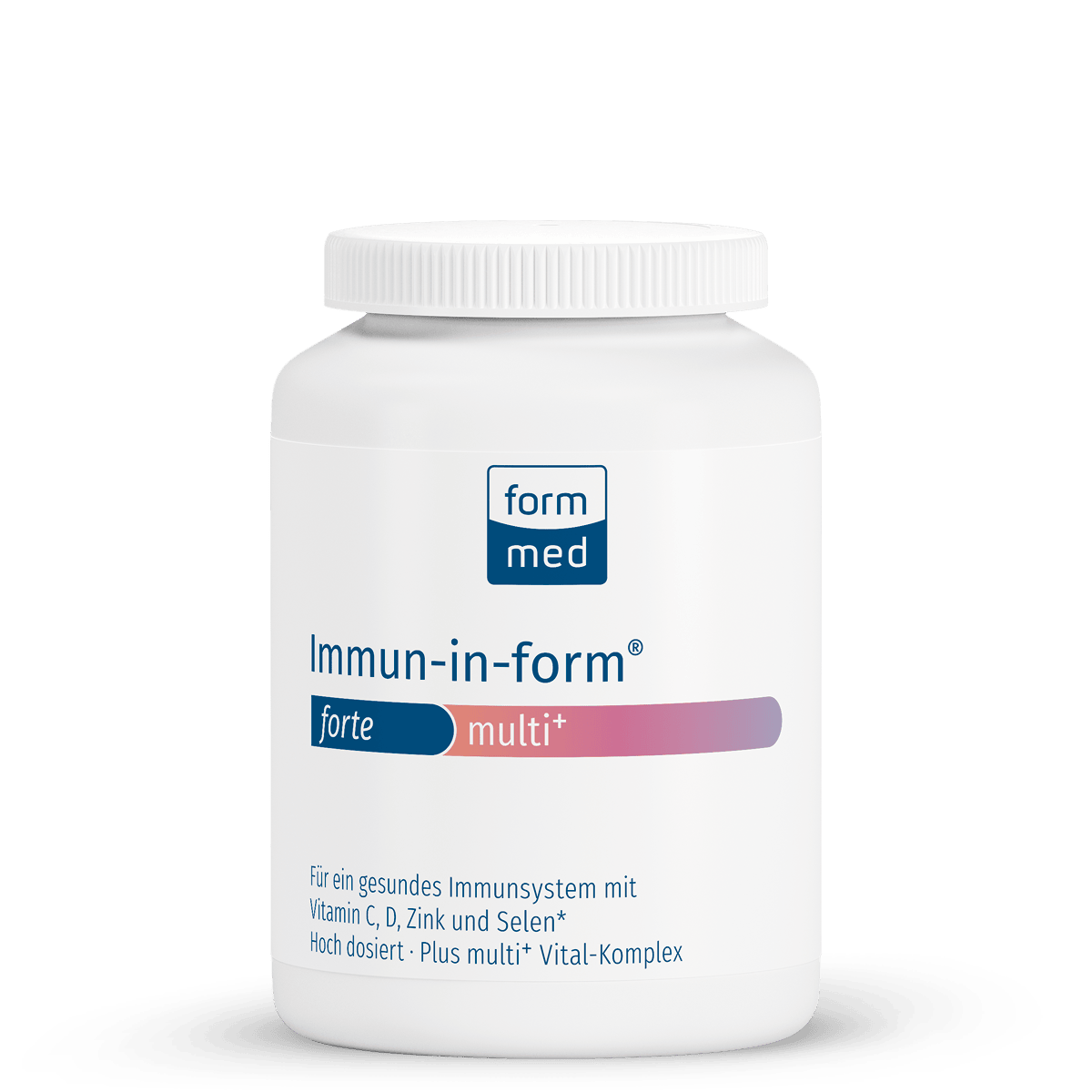
Ready for immediate dispatch - Delivery time approx. 1-3 days
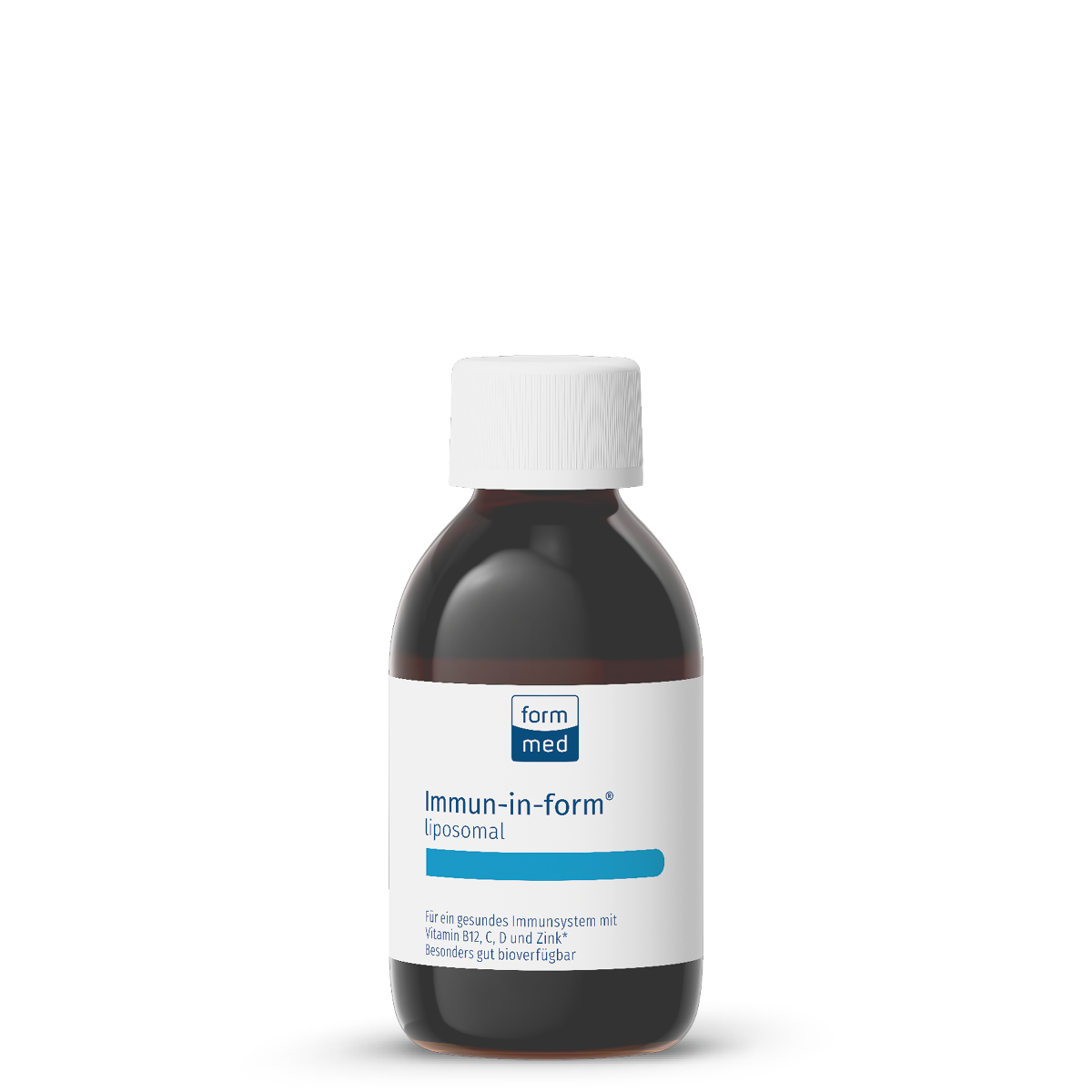
Ready for immediate dispatch - Delivery time approx. 1-3 days
References
Chen, Y. et al. (2023): Tea consumption and risk of lower respiratory tract infections: a two-sample mendelian randomization study. Eur J Nutr. 62(1):385-393. https://pubmed.ncbi.nlm.nih.gov/36042048/
De Marco Castro, E. et al. (2021): β-1,3/1,6-Glucans and Immunity: State of the Art and Future Directions. Mol Nutr Food Res. 65(1):e1901071. https://pubmed.ncbi.nlm.nih.gov/32223047/
Gombart, A. F. et al. (2020): A Review of Micronutrients and the Immune System-Working in Harmony to Reduce the Risk of Infection. Nutrients. 12(1):236. https://pubmed.ncbi.nlm.nih.gov/31963293/
Munteanu, C. & Schwartz, B. (2022): The relationship between nutrition and the immune system. Front Nutr. 9:1082500. https://pubmed.ncbi.nlm.nih.gov/36570149/
Mitra, S. et al. (2022): Exploring the Immune-Boosting Functions of Vitamins and Minerals as Nutritional Food Bioactive Compounds: A Comprehensive Review. Molecules. 27(2):555. https://pubmed.ncbi.nlm.nih.gov/35056870/
Umeda, M. et al. (2021): Preventive effects of tea and tea catechins against influenza and acute upper respiratory tract infections: a systematic review and meta-analysis. Eur J Nutr. 60(8):4189-4202. https://pubmed.ncbi.nlm.nih.gov/34550452/