The right Vitamin D dosage for adults and children
Table of Contents
- Vitamin D – wie viel braucht man am Tag?
- Vitamin D im Winter und Sommer – wann bildet der Körper genug?
- Vitamin-D-Dosierung – wie viel ist sinnvoll?
- Vitamin-D-Mangel beheben: Dosierung ist immer individuell
- Fazit: Vitamin-D-Dosierung – das Wichtigste in Kürze
- Häufig gestellte Fragen zur Vitamin-D-Dosierung
- Passende FormMed Präparate
- Literatur
Vitamin D is a special micronutrient because the body can produce it on its own. The required vitamin D therefore does not come only from food, but is largely formed in the skin through sunlight. This makes vitamin D levels dependent on the season: in summer, the body can theoretically produce enough vitamin D, whereas in winter its own production is greatly reduced.
This article explains under which conditions the body can produce sufficient vitamin D on its own and which vitamin D dosage is appropriate in both winter and summer – so you are optimally supplied throughout the entire year.
Vitamin D – How Much Do You Need Per Day?
The German Nutrition Society (DGE) estimates that children from the age of one and adults require 800 IU (international units) of vitamin D per day from food if no vitamin D is produced endogenously. Infants, on the other hand, should consume 400 IU of vitamin D per day.
In practice, however, it is difficult to meet vitamin D requirements through food alone. This is because there are only a few good dietary sources of vitamin D – mainly fatty fish such as herring and salmon, which provide around 500 to 1,000 IU of vitamin D per 100 grams.
In addition, micronutrient experts discuss whether the amount recommended by the DGE is sufficient to achieve optimal blood levels for health.
Vitamin D in Winter and Summer – When Does the Body Produce Enough?
Because vitamin D is found in only a few foods in relevant amounts, the body largely depends on production in the skin. How efficiently this process works is determined not only by the season but also by …
- latitude – UV radiation is weaker further north
- skin type – people with darker skin need to spend more time outdoors
- individual outdoor habits – including the use of sunscreen
- age – as the body’s own production decreases with age
In summer, children and adults can theoretically cover their entire vitamin D needs through endogenous production – provided the sun is shining and they spend enough time outdoors. For lighter skin types, 15 to 30 minutes of sunlight on the face, hands and forearms is theoretically sufficient.
In winter, UV radiation in Central Europe is not strong enough from October to March to produce sufficient vitamin D – even on sunny days, because the sun is too low. Endogenous vitamin D synthesis becomes significant only from a UV index of 3. The UV index can be found in the weather report.
Vitamin D Dosage – How Much Is Recommended?
If you do not know your vitamin D status, you can orient yourself toward the following dosage ranges to support an adequate and safe intake:
- For adults, 1,000 to 2,000 IU of vitamin D is a practical guideline for a good vitamin D dosage in winter.
- Adults who spend little time outdoors in summer or are outdoors mainly in the evening hours may take 1,000 IU of vitamin D per day.
- Children should cover their vitamin D needs through food in winter. Depending on how much fatty fish they eat, children may therefore take 400 to 800 IU of vitamin D per day.
- In summer, UV protection is essential—especially for children’s sensitive skin. Since this greatly reduces vitamin D formation, a daily vitamin D dosage of 400 to 800 IU is also recommended in summer.
The European Food Safety Authority (EFSA) has established a tolerable upper intake level (UL) of 4,000 IU of vitamin D per day for healthy adults and adolescents to avoid long-term health risks. For children aged 1 to 10 years, the upper limit is 2,000 IU per day.
Why an Accurate Status Assessment Is Important
While general guideline values are helpful, effective dosing is a medical matter—especially in cases of deficiency or illness. Whether supplementation is necessary or whether the dosage is appropriate can only be reliably assessed on the basis of an individual vitamin D status.
The relevant laboratory marker is 25-OH-vitamin D in blood serum. 25-OH-vitamin D is the storage form of vitamin D: it circulates in the bloodstream and is considered a reliable biomarker for vitamin D status. Vitamin D levels can be determined by a blood test at a doctor’s office or with a certified test in the pharmacy.
| 25-OH-vitamin D | Assessment of status |
| below 30 nmol/l (below 12 ng/ml) | Severe vitamin D deficiency |
| 30–50 nmol/l (12–20 ng/ml) | Insufficient status |
| 50–75 nmol/l (20–30 ng/ml) | Desirable range according to D-A-CH reference values |
| 75–125 nmol/l (30–50 ng/ml) | Optimal range according to international scientific literature |
| above 150 nmol/l (above 60 ng/ml) | Supplementation not recommended without medical supervision |
Correcting Vitamin D Deficiency: Dosage Is Always Individual
A vitamin D deficiency cannot be corrected with a one-size-fits-all approach. The appropriate dosage depends on individual factors – such as the measured vitamin D level, body weight and individual metabolic situation. For this reason, vitamin D deficiency should always be treated by a healthcare professional.
Therapists determine not only the effective vitamin D dosage but also the dosage schedule – for example daily or weekly – and define how long vitamin D should be taken. Proper intake is essential for effectively raising vitamin D levels.
They can also assess the risk of overdosage and are familiar with possible interactions between vitamin D and medications.
Conclusion: Vitamin D Dosage – The Most Important Points at a Glance
How much vitamin D to supplement per day depends on individual needs – therefore, determining your vitamin D level (25-OH-D) with a healthcare professional is recommended. A laboratory-based, professionally guided dosage provides the best foundation for safe and effective vitamin D intake.
If you do not know your vitamin D level, you can orient yourself toward the following dosage recommendations:
- Winter: 1,000 to 2,000 IU daily for adults and 400 to 800 IU for children
- Summer: 1,000 IU daily for adults and 400 to 800 IU for children
Häufig gestellte Fragen zur Vitamin-D-Dosierung
Suitable FormMed Supplements

2,000 I.U. (50 µg) natural Vitamin D3 with Vitamin K2 plus Pantothenic acid
Ready for immediate dispatch - Delivery time approx. 1-3 days
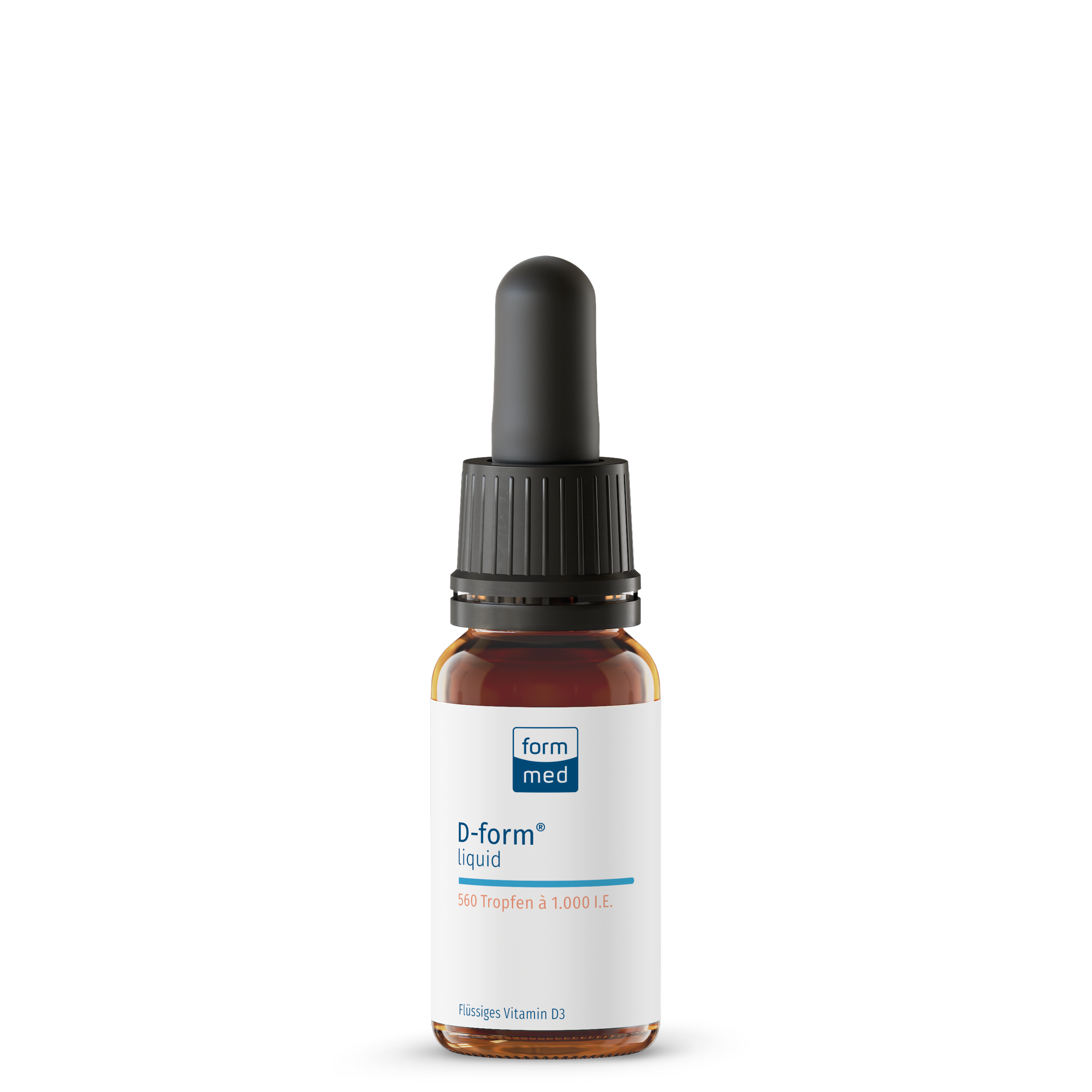
Liquid natural Vitamin D3 with Vitamin K2
Ready for immediate dispatch - Delivery time approx. 1-3 days
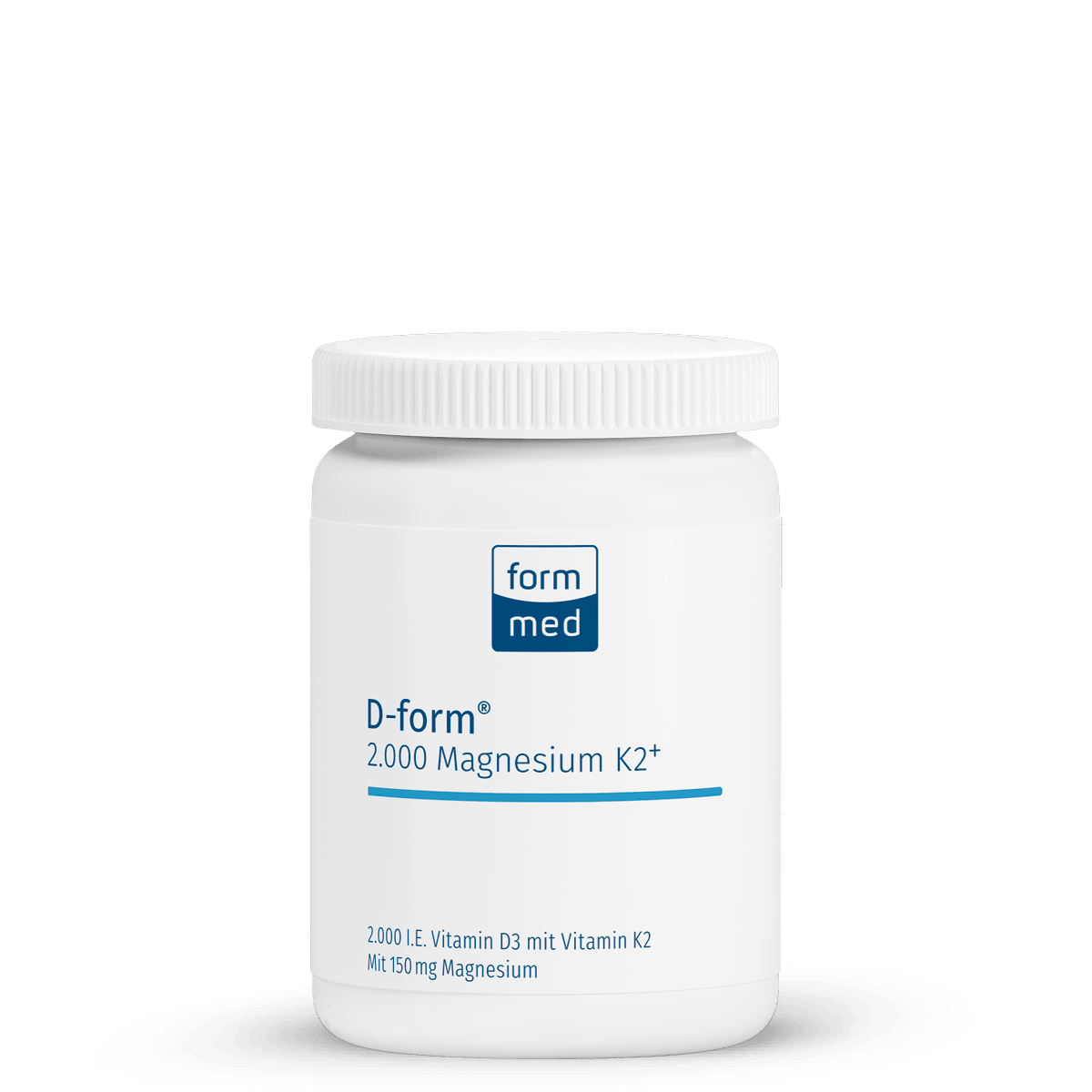
2,000 I.U. (50 µg) Vitamin D3 with 150 mg Magnesium and Vitamin K2 plus Pantothenic acid
Ready for immediate dispatch - Delivery time approx. 1-3 days
References
Corsello, A. et al. (2023): Vitamin D in pediatric age: Current evidence, recommendations, and misunderstandings. Front Med (Lausanne). 10:1107855. https://pmc.ncbi.nlm.nih.gov/articles/PMC10060648/
Deutsche Gesellschaft für Ernährung e. V. (2012): Ausgewählte Fragen und Antworten zu Vitamin D. Gemeinsame FAQ des BfR, der DGE und des MRI vom 22. Oktober 2012. https://www.dge.de/gesunde-ernaehrung/faq/vitamin-d/, abgerufen am: 07.07.2025.
Deutsche Gesellschaft für Ernährung e. V. (2012): Referenzwert. Vitamin D. https://www.dge.de/wissenschaft/referenzwerte/vitamin-d/, abgerufen am: 07.07.2025.
EFSA Panel on Nutrition, Novel Foods and Food Allergens (2023): Scientific opinion on the tolerable upper intake level for vitamin D, including the derivation of a conversion factor for calcidiol monohydrate. EFSA Journal. https://efsa.onlinelibrary.wiley.com/doi/10.2903/j.efsa.2023.8145
Ekmekcioglu, C. & Poteser, M. (2025): The Optimal Protective 25-Hydroxyvitamin D Level for Different Health Outcomes in Adults: A Brief Summary of Dose–Response Meta-Analyses. Metabolites. 15(4):264. https://pmc.ncbi.nlm.nih.gov/articles/PMC12029153/
Grant, W. B. et al. (2025): Vitamin D: Evidence-Based Health Benefits and Recommendations for Population Guidelines. Nutrients. 17(2):277. https://pmc.ncbi.nlm.nih.gov/articles/PMC11767646/
Kift, R. C. & Webb, A. R. (2024): Globally Estimated UVB Exposure Times Required to Maintain Sufficiency in Vitamin D Levels. Nutrients. 16(10):1489. https://pmc.ncbi.nlm.nih.gov/articles/PMC11124381/