Strengthening mitochondria – nutrition, micronutrients and exercise for more energy
Table of Contents
- Was sind Mitochondrien?
- Mitochondrien-Funktion: Energiegewinnung durch Zellatmung
- Mitochondrien und der Zusammenhang mit Müdigkeit, Alterung und Krankheiten
- Wie kann man Mitochondrien stärken?
- Mikronährstoffe für Mitochondrien: Vitamine, Eisen, Magnesium, Q10 und mehr
- Fazit: Mitochondrien stärken für mehr Energie im Alltag
- Häufig gestellte Fragen zu Mitochondrien
- Passende FormMed Präparate
- Literatur
Mitochondria are tiny yet indispensable: as the “powerhouses of the cells,” they provide the energy our body needs for all functions – from heartbeat and muscle movement to concentration and cognitive performance. But what exactly are mitochondria, how does cellular respiration work – and how can you support mitochondrial function?
In this guide, you will learn why these cellular power plants are so important for vitality and performance, how nutrition, exercise and lifestyle influence mitochondrial function, and which supplements may play a role.
What Are Mitochondria?
Mitochondria are small but vital cellular organelles found in almost all body cells. Their main task is to produce energy in the form of adenosine triphosphate (ATP) – the body’s universal energy carrier. This is why mitochondria are often referred to as the “powerhouses of the cells.”
Large numbers of mitochondria are found in organs with high energy needs, such as muscles, the nervous system, the heart and the liver. Depending on how much energy a cell produces, it can contain hundreds to thousands of these tiny power plants.
Mitochondrial Function: Energy Production Through Cellular Respiration
The central function of mitochondria is energy production. ATP, the body’s universal energy carrier, provides energy for nearly all life processes: from muscle contraction to nerve signaling and the creation of new molecules. Because ATP can only be stored in limited amounts, mitochondria must constantly produce it. This happens through cellular respiration, which takes place in several steps:
- Glycolysis: Sugar (glucose) is broken down into smaller molecules in the cell plasma – producing a small amount of energy.
- Oxidative decarboxylation: The molecules are converted into a form that the mitochondria can further process.
- Citric acid cycle: In the mitochondria, nutrients are further broken down and important intermediates for energy production are formed.
- Respiratory chain: This is where most ATP is produced. Electrons drive an energy flow that enables the formation of ATP.
But mitochondria have additional functions: they are involved in programmed cell death (apoptosis), cell growth and cell communication. This makes mitochondria indispensable not only for energy production but also for protecting and renewing cells.
Mitochondria and Their Connection to Fatigue, Aging and Disease
When mitochondrial function is impaired, the first signs often include fatigue and exhaustion. The body can then produce less ATP – energy reserves are depleted more quickly.
As we age, mitochondrial performance naturally declines. You can learn more about the connection between mitochondria and aging in our Longevity guide.
In addition, mitochondria can be affected by various health conditions and environmental factors, as they react sensitively to stress and harmful substances. Diseases involving impaired mitochondrial function are known as mitochondrial disorders or mitochondriopathies. They are often caused by genetic defects and primarily affect organs with high energy demand such as muscles, the brain and the heart. Examples of mitochondrial diseases include Leigh syndrome (a rare metabolic disorder) and MELAS syndrome (mitochondrial encephalomyopathy).
How Can You Support Mitochondria?
If you want to support your mitochondria, several areas can make a difference: nutrition, exercise, lifestyle and targeted micronutrient intake. The goal is to optimally support cellular energy production and protect mitochondria from stressors.
Regular Exercise and Physical Activity
Exercise stimulates the formation of new mitochondria. A combination of endurance and strength training is particularly beneficial – ideally outdoors, where fresh air provides additional oxygen. However, moderate activities such as walking or simple home workouts can also support mitochondrial function. Consistency is key – even small daily habits help keep mitochondria active.
- Walking: Just 30 minutes of brisk walking per day stimulates mitochondria, promotes circulation and is an excellent option for those who are not yet ready for regular intensive exercise.
- Simple at-home exercises: Gentle stretching, yoga or short equipment-free workouts are ideal to keep mitochondria active in daily life.
- Endurance training such as running, swimming and cycling: Longer, steady activities improve stamina and increase the number of mitochondria in the muscles.
- Strength training for muscle growth: More muscle mass increases energy demand and stimulates mitochondria to work more efficiently.
- Interval training (HIIT): This training method is considered particularly effective for stimulating the formation and performance of mitochondria. It alternates short, intense phases with recovery periods.
Healthy Lifestyle
A healthy lifestyle significantly influences mitochondrial function. Even small daily adjustments can make a noticeable difference.
- Adequate sleep: Important repair and regeneration processes occur at night – including in the mitochondria. Getting 7–9 hours of sleep allows cells to recover and provide full energy the next day.
- Stress reduction: Chronic stress increases oxidative stress and can impair mitochondrial energy production. Short breaks and relaxation techniques like meditation, yoga or breathing exercises help calm the nervous system and reduce cellular strain.
- Avoiding harmful substances: Mitochondria are sensitive to toxins and oxidative stress. Avoiding smoking and limiting alcohol as well as reducing exposure to environmental pollutants can noticeably relieve cellular stress.
Balanced Nutrition and Intermittent Fasting
A balanced diet forms the foundation for strong mitochondria. It supplies the nutrients needed for energy metabolism and protects cells from stress. Fresh, minimally processed foods are especially important.
- Vegetables and fruit: Plant-based foods are rich in antioxidants that protect cells from oxidative stress.
- High-quality protein: Legumes, nuts, fish and eggs provide essential amino acids for building enzymes and cellular structures.
- Healthy fats: Omega-3 fatty acids EPA and DHA from fish or algae oil are important membrane components and support normal heart and brain function – two organs with especially high energy demands.
An approach currently discussed in scientific research is intermittent fasting. This method alternates periods of eating with fasting – for example, the 16:8 method, where food is consumed only within an eight-hour window. During fasting phases, cellular repair processes increase. Studies suggest that fasting may relieve mitochondrial strain and improve their efficiency.
Whether through balanced nutrition or fasting intervals – the key is ensuring that mitochondria are consistently supplied with the nutrients they need.
Micronutrients for Mitochondria: Vitamins, Iron, Magnesium, Q10 and More
To function optimally, mitochondria require not only macronutrients such as carbohydrates and fats but also micronutrients from the diet. Micronutrients act as cofactors in energy metabolism and support the efficient conversion of macronutrients into energy. Adequate intake helps maintain mitochondrial performance.
B Vitamins
B vitamins play a central role in energy metabolism and are essential for mitochondrial function. They are involved in the breakdown of carbohydrates and are important components of the respiratory chain, the process in which ATP is produced within mitochondria.
Learn more about each B vitamin and its specific functions in our guide on B vitamins and energy metabolism.
Iron
Iron is a crucial trace element for energy supply and indispensable for oxygen transport in the blood. Through hemoglobin in red blood cells, iron binds oxygen in the lungs and delivers it to tissues where it is needed for energy production. Adequate iron status is therefore essential for mitochondrial function.
However, both deficiency and excess iron can be problematic, so it is advisable to have iron levels checked.
Magnesium
Magnesium is a mineral involved in more than 300 enzymatic reactions in the body. It contributes to normal energy metabolism by acting as a cofactor for the key enzyme ATP synthase in the mitochondria. Without this enzyme, mitochondria cannot produce energy.
Selenium
Selenium is a trace element with antioxidant properties: it helps protect cells from oxidative stress. This indirectly supports mitochondria, as they are particularly susceptible to free radicals during energy production.
Coenzyme Q10
Coenzyme Q10 is a naturally occurring compound found in mitochondria. It plays a central role in the respiratory chain and is directly involved in ATP formation. The body’s own production of coenzyme Q10 declines with age, making adequate intake through diet increasingly important.
L-Carnitine
L-carnitine is another naturally occurring compound that enables the transport of long-chain fatty acids into the mitochondria, where they are used for energy production. The body can synthesize carnitine from the amino acids lysine and methionine, and it can also be obtained from food—particularly from meat.
Conclusion: Supporting Mitochondria for More Energy in Everyday Life
Mitochondria are the powerhouses of our cells – without them, energy metabolism cannot function. They produce ATP, which every cell needs to perform its tasks. As we age, during periods of ongoing stress or due to unfavorable lifestyle habits, mitochondrial function can decline. Fatigue and reduced resilience may be the result.
The best strategies to support mitochondria are simple and easy to integrate into daily life: regular physical activity, a healthy lifestyle, a balanced diet and, if needed, targeted supplements that support mitochondrial function. Particularly important are B vitamins, magnesium, iron, selenium, coenzyme Q10 and L-carnitine.
Healthy mitochondria provide energy for everyday life and form the foundation for sustained performance and quality of life.
Frequently Asked Questions About Mitochondria
Mitochondria are the powerhouses of the cell: They convert breakdown products from food components – especially pyruvate from glucose and fatty acids – into adenosine triphosphate (ATP), the universal energy currency of the body. This energy is needed for muscle work, metabolic processes and signal transmission in nerve cells.
In addition, mitochondria contribute to calcium storage and play a role in regulating programmed cell death.
Mitochondria produce energy through so-called cellular respiration: Breakdown products from glucose and fatty acids are oxidized in several steps, releasing electrons. These electrons move through the respiratory chain in the inner mitochondrial membrane, creating an electrochemical gradient. This gradient drives the enzyme ATP synthase, which forms adenosine triphosphate (ATP) from it – the universal energy currency of the cell.
Oxygen is required as the final electron acceptor, which is why the process is also referred to as aerobic respiration.
Mitochondrial exhaustion, also known as mitochondrial dysfunction, refers to a state in which mitochondria can no longer provide sufficient energy in the form of adenosine triphosphate (ATP).
The cause is often oxidative stress, which damages the sensitive structures of the mitochondria – promoted, for example, by aging processes, chronic stress or an insufficient supply of certain micronutrients.
When mitochondria do not work properly, a double problem arises: On the one hand, cells lack energy in the form of ATP, which can become noticeable especially in energy-intensive tissues such as muscles, nerves and metabolic organs.
On the other hand, impaired mitochondria produce more reactive oxygen species, which in turn promote oxidative stress and can further burden the mitochondria themselves.
Impaired mitochondrial function (mitochondrial dysfunction) can manifest as chronic fatigue, muscle weakness and reduced physical resilience. Since the nervous system requires particularly large amounts of energy, concentration problems and forgetfulness are also possible signs. Organs with high energy demands, such as the heart and liver, may also be affected.
Since these symptoms are nonspecific and can have many causes, medical evaluation is important.
Smoking, alcohol, lack of exercise and an unbalanced diet can weaken mitochondria. Environmental toxins, pollutants and certain medications can also impair mitochondrial function.
Mitochondria cannot be repaired in the strict sense, but their function can be supported and their number increased through targeted measures.
Regular exercise is considered one of the most effective approaches: Endurance training in particular, such as cycling or running, as well as strength training, stimulates the formation of new mitochondria (mitochondrial biogenesis).
A balanced diet with an adequate supply of micronutrients such as B vitamins and magnesium also plays a role, as these are needed as cofactors for central metabolic processes in the mitochondria.
Erste Verbesserungen können sich bereits nach etwa zwei bis vier Wochen zeigen, die vollständige Anpassung kann jedoch Wochen bis Monate in Anspruch nehmen.
Yes, magnesium is a necessary cofactor for ATP synthase – the enzyme that performs the actual ATP formation in the mitochondria. In this way, magnesium contributes to normal energy metabolism.
Suitable FormMed Supplements
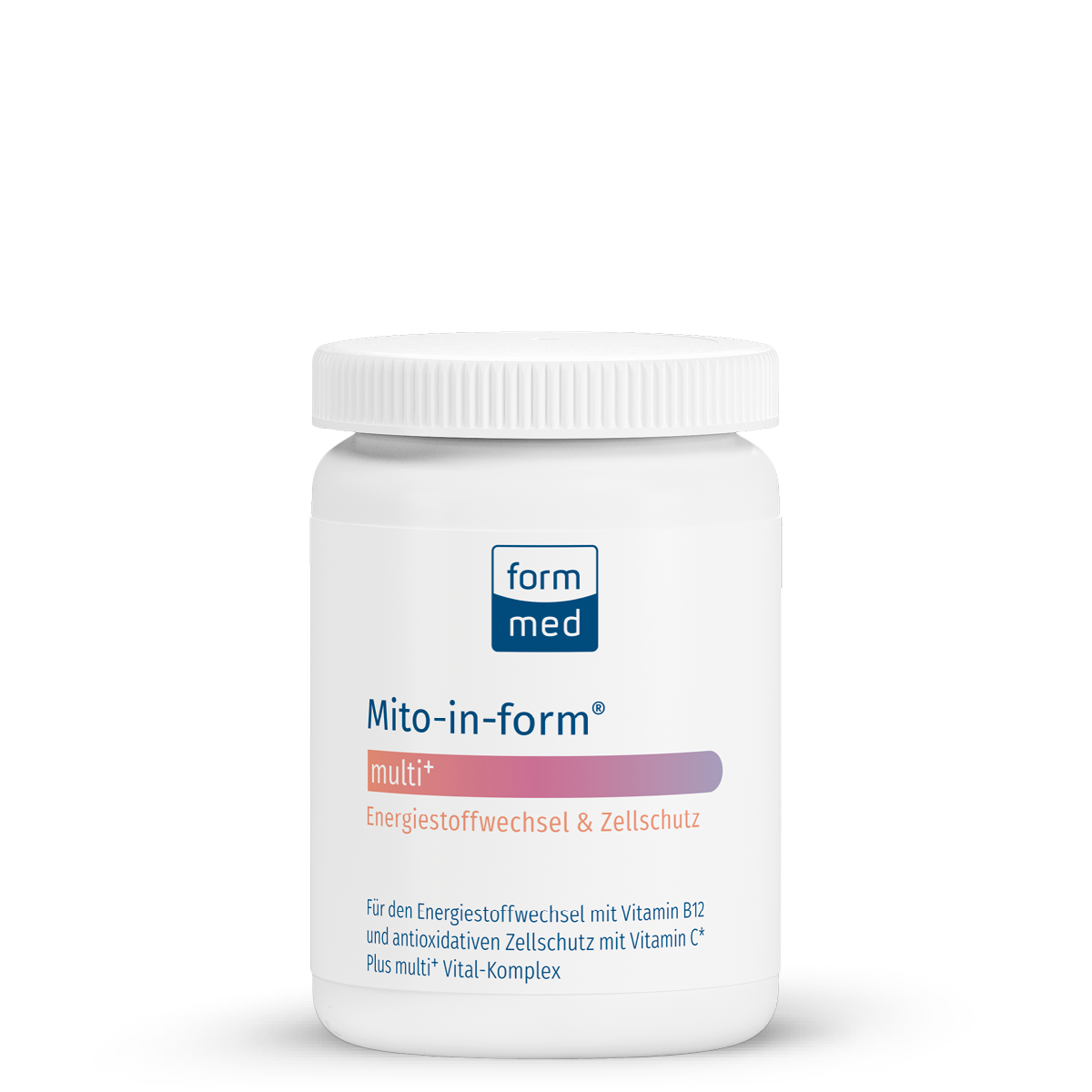
Ready for immediate dispatch - Delivery time approx. 1-3 days

15 mg microencapsulated iron with 150 mg Vitamin C – plus Copper and Vitamin B2
Ready for immediate dispatch - Delivery time approx. 1-3 days

100 mg highly pure fermented Coenzyme Q10 with 200 mg L-Carnitine – plus vitamins C and E
Ready for immediate dispatch - Delivery time approx. 1-3 days
References
Broome, S. C. et al. (2024): Mitochondria as Nutritional Targets to Maintain Muscle Health and Physical Function During Ageing. Sports Med. 54(9):2291–2309. https://pmc.ncbi.nlm.nih.gov/articles/PMC11393155/
Golubnitschaja, O. et al. (2024): Mini-encyclopedia of mitochondria-relevant nutraceuticals protecting health in primary and secondary care—clinically relevant 3PM innovation. EPMA J. 15(2):163–205. https://pmc.ncbi.nlm.nih.gov/articles/PMC11148002/
Hidalgo-Gutiérrez, A. et al. (2021): Metabolic Targets of Coenzyme Q10 in Mitochondria. Antioxidants (Basel). 10(4):520. https://pmc.ncbi.nlm.nih.gov/articles/PMC8066821/
Mehrabani, S. et al. (2020): The effect of fasting or calorie restriction on mitophagy induction: a literature review. J Cachexia Sarcopenia Muscle. 11(6):1447–1458. https://pmc.ncbi.nlm.nih.gov/articles/PMC7749612/
Suomalainen, A. & Nunnari, J. (2024): Mitochondria at the crossroads of health and disease. Cell. 187(11):2601-2627. https://pubmed.ncbi.nlm.nih.gov/38788685/
Zong, Y. et al. (2024): Mitochondrial dysfunction: mechanisms and advances in therapy. Signal Transduct Target Ther. 9(1):124. https://pubmed.ncbi.nlm.nih.gov/38744846/