Vitamin D and sunscreen – what should you bear in mind during the summer?
Summer is the ideal time to replenish your vitamin D stores. During this season, the sun is strong enough for your skin to produce vitamin D effectively with the help of UV radiation. Nevertheless, every second person in Germany has a vitamin D deficiency even in summer. Is this because sunscreen prevents vitamin D production? And should you take vitamin D supplements in summer as a result?
Read the answers here.
Vitamin D: How long should you spend in the sun?
To produce enough vitamin D, you would need to spend between 5 and 25 minutes in direct sunlight between 12 and 3 p.m. during the summer, depending on your skin type. During this time, the face, hands, and parts of the arms and legs should be uncovered. In summer, it is therefore usually possible to produce sufficient vitamin D naturally.
However, using proper sun protection is important. It helps prevent sunburn and long-term consequences such as premature skin aging, wrinkles, and skin cancer.
Can you still produce vitamin D while using sunscreen?
In theory, sunscreen blocks vitamin D production. This is supported by laboratory studies. However, in practice, it’s different: Observational studies show that sunscreen or sun lotion has little effect on vitamin D levels in the blood.
Possible reasons for the differing results between lab and observational studies include:
- In observational studies, a low sun protection factor (SPF 15) was usually tested. The higher the SPF, the less UV radiation reaches the skin. For good skin cancer protection, you should use at least SPF 30.
- Unlike ideal conditions in a lab, most people apply too little sunscreen or do not reapply it regularly. As a result, the sunscreen does not completely block UV rays, and some vitamin D can still be produced.
- Sunscreens protected differently in a usage study: creams with high UVA and low UVB protection allowed better vitamin D production. Vitamin D is produced by UVB radiation.
Who should take vitamin D in the summer?
A vitamin D deficiency caused by sunscreen alone is unlikely. However, there are other factors that can contribute to a vitamin D deficiency in summer. The following risk groups should therefore pay special attention to their vitamin D levels:
- People who expose little skin to sunlight are at a higher risk of vitamin D deficiency – for example, because they cover their skin completely with clothing or rarely spend time outdoors.
- People with dark skin need to stay in the sun longer to produce the same amount of vitamin D as people with fair skin. The reason: dark skin contains more melanin, which absorbs UV radiation.
- Older adults produce vitamin D less efficiently through the skin.
- Babies and children have very sensitive skin and should never be exposed to direct sunlight without protection. Therefore, they produce little to no vitamin D.
- People with severe overweight require more vitamin D. In their case, vitamin D is more extensively stored in fat tissue, making less of it available in the blood.
Conclusion: Vitamin D in Summer
Although studies have not yet confirmed that sunscreen causes a vitamin D deficiency, there is a certain risk when using high sun protection factor (from SPF 30) and frequent reapplication.
Those who want to ensure adequate vitamin D levels in summer despite using sunscreen can take vitamin D supplements – because sun protection should not be compromised. For risk groups in particular, vitamin D supplementation is advisable. For most people, a supplement providing 1,000 International Units per day is suitable during summer.
If you want to know whether your vitamin D levels are sufficient, it’s best to have them measured by a healthcare professional.
Frequently asked questions about vitamin D in summer
For the body’s own production of vitamin D, about 5 to 25 minutes of direct sun on the face, hands and parts of the arms and legs are sufficient in summer, depending on skin type. The ideal time is between 12 noon and 3 p.m., when the sun is at its highest.
In winter, the body’s own vitamin D production is generally not sufficient due to the low position of the sun and reduced UVB radiation.
What matters is not one specific body part, but the total uncovered skin area. According to the German Federal Institute for Risk Assessment, it is sufficient to expose about one quarter of the body surface – face, hands and parts of the arms and legs – to the sun in order to enable sufficient vitamin D production by the body. Depending on skin type and season, 5 to 25 minutes per day are necessary for this.
Despite frequent sun exposure, the body’s own vitamin D production may be limited. Possible reasons include the use of sunscreen with a high sun protection factor, a darker skin type that requires more UV radiation for the same amount of production, and increasing age, as the skin becomes less efficient at producing vitamin D over the years. Severe obesity also plays a role, as vitamin D is increasingly distributed in fatty tissue and therefore less is available in the blood.
In theory, sunscreen blocks the UV-B radiation needed for vitamin D production – this is shown by laboratory studies under controlled conditions. In practice, however, it looks different: Observational studies show that sunscreen has hardly any influence on vitamin D levels in the blood. One reason is that in everyday life, people usually apply less sunscreen and reapply it less often than under laboratory conditions, so enough UV-B radiation still reaches the skin.
A vitamin D deficiency can manifest as fatigue, increased susceptibility to infections, hair loss, muscle weakness, bone pain, sleep problems and mood swings. However, these symptoms are nonspecific and can also have other causes, which is why medical evaluation is recommended.
In summer, the body can generally produce enough vitamin D through sun exposure. Nevertheless, supplementation can also be useful during this season – especially for certain risk groups: people who expose little skin to the sun, people with darker skin, older people and people with severe obesity. Anyone who wants to make sure they are well supplied can also take a low-dose vitamin D preparation in summer.
Suitable FormMed Supplements
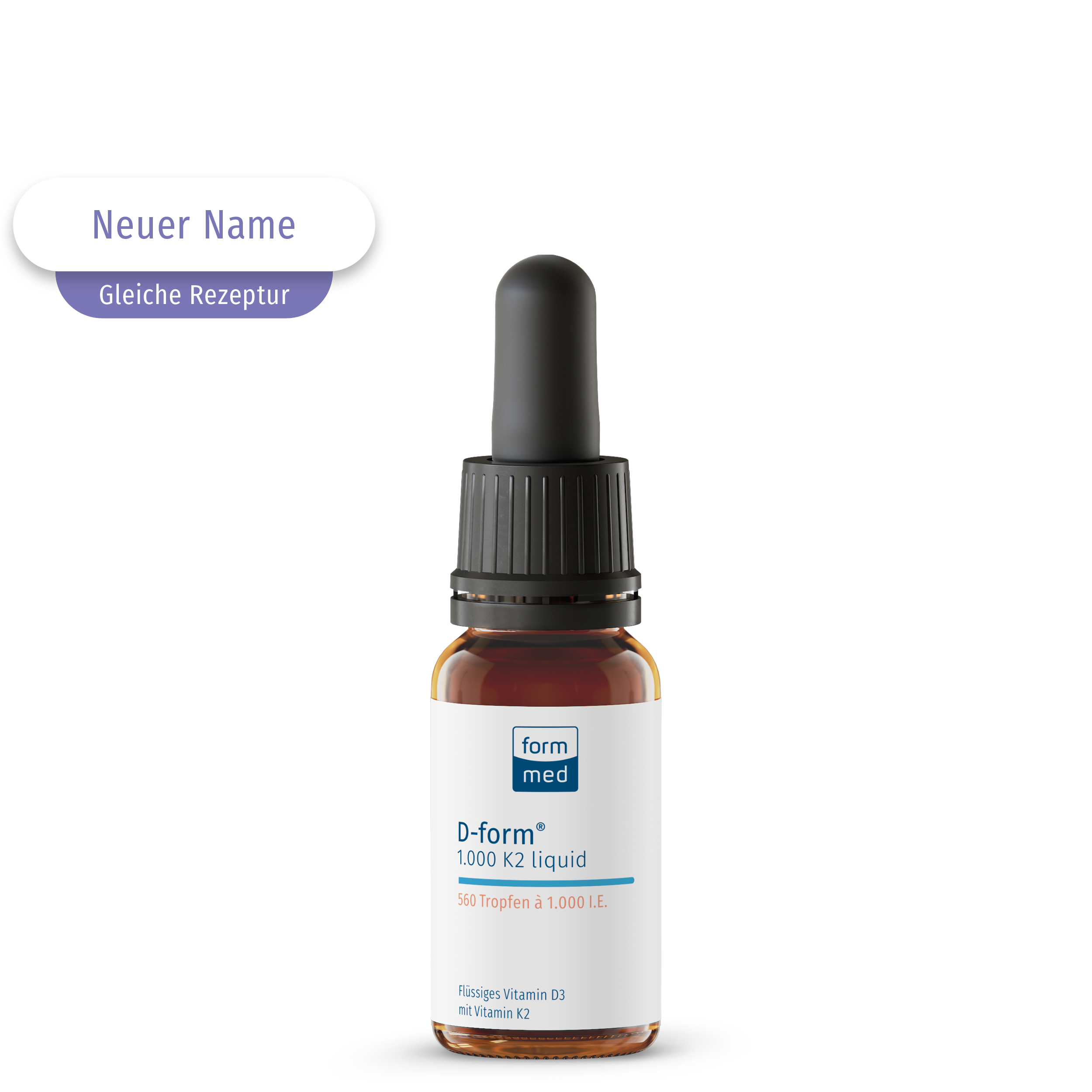
Flüssiges natürliches Vitamin D3 mit Vitamin K2
Ready for immediate dispatch - Delivery time approx. 1-3 days
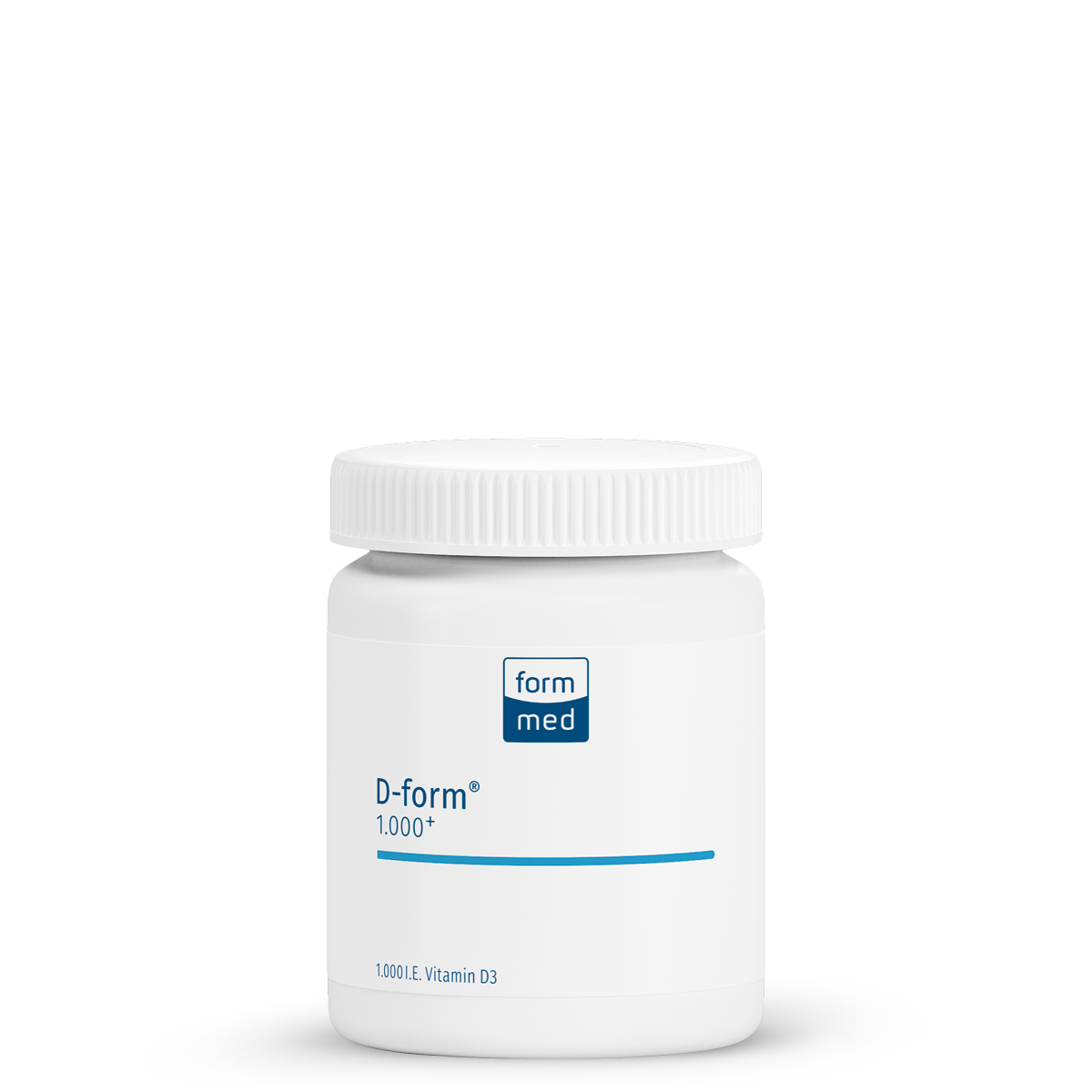
1,000 I.U. (25 µg) natural Vitamin D3 plus Pantothenic acid
Ready for immediate dispatch - Delivery time approx. 1-3 days

2,000 I.U. (50 µg) natural Vitamin D3 with Vitamin K2 plus Pantothenic acid
Ready for immediate dispatch - Delivery time approx. 1-3 days
References
Bundesamt für Strahlenschutz (2024): UV-Schutz durch Sonnencreme https://www.bfs.de/DE/themen/opt/uv/schutz/sonnencreme/sonnencreme_node.html
Grigalavicius, M. et al. (2016): Layer Thickness of SPF 30 Sunscreen and Formation of Pre-vitamin D. Anticancer research, 36(3), 1409–1415. https://pubmed.ncbi.nlm.nih.gov/26977044/
Kontopoulou, L. Β. et al. (2021): Increased Body Mass Index (BMI) and Sunscreen Use Are Associated with Inadequate Vitamin D Status in Greek Adults in Winter: BMI, Sunscreen Use and Vitamin D Status in Greek Adults. Advances in experimental medicine and biology, 1337, 307–314. https://pubmed.ncbi.nlm.nih.gov/34972918/
Neale, R. E. et al. (2019): The effect of sunscreen on vitamin D: a review. The British journal of dermatology, 181(5), 907–915. https://pubmed.ncbi.nlm.nih.gov/30945275/
Passeron, T. et al. (2019): Sunscreen photoprotection and vitamin D status. The British journal of dermatology, 181(5), 916–931. https://pubmed.ncbi.nlm.nih.gov/31069788/
Rabenberg, M. et al. (2015): Vitamin D status among adults in Germany--results from the German Health Interview and Examination Survey for Adults (DEGS1). BMC public health, 15, 641. https://pubmed.ncbi.nlm.nih.gov/26162848/
Young, A. R. et al. (2019): Optimal sunscreen use, during a sun holiday with a very high ultraviolet index, allows vitamin D synthesis without sunburn. The British journal of dermatology, 181(5), 1052–1062. https://pubmed.ncbi.nlm.nih.gov/31069787/