
Multivitamin supplements: When does basic supplementation make sense?
Table of Contents
- Sind Multivitamine sinnvoll oder Geldverschwendung?
- Was macht ein gutes Multivitamin aus?
- Wer profitiert am meisten von einem Multivitamin-Komplex?
- Multivitamin für Männer und Frauen: Wo liegt der Unterschied?
- Die richtige Einnahme: Wann und wie wirken Multivitamine am besten?
- Fazit: Multivitamine sinnvoll einsetzen – Qualität macht den Unterschied
- Häufige Fragen zu Multivitaminen
- Gut versorgt mit Mikronährstoffen
- Literatur
Multivitamins are among the most widely used dietary supplements. Yet many people wonder: Do multivitamins make sense? In principle, a balanced diet can meet your vitamin and mineral needs. However, this is not always possible in everyday life. This is where scientifically sound basic supplementation comes in: it ensures a reliable supply of essential micronutrients—provided the quality is right. After all, there are significant differences between simple effervescent tablets from the drugstore and high-quality multivitamins.
This guide explains when multivitamin supplements are useful for basic nutritional support and how to recognize high quality so you can find the best multivitamins.
Are multivitamins beneficial or a waste of money?
For healthy individuals who maintain a consistently balanced and varied diet, multivitamins are generally not necessary.
However, everyday reality often looks different: stress, an unbalanced diet, and changing nutritional needs during certain life stages can mean that the intake of specific micronutrients is not always optimal. These factors include aging, pregnancy, and breastfeeding, as well as illness and medication use.
In such cases, multivitamin supplements can be useful—acting, in a sense, as a "safety net" to close potential nutritional gaps.
The reason for this is that vitamins, minerals, and trace elements are involved in virtually all bodily processes. Among other things, they help cells generate energy, muscles function, nerves transmit signals, and the immune system perform its tasks.
Reliable basic coverage thus forms the foundation for the body's daily functions—as well as for targeted supplements that build upon this base.
What makes a good multivitamin?
Not every multivitamin supplement is automatically a good choice. If you are wondering which multivitamins are the best, you should focus primarily on quality—this is where high-quality supplements differ significantly from products found in drugstores.
Many drugstore products—particularly effervescent tablets or standard multivitamin tablets—often contain additives such as colorings, flavorings, and sweeteners. They also frequently use nutrient compounds that the body cannot absorb or metabolize as effectively.
High-quality multivitamin supplements are characterized by a targetedand scientifically backed selection of highly bioavailable micronutrients and the absence of unnecessary additives.
What to look for when buying a multivitamin supplement:
- Appropriate dosage: Micronutrients should be dosed sensibly and tailored to daily requirements—always based on scientific findings.
- Synergistic composition: A good multivitamin supplement features a combination of nutrients that complement each other functionally and work together to support the body's needs.
- High nutrient bioavailability: The form of the vitamins and minerals used is crucial, ensuring they can be effectively absorbed and utilized by the body.
- Free from unnecessary additives: High-quality multivitamin supplements contain no artificial colors, flavors, or sweeteners—unlike many multivitamin effervescent tablets.
- Dosage form: Compared to effervescent tablets, multivitamin capsules offer the advantage that micronutrients can usually be encapsulated as pure powder.
FormMed Tip: A consistent approach to quality
A well-conceived quality concept is crucial—from the selection of raw materials to the inspection of the finished products. The FormMed Q360+ quality promise stands for verified raw materials, scientifically sound product development, and analysis of every batch of every product by the independent GBA Group.
Bioavailability: What matters is what reaches the body
Bioavailability describes the amount of an ingested micronutrient that is actually available for the body to use.
It is influenced by various factors, including:
- The chemical form of the nutrient: Different compounds are absorbed with varying degrees of efficiency.
- Combination with other micronutrients: Certain nutrients can either support or inhibit each other's absorption.
- Individual intestinal absorption: Digestion and metabolism influence how effectively nutrients become available.
- In practical terms, this means: The quantity of a nutrient alone does not indicate how much of it becomes effective within the body. The decisive factor is the proportion that can actually be absorbed and utilized. Good bioavailability therefore helps ensure that vitamins and minerals can perform their functions in the body.
Special forms of active ingredients as a mark of quality
Micronutrients come in various forms—and not all of them are equally beneficial. Standard compounds are often found in basic products, whereas high-quality formulations specifically utilize proven and highly bioavailable forms of active ingredients.
FormMed supplements therefore contain:
- Vitamin K2 as MK-7 (menaquinone-7): This naturally occurring form is characterized by high bioavailability and remains available in the body for a comparatively long time.
- Vitamin E as a natural complex: Instead of isolated single compounds, Vitamin E consists of tocopherols and tocotrienols—just as it occurs in food.
- Vitamin B6 as active pyridoxal-5-phosphate (P5P): This active form is broken down into pyridoxal in the intestine and is rapidly available to the body.
- Folic acid as methylfolate (5-MTHF): Methylfolate can be used directly by the body and is particularly beneficial for individuals who are less efficient at activating folic acid due to genetic variations.
- Standardized plant extracts: Unlike simple plant powders, extracts contain defined amounts of key active ingredients.
In addition, FormMed utilizes selected branded raw materials.
Who benefits most from a multivitamin complex?
A multivitamin complex can be particularly useful when an adequate supply of micronutrients cannot be consistently ensured through a balanced diet or when requirements are increased during certain stages of life.
The following groups of people may benefit in particular:
Older people
Digestion and metabolism change with age. For example, vitamin B12 is often absorbed less efficiently. At the same time, dietary habits may change – for instance, when fresh foods are prepared less frequently or appetite decreases.
In practice, this means that meals may become smaller or consist more frequently of ready-made meals. As a result, they may not always provide all micronutrients in sufficient amounts.
Pregnant and breastfeeding women and children
During pregnancy and breastfeeding, requirements increase for certain micronutrients – including folic acid and vitamin B12 as well as calcium, iron and iodine. At the same time, the body has particularly high demands during this stage: new tissue is formed and the growing baby also needs to be supplied with nutrients.
A good supply of nutrients is also important for children, as the body is still growing. In practice, children often have a limited diet – for example, they may eat few vegetables or avoid certain foods altogether. As a result, the intake of individual micronutrients can fluctuate. A multivitamin for children supports their daily nutrient intake.
People with special diets and food intolerances
People who follow a vegan or vegetarian diet consume plenty of plant-based foods, but may not always achieve an optimal intake of certain micronutrients – and therefore need to pay particular attention to their food choices. These include primarily vitamin B12 as well as iron and iodine. A vegan multivitamin tailored to individual requirements can be a useful supplement in this case.
Food intolerances or the long-term avoidance of certain foods can also make it more difficult to regularly obtain all essential micronutrients.
People with impaired nutrient absorption
Micronutrients are primarily absorbed in the intestine. If absorption is impaired or digestive processes are less efficient, the supply of vitamins and minerals may fluctuate. This may be the case, for example, with chronic gastrointestinal disorders, inflammation of the intestinal mucosa or following intestinal surgery. Insufficient stomach acid can also impair the absorption of certain nutrients.
People experiencing chronic stress and athletes
Persistent stress often affects eating habits: meals are skipped, eaten irregularly or consist of quick, poorly balanced ready-made meals. As a result, the intake of essential micronutrients may fluctuate.
During intense physical activity – for example, during exercise – requirements increase for certain micronutrients. This is partly because energy expenditure increases, minerals are lost through sweat and muscles are placed under greater strain. B vitamins and magnesium play a particularly important role in this context.
Illnesses and medications
Illnesses and the regular use of medications can also influence micronutrient requirements and supply. For example, stomach acid blockers can reduce the absorption of vitamin B12, while antibiotics can alter the gut microbiota and thereby affect nutrient utilization. Diuretic medications can also lead to increased excretion of minerals such as magnesium.
In such situations, it may be advisable to have your micronutrient status assessed by a doctor or therapist and adjusted to your individual needs.
FormMed Tip – high-quality multivitamin complex
To support a reliable daily supply of essential micronutrients, FormMed has developed the multi+ Vital-Komplex. It combines selected vitamins and minerals into a comprehensive multivitamin-mineral complex – serving as the foundation for scientifically sound basic nutritional support.
Multivitamins for men and women: What is the difference?
A good all-in-one multivitamin is not equally suitable for everyone. Men and women have different nutrient requirements – due, among other factors, to their respective physical characteristics as well as their stages of life and lifestyles.
- Women often have higher requirements for iron and folic acid depending on their stage of life – for example, due to menstruation, pregnancy or breastfeeding.
- Men generally require less iron, while other micronutrients are more relevant – for example, zinc for maintaining normal testosterone levels and for cell division in prostate cells, as well as selenium for normal sperm production.
In addition to sex, age also plays a crucial role. Metabolism, appetite and nutrient absorption change with age – meals often become smaller and certain vitamins, such as vitamin B12, are absorbed less efficiently.
As a result, nutrient requirements may change, making specially formulated preparations useful – such as a multivitamin for women over 50 or a multivitamin for men over 50.
The right way to take multivitamins: When and how do they work best?
For multivitamin capsules to provide their full nutritional benefits, the right way of taking them also matters.
Key factors include the timing, taking them with a meal, and the dosage according to the recommended intake. Even small differences can affect how well vitamins and minerals are absorbed and utilized by the body.
How to take multivitamin capsules correctly
Multivitamin capsules should be taken with sufficient liquid with a meal – ideally with a main meal. This is particularly important because fat-soluble vitamins such as vitamins A, D, E and K can only be optimally absorbed in the intestine when consumed together with some dietary fat.
If necessary, multivitamin capsules can be opened. The powder they contain can then be stirred into juice or yogurt. This is helpful for people who have difficulty swallowing capsules.
Alternatively, the so-called capsule nodding technique can make them easier to take.
Should you take a multivitamin in the morning or evening?
In principle, multivitamins can be taken both in the morning and in the evening. Many people prefer taking them in the morning or at lunchtime with a meal.
However, the exact timing is less important than regular daily intake. The body cannot produce many vitamins and minerals itself and therefore depends on a continuous supply.
The vitamins that should be consumed daily include mainly water-soluble vitamins, as these are not stored – including vitamin C and most B vitamins.
Can you overdose on multivitamins?
Multivitamins should always be taken according to the recommended intake stated on the packaging – otherwise, it is possible to take too much.
A consistently excessive intake – particularly of fat-soluble vitamins such as A, D, E and K – can have unfavorable effects because these are stored in the body. Water-soluble vitamins, on the other hand, are generally excreted in the urine.
Conclusion: Using Multivitamins Wisely – Quality Makes the Difference
As a rule, multivitamins are not necessary if one maintains a consistently balanced diet that meets all nutritional needs. In practice, however, it is often difficult to adhere to such a diet every day—due to factors like daily stress, a lack of time for cooking, a one-sided diet, or specific life stages such as pregnancy or older age. Consequently, high-quality multivitamin supplements can be a sensible addition.
Quality is the decisive factor here: products from drugstores—such as simple effervescent tablets—often contain additives and nutrient compounds with lower bioavailability. In contrast, a scientifically sound approach to basic nutritional support relies on highly bioavailable micronutrients, appropriate dosages, and a well-balanced composition.
Ultimately, what matters is not just whether a multivitamin is used, but which one—and whether it meets the standards of high-quality micronutrient supplementation.
Frequently Asked Questions About Multivitamins
Multivitamins can be taken daily, provided they are dosed according to the recommended intake. Since the body cannot produce many vitamins and minerals itself, regular intake is beneficial.
Urine often turns neon yellow after taking multivitamins because excess vitamin B2 (riboflavin) is excreted in the urine. This water-soluble vitamin has an intense yellow color that is visibly apparent in the urine. This discoloration is generally harmless.
Yes, multivitamins can be easily combined with omega-3 fatty acids . This is often useful, as omega-3 fatty acids also play an important role in daily basic nutrient intake.
Dietary intake of omega-3 is often low, so deficiency is not uncommon. You can find out more about how a deficiency can become noticeable and how omega-3 intake can be improved in our guide to omega-3 deficiency.
No, multivitamins from the drugstore cannot be compared to high-quality supplements from a pharmacy or a healthcare professional.
The differences lie primarily in the quality of the ingredients and the formulation: High-quality supplements contain highly bioavailable forms of nutrients and carefully calculated dosages, while largely avoiding unnecessary additives. In contrast, drugstore products—such as effervescent tablets—often contain additives and compounds that are less readily absorbed by the body.
Well-supplied with micronutrients
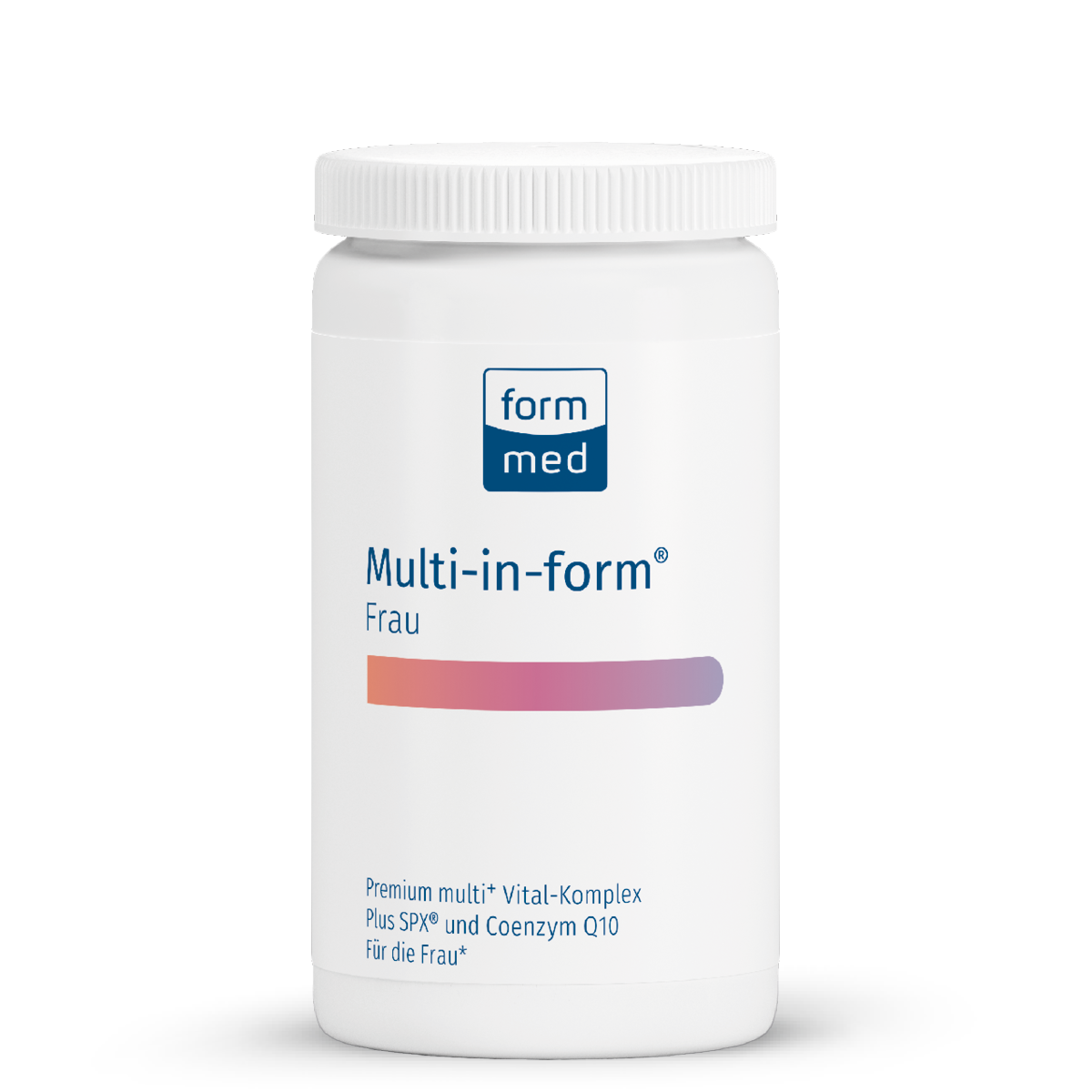
Ready for immediate dispatch - Delivery time approx. 1-3 days
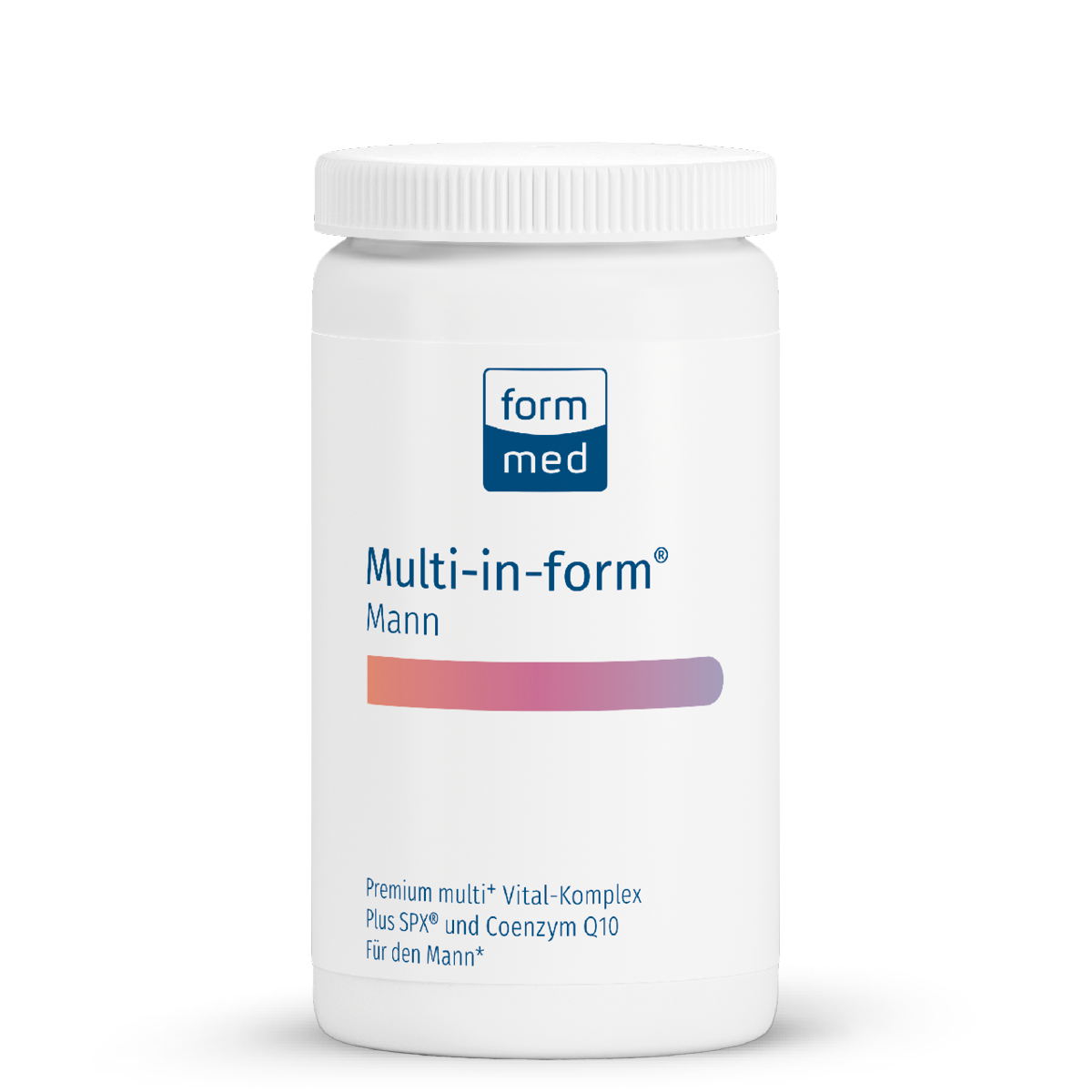
Ready for immediate dispatch - Delivery time approx. 1-3 days

Ready for immediate dispatch - Delivery time approx. 1-3 days
Literature
Berger, M. M. et al. (2024): The science of micronutrients in clinical practice - Report on the ESPEN symposium. Clin Nutr. 43(1):268-283. https://pubmed.ncbi.nlm.nih.gov/38104489/
Deutsche Gesellschaft für Ernährung e. V. (2025): Referenzwerte. https://www.dge.de/wissenschaft/referenzwerte/
Huang, H.-Y. et al. (2006): Multivitamin/mineral supplements and prevention of chronic disease. Evid Rep Technol Assess (Full Rep). (139):1-117. https://pubmed.ncbi.nlm.nih.gov/17764205/
Lankarani-Fard, A. et al. (2025): Reframing Micronutrient Deficiencies for Modern times: A Review. J Gen Intern Med. 40(8):1735-1741. https://link.springer.com/article/10.1007/s11606-025-09481-y
Mouchaileh, N. et al. (2023): Vitamin B12 deficiency in older people: a practical approach to recognition and management. Geriatric Therapeutics Review. 53 6:350-358. https://onlinelibrary.wiley.com/doi/full/10.1002/jppr.1897
Passarelli, S. et al. (2024): Global estimation of dietary micronutrient inadequacies: a modelling analysis. Lancet Glob Health. 12(10):e1590-e1599. https://www.thelancet.com/journals/langlo/article/PIIS2214-109X(24)00276-6/fulltext
Richards, J. et al. (2025): Micronutrient bioavailability: concepts, influencing factors, and strategies for improvement. Front Nutr. 12:1646750. https://pmc.ncbi.nlm.nih.gov/articles/PMC12673670/
Wang, W. et al. (2026): Multivitamin and mineral use: A rapid review of meta-analyses on health outcomes. Ageing Res Rev. 114:102965. https://pubmed.ncbi.nlm.nih.gov/41308839/