

Liver Detox: What’s the Truth About Detox Regimens, and What Really Helps?
Table of Contents
- Welche Aufgabe hat die Leber bei der Entgiftung?
- Wie viele Tage braucht die Leber zum Entgiften?
- Leber reinigen – warum eine Detox-Kur nicht notwendig ist
- Leber entgiften mit Ernährung und Hausmitteln – die Grundprinzipien
- Antioxidantien und B-Vitamine – eine gute Basis ist wichtig
- Aminosäuren und Glutathion: Bedeutung für die Entgiftung
- Artischocke und Mariendistel – welche Rollen spielen sie beim Thema „Leber entgiften“?
- Fazit: Leber entgiften, indem man sie langfristig gesund hält
- Passende FormMed Präparate
- Literatur
“How can I detox my liver?” – many people ask themselves this question. Terms such as “detox cleanse” and “linsing the liver” are everywhere. But what is actually scientifically proven? One thing is certain: the liver detoxifies continuously and independently. In order to carry out its functions reliably, it needs one thing above all – the right conditions.
In this guide, you will learn what role the liver plays in detoxification and how nutrition, micronutrients, and selected plant compounds may contribute.
What role does the liver play in detoxification?
The liver is the body’s central detoxification organ. Every day, it processes a wide variety of substances that enter the body through food, breathing, or the body’s own metabolic processes.
One of the most important functions of the liver is to chemically transform substances produced by the body and substances foreign to the body. The aim is to make these substances easier for the body to handle so they can be excreted:
- In this process, the liver converts many substances into water-soluble forms, which are then excreted via the kidneys in the urine.
- Fat-soluble substances enter the intestines via the bile and are removed from the body through bowel movements.
The body’s own detoxification in the liver takes place in several coordinated steps and depends on special enzyme systems.
How many days does the liver need to detoxify?
A healthy liver does not work at fixed times; rather, it detoxifies continuously – around the clock. Therefore, there is neither a specific number of days nor a point in time at which the liver is “finished detoxifying.”
What matters is the liver’s long-term health. Measures such as detox or cleansing regimens over just a few days cannot sustainably influence these complex processes. A balanced diet and a good supply of essential nutrients, on the other hand, provide the foundation that enables the liver to perform its functions reliably over the long term.
Cleansing the liver – why a detox cleanse is not necessary
Terms such as “cleansing the liver” or “detox cleanse” are widespread. They create the impression that the liver must regularly be freed from harmful substances through a detox regimen. From a scientific perspective, this is not necessary.
The liver naturally has highly efficient mechanisms for continuously processing metabolic by-products and substances foreign to the body. This is not about “cleansing” in the sense of a detox regimen, but about highly complex biochemical processes. These detoxification processes cannot be replaced by juices, teas, or radical diets.
The goal is therefore a liver-friendly lifestyle that supports liver function in everyday life and preserves it in the long term.
Detoxifying the liver with nutrition and home remedies – the basic principles
A balanced diet provides the energy and nutrients the liver needs for its functions. It creates the foundation for the body’s own detoxification processes.
When people speak of home remedies to detoxify the liver, they usually mean simple, practical everyday habits – such as consciously choosing healthy foods and ensuring adequate fluid intake.
Which foods are good for the liver?
A liver-friendly diet is based on a varied selection of natural foods that provide plenty of fiber, secondary plant compounds, amino acids, and essential vitamins and minerals.
Suitable foods include:
- Green leafy vegetables such as spinach, Swiss chard, and arugula
- Cruciferous vegetables such as broccoli, Brussels sprouts, and cauliflower
- Bitter vegetables such as artichoke, chicory, and endive
- Whole grains such as oats, whole grain bread, and brown rice
- Legumes such as lentils, chickpeas, and beans
- Nuts and seeds such as walnuts, almonds, and flaxseed
- High-quality plant oils such as olive oil and rapeseed oil
What matters is not a single “superfood” for a detox cleanse, but a balanced diet.
What should you drink to detoxify the liver?
The same applies to drinks: the liver does not need to be “detoxified,” but works continuously on its own. However, adequate fluid intake supports metabolic processes and is important so that the kidneys can produce enough urine to excrete water-soluble metabolic by-products. As a guideline, adults generally need around 1.5 to 2 liters of fluid per day – and correspondingly more in cases of heavy sweating.
Suitable options are:
- Water as the most important basis, for example with a slice of lemon
- Unsweetened herbal or bitter teas
- Coffee consumed in moderation
Sugary drinks and alcohol consumption, on the other hand, can place unnecessary strain on the metabolism. What matters is an overall balanced fluid intake spread throughout the day.
Antioxidants and B vitamins – a good foundation is important
During detoxification, the body naturally produces reactive oxygen species. They are part of metabolism, but must be kept in balance by the body’s own protective systems. If they predominate, oxidative stress can occur, which in turn can damage cellular components such as membranes or proteins. Antioxidants help protect cells from oxidative stress. These include vitamin C, vitamin E, selenium, copper, and zinc, among others.
In addition, B vitamins play a central role in liver metabolism. They act as coenzymes. This means they help enzymes transform substances and provide energy.
- Vitamin B6 is involved in protein and amino acid metabolism.
- Vitamin B12 plays a role in energy production in the cells.
- Folic acid is important for processes related to cell division and amino acids.
Choline is also of particular importance for the liver. This nutrient is involved in fat metabolism and is needed for the formation of cell membranes. An adequate intake of these micronutrients supports the liver’s metabolic processes.
Amino acids and glutathione: their importance for detoxification
Amino acids are the building blocks of proteins and perform numerous functions in the body. They are also important in the liver because detoxification enzymes are also made of proteins. An adequate supply of amino acids is therefore a prerequisite for the normal course of detoxification.
Glutathione is of particular importance. It is a compound produced by the body from the amino acids glutamic acid, cysteine, and glycine, and it occurs in high concentrations in the liver. Glutathione is part of the antioxidant defense system and is involved in the processing of certain metabolic by-products.
The body needs an adequate supply of amino acids to produce glutathione. A balanced, protein-rich diet provides the necessary building blocks.
Artichoke and milk thistle – what roles do they play in the topic of “detoxifying the liver”?
Artichoke and milk thistle are traditional medicinal plants. Both contain characteristic secondary plant compounds that are the focus of scientific studies when it comes to liver health.
Artichoke contains bitter compounds, especially cynarin. Bitter compounds have traditionally been used to stimulate the production of digestive juices – including bile. The liver produces bile, which is important for fat digestion and also serves as an excretion route for certain metabolic by-products.
Milk thistle contains the plant compound complex silymarin. This is being investigated in scientific studies for its liver-protective and antioxidant properties. Antioxidant mechanisms help protect cells from oxidative stress – a process that is especially essential in metabolically active organs such as the liver. Artichoke and milk thistle can therefore be a valuable part of a holistic approach to liver health.
Conclusion: detoxify the liver by keeping it healthy in the long term
The liver is a highly active metabolic organ that detoxifies continuously – without any special cleansing. From a scientific perspective, a “detox cleanse” is not necessary, since detoxification processes are firmly embedded in metabolism and take place around the clock.
What matters much more is supporting the liver’s physiological functions over the long term. A balanced, plant-focused diet, adequate fluid intake, and a needs-based supply of essential micronutrients provide the foundation for this. Antioxidants, B vitamins, choline, and amino acids are important for the liver’s physiological processes.
Anyone who views the topic of “detoxifying the liver” holistically therefore does not rely on short-term measures, but on sustainable dietary and lifestyle habits as the basis for a healthy liver.
Suitable FormMed products
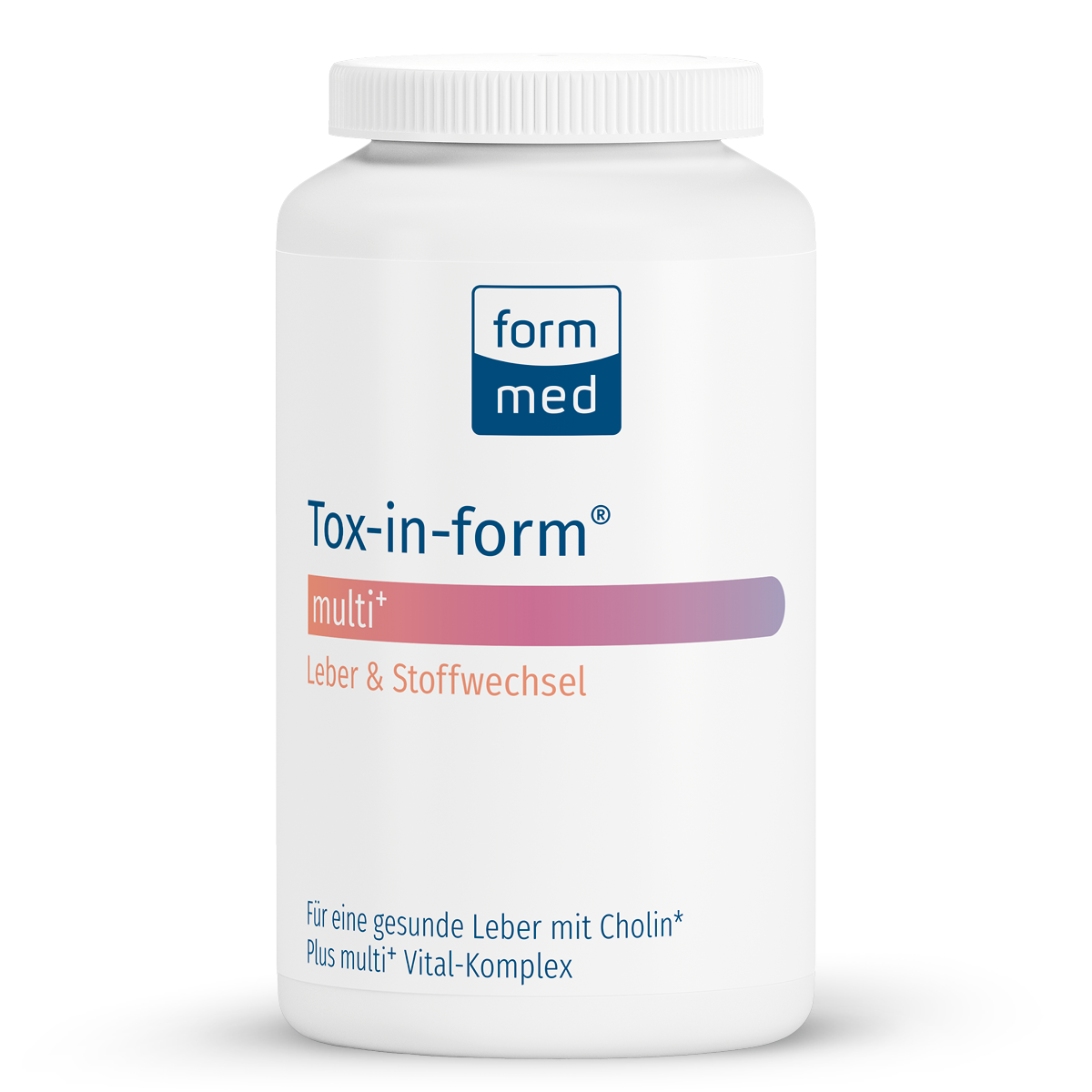
Ready for immediate dispatch - Delivery time approx. 1-3 days

Ready for immediate dispatch - Delivery time approx. 1-3 days

Ready for immediate dispatch - Delivery time approx. 1-3 days
References
Biesalski, H. K. (2024): Vitamins, trace elements, and minerals. Indications, diagnostics, therapy. 3rd updated and expanded edition. Georg Thieme Verlag KG Stuttgart. Casas-Grajales, S. and Muriel, P. (2015): Antioxidants in liver health. World J Gastrointest Pharmacol Ther. 6(3):59–72. https://pmc.ncbi.nlm.nih.gov/articles/PMC4526841/
Gillessen, A. and Schmidt, H. H.-J. (2020): Silymarin as Supportive Treatment in Liver Diseases: A Narrative Review. Adv Ther. 2020 Feb 17;37(4):1279–1301. https://pmc.ncbi.nlm.nih.gov/articles/PMC7140758/
Hodges, R. E. and Minich, D. M. (2015): Modulation of Metabolic Detoxification Pathways Using Foods and Food-Derived Components: A Scientific Review with Clinical Application. J Nutr Metab. 16;2015:760689. https://pmc.ncbi.nlm.nih.gov/articles/PMC4488002/
Lee, D.-Y. and Kim, E.-H. (2029): Therapeutic Effects of Amino Acids in Liver Diseases: Current Studies and Future Perspectives. J Cancer Prev. 24(2):72–78. https://pmc.ncbi.nlm.nih.gov/articles/PMC6619856/
Loguercio, S. and Festi, D. (2011): Silybin and the liver: From basic research to clinical practice. World J Gastroenterol. 2011 May 14;17(18):2288–2301. https://pmc.ncbi.nlm.nih.gov/articles/PMC3098397/
Mirhashemi, S. H. et al. (2022): Effect of 8 Weeks milk thistle powder (silymarin extract) supplementation on fatty liver disease in patients candidates for bariatric surgery. Metabol Open. 2022 May 21;14:100190. https://pmc.ncbi.nlm.nih.gov/articles/PMC9149185/
Schmidt, R. (2025): Concept of liver detoxification: Critical analysis of popular beliefs and evidence-based medicine. Journal of Complementary Medicine. 17(05): 30-35. https://www.thieme-connect.com/products/ejournals/abstract/10.1055/a-2687-9460


