Recognizing and preventing iodine deficiency – how to meet your daily iodine requirement
Table of Contents
- Iodine Deficiency Due to Reduced Use of Iodized Salt: The Underestimated Risk
- Iodine Deficiency Symptoms: How Does the Body Show a Lack of Iodine?
- Iodine and Food – Which Foods Contain the Most?
- How Much Iodine Do You Need Per Day?
- Taking Iodine – When Is It Recommended?
- Conclusion: Detect Iodine Deficiency Early and Take Targeted Action
- Suitable FormMed Supplements
- References
Iodine is an essential micronutrient for proper thyroid function and the production of thyroid hormones. Although iodine intake in Germany was sufficient for many years, recent data shows that more and more people are once again becoming iodine-deficient. This is due in part to changing eating habits and the declining use of iodized salt.
Learn what iodine is, how to recognize an iodine deficiency, how much iodine is recommended per day, and what you can do to improve your iodine intake.
Iodine Deficiency Due to Reduced Use of Iodized Salt: The Underestimated Risk
Iodine deficiency in Germany was long considered resolved—especially since the introduction of iodized salt in the 1980s. However, current data for Germany shows: the proportion of people with insufficient iodine intake has risen again to 30 to 45%, depending on the age group.
Reasons for the decline include:
- Only about 9% of industrially processed foods are now made using iodized salt—mostly for cost reasons. To ensure sufficient iodine intake, this figure should be around 40 to 45%.
- The trend toward gourmet salts such as sea salt or Himalayan salt is displacing iodized salt. These salts are often perceived as more “pure” and “natural”—which has led some to criticize iodized salt. However, professional health organizations clearly emphasize: iodized salt is healthy when used as a basic source of iodine.
- Many people are consciously avoiding animal-based foods. Plant-based alternatives like oat or soy drinks usually do not contain iodine—unlike cow’s milk, which is one of the most important natural sources of iodine.
The result is a gradual deficiency that often goes unnoticed—and over time, this can develop into a manifest iodine deficiency.
Iodine Deficiency Symptoms: How Does the Body Show a Lack of Iodine?
Iodine is an essential mineral for the thyroid gland. It is vital for its function and for the production of thyroid hormones. These hormones regulate numerous processes—including energy metabolism, body temperature, cardiovascular function, mental well-being, and cognitive performance.
Without sufficient iodine, the metabolism can become imbalanced in various ways. Recognizing an iodine deficiency is not always easy. Symptoms often develop slowly and are non-specific—meaning many people do not associate them with a lack of iodine.
Common iodine deficiency symptoms include:
- Fatigue and exhaustion
- Difficulty concentrating
- Sensitivity to cold
- Weight gain despite unchanged eating habits
- Dry skin
- Sensation of tightness or pressure in the neck area (goiter)
If several of these symptoms occur, a medical check-up may be useful—to assess iodine status and investigate possible causes.
Iodine and Food – Which Foods Contain the Most?
Many people ask, “Where is iodine found?”—especially those following a vegetarian or vegan diet, since animal-based foods like fish are rich in iodine. Fruits and vegetables contain only small amounts of iodine—with broccoli being one of the highest, at about 15 micrograms per 100 grams.
Important iodine-rich foods are summarized in the following table:
| Animal-Based Foods | Plant-Based Foods |
| Sea fish such as cod and haddock (155 to 300 µg per 100 g) | Algae such as nori and wakame (Caution: iodine content can be very high; check the packaging for iodine values!) |
| Milk and dairy products (4 to 8 µg per 100 g) | |
| Eggs (10 µg per 100 g) |
One of the most important sources of iodine in daily life, however, is iodized salt—not only for cooking, but also in processed foods. Bread, cheese, and sausage products can also contribute to iodine intake—provided that iodized salt was used during production. It’s worth checking the label when shopping.
Iodized salt contains 15 to 25 micrograms of iodine per gram of salt. With a daily salt intake of 5 grams—the reference value from the German Nutrition Society (DGE)—approximately 75 to 125 micrograms of iodine can be absorbed.
How Much Iodine Do You Need Per Day?
Daily iodine requirements depend on age and life stage. Adults need 150 micrograms of iodine per day. During pregnancy and breastfeeding, the need increases—making sufficient intake especially important.
The German Nutrition Society recommends the following:
| Group | Recommended Daily Iodine Intake |
| Adults | 150 µg |
| Pregnant women | 220 µg |
| Breastfeeding women | 230 µg |
| Children (depending on age) | 80 to 120 µg |
Taking Iodine – When Is It Recommended?
Not everyone manages to meet their iodine needs through diet alone. Especially in cases of increased demand—such as during pregnancy and breastfeeding—or due to specific lifestyle choices, daily intake may be too low. This applies to vegan diets, or when fish and iodized salt are avoided. In such cases, targeted iodine supplementation can be beneficial.
For additional basic support, a dosage of 50 to 100 micrograms of iodine is recommended. A supplement like this can help meet the overall daily requirement of 150 to 230 micrograms of iodine.
Conclusion: Detect Iodine Deficiency Early and Take Targeted Action
Iodine deficiency is once again on the rise in Germany—gradually, but with consequences for thyroid health. The decline in iodized salt use and changing dietary habits are contributing factors to many people no longer meeting their iodine needs. Insufficient intake often goes unnoticed—common symptoms such as fatigue, difficulty concentrating, or sensitivity to cold are rarely directly associated with iodine deficiency.
Good iodine intake is easy to achieve—but not guaranteed:
- Those who consciously avoid fish, dairy products, or iodized salt should keep an eye on their iodine intake.
- Mindful shopping and choosing the right salt can help support thyroid function and metabolism over the long term.
- Additionally, taking iodine—such as through a high-quality micronutrient supplement containing 50 to 100 micrograms daily—can be beneficial.
Suitable FormMed Supplements
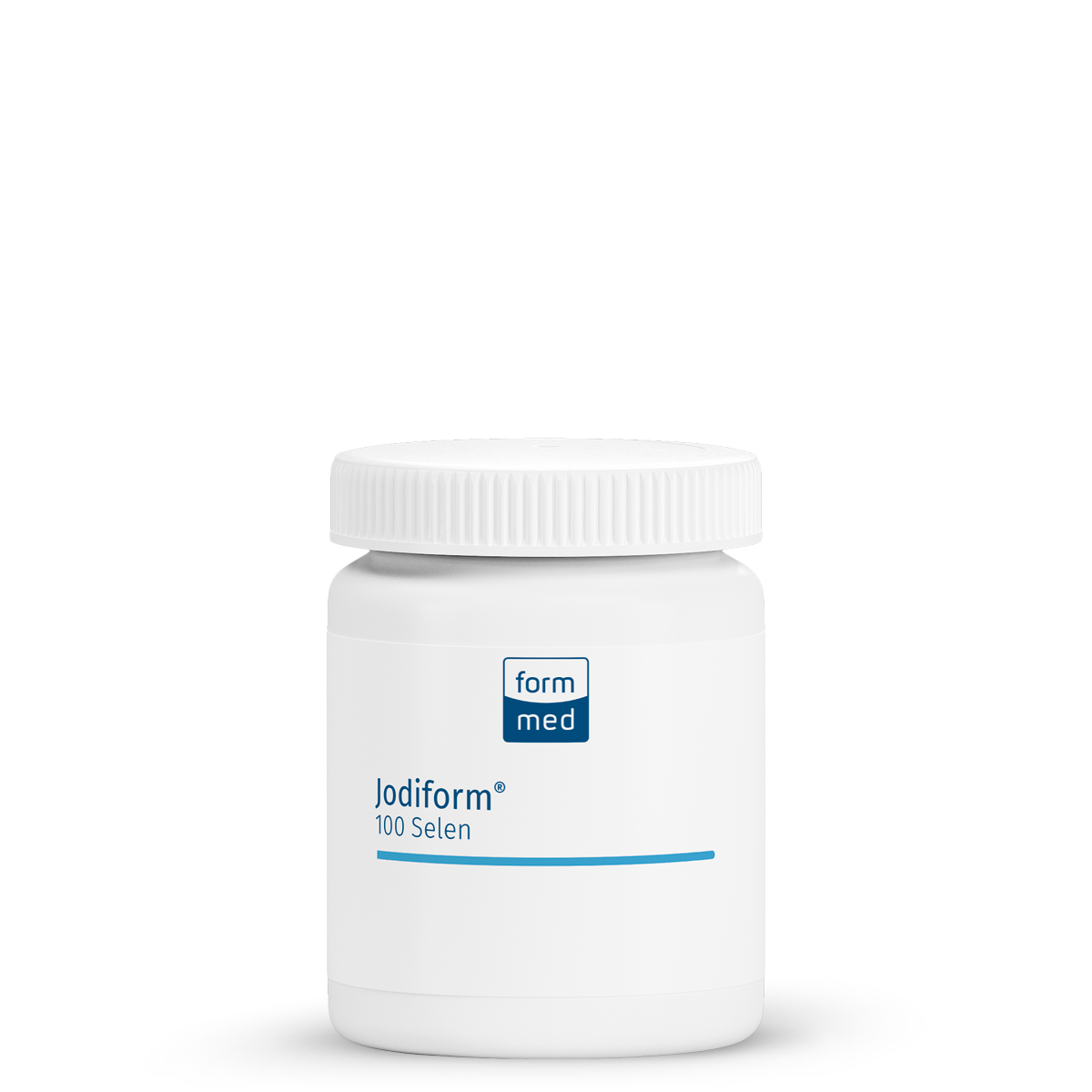
100 µg highly bioavailable Iodine with 50 µg Selenium
Ready for immediate dispatch - Delivery time approx. 1-3 days
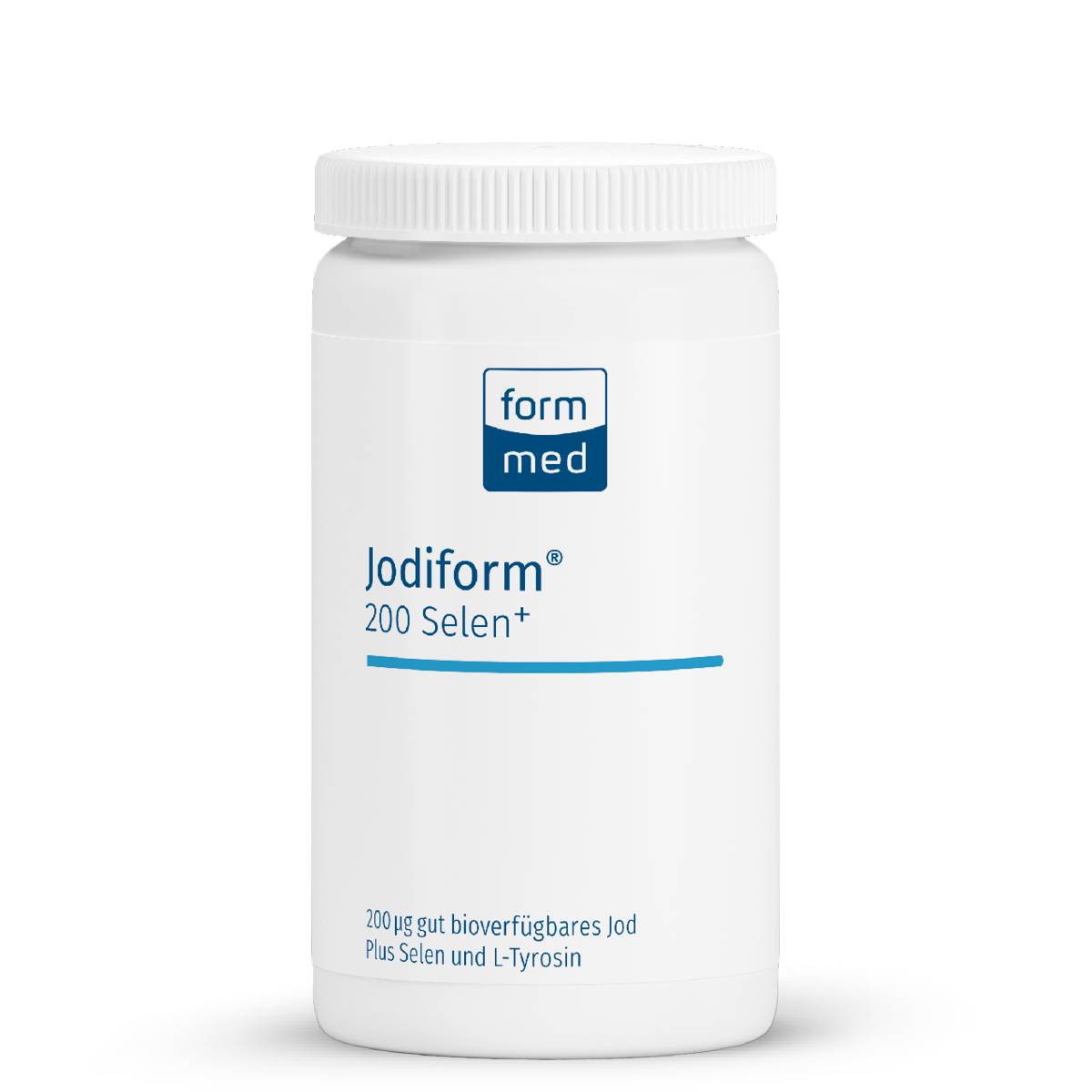
200 µg highly bioavailable Iodine with 100 µg Selenium for the thyroid – plus L-Tyrosine
Ready for immediate dispatch - Delivery time approx. 1-3 days

200 µg highly bioavailable Iodine plus L-Tyrosine
Ready for immediate dispatch - Delivery time approx. 1-3 days
References
Aerzteblatt (Hrsg.) (2024): WHO: Europäische Bevölkerung stärker durch Jodmangel gefährdet. https://www.aerzteblatt.de/nachrichten/152774/WHO-Europaeische-Bevoelkerung-staerker-durch-Jodmangel-gefaehrdet, abgerufen am: 15.09.2025.
Bissinger, L. et al. (2018): Repräsentative Markterhebung zur Verwendung von Jodsalz in handwerklich und industriell gefertigten Lebensmitteln. https://jlupub.ub.uni-giessen.de/handle/jlupub/10491, abgerufen am: 15.09.2025.
Bundesministerium für Ernährung und Landwirtschaft (2024): Jodversorgung in Deutschland: Ergebnisse des Jodmonitorings bei Kindern, Jugendlichen und Erwachsenen. https://www.bmel.de/DE/themen/ernaehrung/gesunde-ernaehrung/degs-jod-studie.html, abgerufen am: 15.09.2025.
Bundesministerium für Ernährung und Landwirtschaft (2023): "Wenn Salz, dann Jodsalz": BMEL startet Informationsoffensive. Pressemitteilung Nr. 109/2023. https://www.bmel.de/SharedDocs/Pressemitteilungen/DE/2023/109-Jodsalz.html, abgerufen am: 15.09.2025.
Bundesinstitut für Risikobewertung (2020): Jodversorgung in Deutschland wieder rückläufig - Tipps für eine gute Jodversorgung. Fragen und Antworten zur Jodversorgung und zur Jodmangelvorsorge. https://www.bfr.bund.de/cm/343/jodversorgung-in-deutschland-wieder-ruecklaeufig-tipps-fuer-eine-gute-jodversorgung.pdf
Deutsche Gesellschaft für Ernährung e. V. (2025): Referenzwert. Jod. https://www.dge.de/wissenschaft/referenzwerte/jod/, abgerufen am: 15.09.2025.
Remer, T. et al. (2022): The DONALD study as a longitudinal sensor of nutritional developments: iodine and salt intake over more than 30 years in German children. Eur J Nutr. 61(4): 2143–2151. https://www.ncbi.nlm.nih.gov/pmc/articles/PMC9106614/
Weltgesundheitsorganisation (Hrsg.) (2024): Bevölkerung der Europäischen Region der WHO aufgrund veränderter Ernährung stärker durch Jodmangel gefährdet. https://www.who.int/europe/de/news/item/28-06-2024-people-in-the-who-european-region-at-greater-risk-of-iodine-deficiency-due-to-changing-diets, abgerufen am: 15.09.2025.