
Immunosenescence and Inflammaging: How the Immune System Ages and What You Can Do
Table of Contents
- Immunosenescence: When Immune Cells Run Out of Steam
- Inflammaging: Silent Inflammation in the Body
- The Consequences: From Susceptibility to Infections to Oxidative Stress
- Micronutrients in Older Age: Supporting the Immune System and Cellular Protection
- Protein in Older Age: A Building Block for Antibodies and Immune Cells
- Diet and Lifestyle as Countermeasures to Inflammaging
- Conclusion: Targeted Support for Immunosenescence and Inflammaging
- Frequently Asked Questions About Immunosenescence and Inflammaging
- Well-supplied with micronutrients
- Literature
As we age, our bodies change—and this includes our immune defenses. Many people notice that, beyond a certain age, they become more susceptible to infections or take longer to recover from illnesses. At the same time, chronic health issues may arise, often without a clear, identifiable cause. Scientists refer to these closely interconnected processes as "immunosenescence" (the aging of the immune system) and "inflammaging" (age-related, low-grade chronic inflammation).
In this guide, you will learn about the biochemical processes underlying these immune changes, the potential consequences they may have, and the role that micronutrients and protein play.
Immunosenescence: When Immune Cells Run Out of Steam
Immunosenescence refers to the general, age-related decline in the performance of the immune system. It primarily affects the specific immune response, also known as the adaptive immune system. Unlike the innate immune system—which is present from birth—the adaptive immune system must specifically adjust to new, previously unknown pathogens. In the process, it builds up an immunological memory.
At the heart of this process lies a small, often underestimated organ: the thymus.
What exactly is the thymus?
The thymus is a small organ located behind the breastbone, just above the heart. It is sometimes confused with the thyroid gland, but in reality, the two organs are entirely unrelated.
While the thyroid produces hormones for metabolism, the thymus serves as the central "training ground" for the immune system. Within it, immature precursor cells from the bone marrow develop into specialized T cells (T lymphocytes)—named after the thymus, where they undergo their maturation. During this process, the thymus imparts two key capabilities to the developing cells:
- the ability to distinguish foreign structures from the body’s own tissue
- the ability to respond to an extremely wide range of potential pathogens
How the thymus shrinks over the years
In proportion to body size, the thymus is largest and most active during childhood.
The organ reaches its maximum absolute weight—between 35 and 50 grams—during puberty. From this point on, it begins to shrink continuously—a process medical professionals call thymic involution. Up until the age of 40 to 50, the organ loses approximately 3 percent of its functional tissue each year; thereafter, this regression slows to about 1 percent per year. As this happens, functional thymic tissue is increasingly replaced by fat and connective tissue. In later life, the thymus produces only a fraction of the T-cells it generated during childhood. What happens when fewer new T-cells are produced? Due to the progressive shrinkage of the thymus, fewer and fewer new T-cells are created over the years to replenish the body’s supply of immune cells. Furthermore, as time passes, an increasing proportion of the T-cells—those originally generated to combat pathogens the body has already encountered—undergo aging. While these cells are intended to serve as "memory cells" that provide long-term protection, many eventually become senescent: they stop dividing and barely respond to new stimuli, yet they do not die off, instead accumulating within the body. Since the thymus provides almost no new supply, this growing population of exhausted cells cannot be adequately offset by fresh T-cells. The result is a twofold problem: the body’s ability to respond to new, previously unknown viruses or bacteria becomes slower and less precise, as there is a shortage of new, versatile T-cells. At the same time, the accumulated, exhausted immune cells no longer make any relevant contribution to defense.Inflammaging: Silent Inflammation in the Body
Aging T-cells—which no longer divide but also fail to die off—release pro-inflammatory signaling molecules, even in the absence of any acute threat. Macrophages (“scavenger cells”) and other components of the innate, non-specific immune system also contribute to this process by releasing small amounts of these signaling molecules, known as cytokines. In younger years, these signals are typically downregulated reliably once an infection has subsided or a wound has healed. As we age, this “switching off” process becomes increasingly ineffective.
The result is a chronic, low-grade state of inflammation throughout the entire body—occurring without an acute illness, without a fever, and often without any noticeable symptoms in the early stages. Researchers have coined the term “inflammaging” to describe this phenomenon—a portmanteau of “inflammation” and “aging.”
This silent inflammation is rarely confined to a single organ. It can affect virtually any tissue and has been linked by researchers to a wide range of age-related health issues.
Other contributing factors include a decline in the ability of aging cells to clear away cellular debris and deposits (autophagy), as well as changes to the intestinal lining and the gut microbiome.What is the difference between immunosenescence and inflammaging?
While the two processes are interdependent, they describe distinct phenomena:
Immunosenescence refers to the general, age-related decline in the performance of the immune system, characterized by a reduction in specific immune cells—such as T cells—which leaves the body more susceptible to infections.
Inflammaging, by contrast, describes a chronic, low-grade inflammatory state throughout the body. This state is driven by both aging T cells and cells of the innate immune system, resulting in persistent inflammation that causes cellular damage.
Together, these two processes accelerate biological aging.
The Consequences: From Susceptibility to Infections to Oxidative Stress
Immunosenescence and "inflammaging" often go unnoticed for a long time because both processes develop gradually over the years. Eventually, however, their effects become apparent—usually manifesting first as non-specific complaints, which many people initially attribute simply to "getting older."
- Prolonged illness: Infections that might have resolved within a few days in one’s youth often persist longer in later life, as there are fewer newly produced, fully functional immune cells available.
- Impaired wound healing: Tissue regeneration is a finely tuned process in which immune cells play a crucial role. If the function of these cells changes, wound healing can be delayed.
- Increased oxidative stress: The persistent, low-grade activity of the immune system associated with inflammaging leads to an increased production of free radicals. If not neutralized, these reactive oxygen species can damage cellular structures, including membranes, proteins, and even DNA.
- Noticeable exhaustion: An immune system that remains constantly active "in the background" consumes energy and resources—a factor that can contribute to a general sense of exhaustion and reduced resilience in old age.
These issues illustrate how an immune system that is simultaneously weakened and chronically activated can place a dual burden on the body as it ages.
Micronutrients in Older Age: Supporting the Immune System and Cellular Protection
For immune cells to perform their functions, they require an adequate supply of specific vitamins and trace elements. As we age, however, the conditions for maintaining a good micronutrient status change: intestinal absorption often declines—due to factors such as reduced stomach acid production or changes in the intestinal lining—while the body’s requirements simultaneously increase, driven by persistent, low-grade inflammatory processes. This can create an imbalance between intake and consumption.
This is where targeted support comes in. Four micronutrients are currently the focus of scientific research regarding immune system function and the protection of cells against oxidative stress: vitamin D, vitamin C, zinc, and selenium.
Vitamin D – The "Sunshine Vitamin" and Its Impact on Immune Cells
Almost every cell in the immune system features a receptor for vitamin D on its surface—a clear indication of how closely the two are linked.
When active vitamin D molecules bind to these receptors, they directly influence the cell’s genes. For instance, they stimulate phagocytes (scavenger cells) to produce the body’s own defense substances, such as cathelicidins—small proteins capable of directly attacking pathogens. At the same time, vitamin D helps regulate the response of T-cells, ensuring that the immune defense is targeted without becoming excessive. In this way, vitamin D contributes to the normal functioning of the immune system.
The body produces most of its vitamin D itself through the action of sunlight on the skin; however, this endogenous production decreases with age. Furthermore, in Germany, the amount produced is generally insufficient during the months from October to March.
For many older people, it is therefore worthwhile to have their vitamin D levels checked regularly and, if necessary, to take appropriate supplements—find out more in the guide “The Correct Vitamin D Dosage for Adults and Children.”Vitamin C – Highly Concentrated in Phagocytes and Lymphocytes
White blood cells, such as phagocytes and lymphocytes, contain a much higher concentration of vitamin C than is found in blood plasma. One reason for this is that, when fighting pathogens, phagocytes deliberately release aggressive oxygen compounds to neutralize them; vitamin C protects the phagocyte’s own cellular structures from these self-generated free radicals. At the same time, it supports the mobility of phagocytes, allowing them to travel more quickly to the site of an infection. In this way, vitamin C contributes to the normal functioning of the immune system.
The human body cannot produce vitamin C on its own and therefore relies on a regular intake through one’s diet. Furthermore, as a water-soluble vitamin, it is not stored in the body in any significant amounts.
Zinc and Selenium – Cofactors for Immune Cells and Cellular Protection
Both zinc and selenium are necessary for the normal functioning of the immune system, with each of these trace elements performing its own specific roles. At the same time, they help protect against oxidative stress before free radicals can damage cellular structures. Zinc is required—among other places, in the thymus—for the maturation of new T-cells; it is also involved in over 300 other enzymatic reactions in the body, including acting as a cofactor for the antioxidant enzyme superoxide dismutase. In older age, an inadequate zinc status is not uncommon: older adults often consume less zinc through their diet. Furthermore, the body’s ability to absorb zinc from food also declines with age. Selenium is incorporated into proteins—known as selenoproteins—that are involved in the regulation of immune cells. One of these is the antioxidant enzyme glutathione peroxidase. Since the soil in large parts of Europe is low in selenium, obtaining an adequate supply from plant-based foods is often difficult; animal-derived foods, such as fish, meat, or eggs, are generally considered more reliable sources of selenium. As people age, their selenium status often declines further—a trend partly influenced by the fact that diets tend to become less varied in later life.
FormMed Tip – Comprehensive Basic Support Instead of Individual Supplements
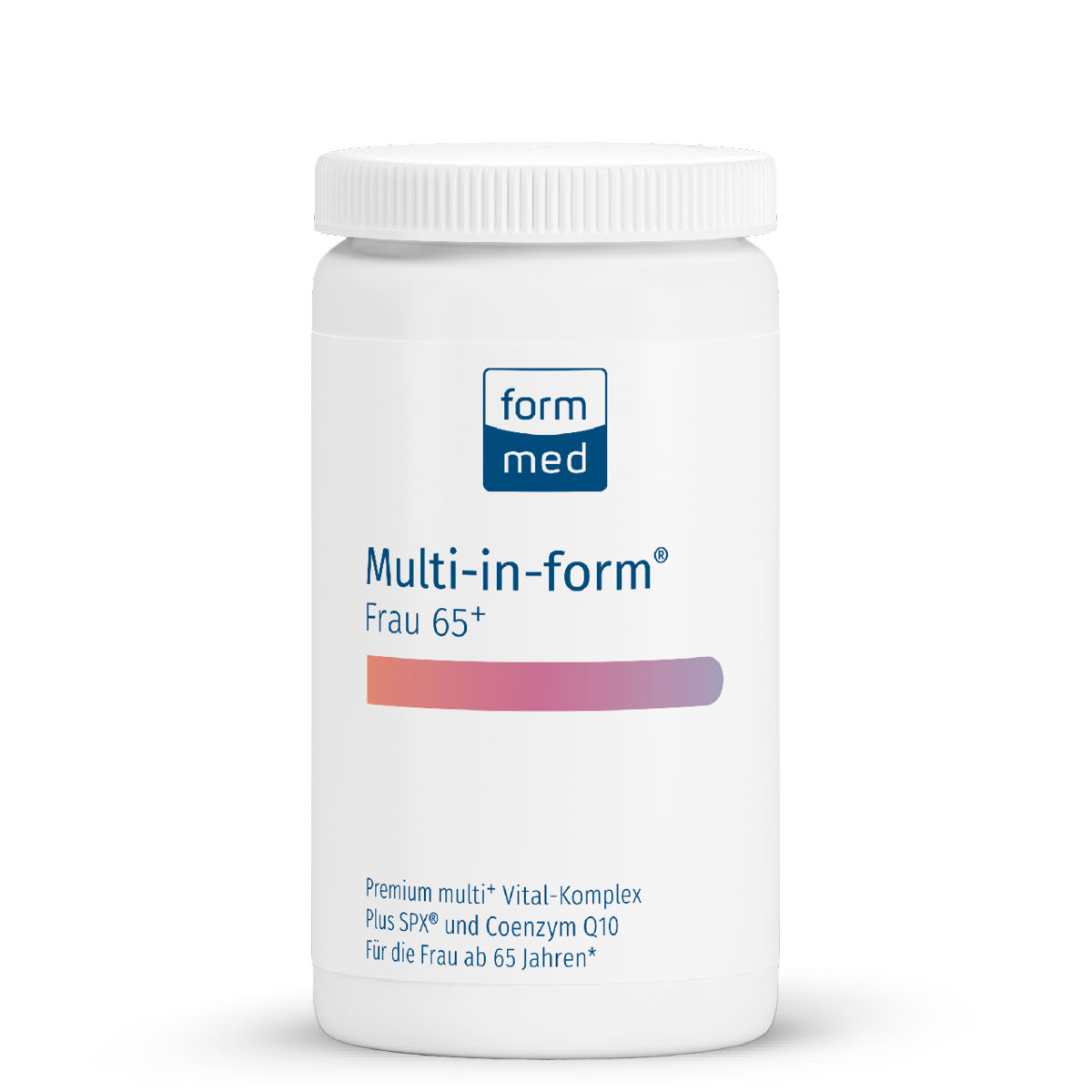
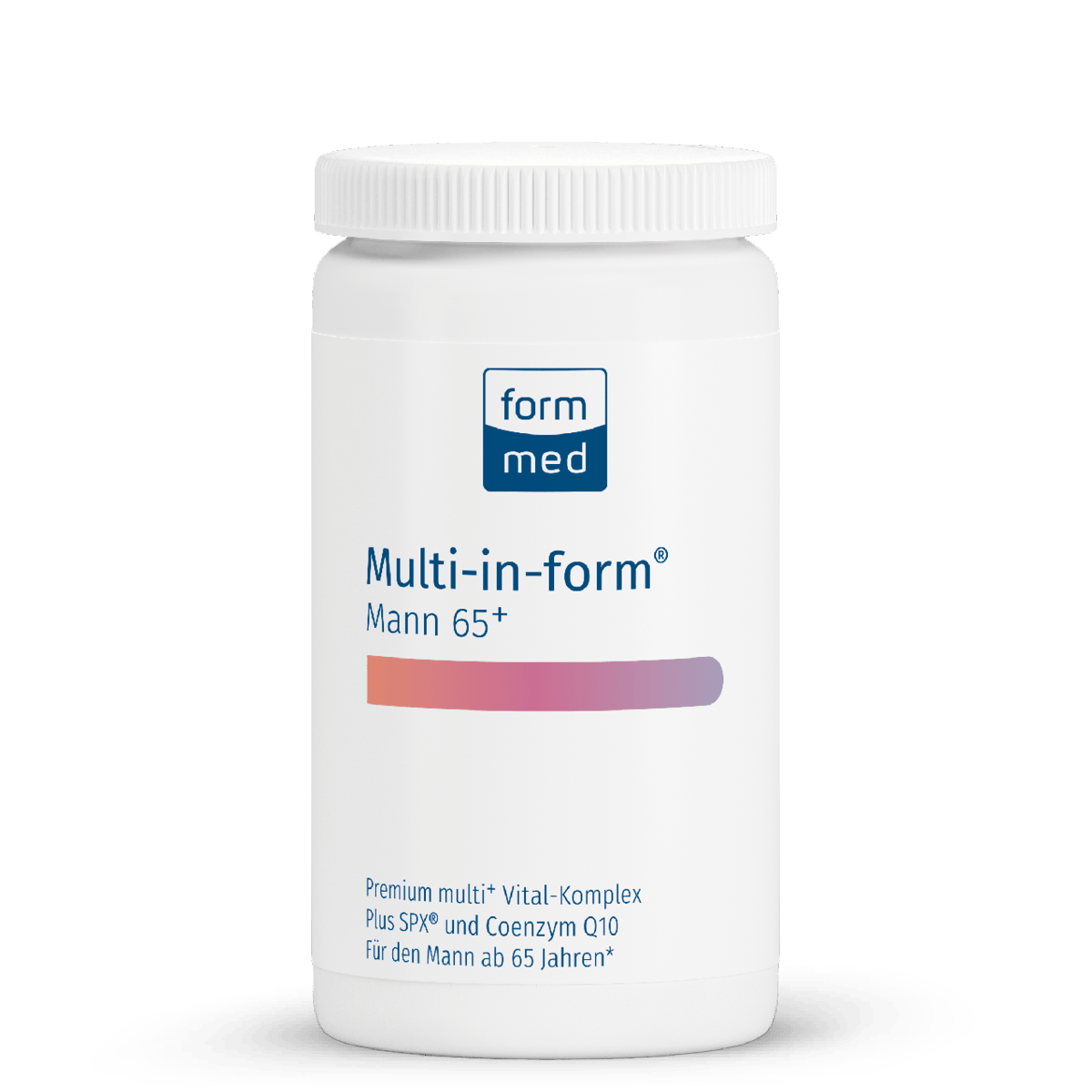
When looking to supplement specific micronutrients—such as vitamin D, vitamin C, zinc, or selenium—it is easy to end up taking several separate, single-nutrient products. A well-balanced, comprehensive supplement, by contrast, covers these and other micronutrients essential in later life within a single complex. These are specifically tailored to changing needs—for example, through products like Multi-in-form® Frau 65+ and Multi-in-form® Mann 65+.
FormMed uses highly bioavailable raw materials and carefully calibrated dosages in its products, ensuring that the body can optimally absorb the nutrients without being subjected to unnecessary strain.
Protein in Older Age: A Building Block for Antibodies and Immune Cells
Much like muscles, the immune system requires a constant supply of resources—provided primarily by protein in the form of amino acids, the building blocks of protein. Antibodies (immunoglobulins) are themselves protein molecules. Furthermore, the rapid proliferation of T and B cells during an immune response demands large quantities of amino acids.
In this context, researchers are focusing specifically on branched-chain amino acids—known as BCAAs—as well as glutamine, which rapidly dividing immune cells utilize as a preferred source of energy and structural material. If protein intake is insufficient, the availability of these building blocks may be limited, potentially compromising the immune response.
In older age, dietary protein intake often declines—for instance, due to a reduced appetite or difficulties with chewing and swallowing. At the same time, an immune system that is chronically activated by "inflammaging" (age-related low-grade inflammation) continuously consumes amino acids to produce signaling molecules, enzymes, and antibodies. Consequently, it is often more practical to incorporate smaller, protein-rich portions throughout the day—such as soft or liquid-based options like scrambled eggs, yogurt, quark, or protein shakes—which are easier to chew and swallow than large, substantial meals.
Diet and Lifestyle as Countermeasures to Inflammaging
In addition to a targeted intake of micronutrients and sufficient protein, fundamental dietary patterns are also becoming a key focus of research regarding inflammaging. Scientists are specifically investigating how a dietary pattern rich in secondary plant compounds—such as one modeled after the Mediterranean diet—affects low-grade, chronic inflammation in old age.
Typical components of a diet associated with a more favorable "inflammaging" profile include:
- Polyphenol-rich fruits and vegetables: Berries, leafy green vegetables, alliums (such as onions and garlic), and herbs contain numerous secondary plant compounds whose influence on inflammatory markers is currently being studied.
- Oily saltwater fish: Salmon, mackerel, and herring provide omega-3 fatty acids, which serve as precursors for inflammation-resolving signaling molecules.
- Whole grains: Fiber-rich whole-grain products have a beneficial effect on the gut microbiome, which is closely linked to the immune system.
- Legumes, nuts, and high-quality vegetable oils: In addition to fiber, these provide minerals such as zinc and selenium, as well as vitamin E.
Conversely, pro-inflammatory foods should be avoided: studies have repeatedly linked a high intake of ultra-processed convenience foods, trans fats, and refined sugar to a less favorable inflammatory state.
Regular physical activity is one of the best-documented lifestyle factors for favorably influencing the balance between immunosenescence and inflammaging. The key factor here is consistency rather than intensity—a combination of endurance activities, such as brisk walking, cycling, or swimming, and moderate strength training is considered particularly effective.
Nutrition, physical activity, and targeted micronutrient supplementation together form the three pillars for positively influencing this natural aging process.
Conclusion: Targeted Support for Immunosenescence and Inflammaging
Immunosenescence and "inflammaging" are two sides of the same aging process: while the adaptive (specific) immune response loses efficiency—partly due to the gradual regression of the thymus—the innate immune system becomes chronically overactive, constantly emitting low-grade inflammatory signals. Together, these processes contribute to an increased susceptibility to infections, as well as numerous other age-related health issues.
Since the intake of micronutrients and protein often declines with age—at a time when the body’s requirements actually rise due to persistent inflammatory activity—it is worth taking a closer look at one’s nutritional status. A targeted intake of vitamin D, vitamin C, zinc, and selenium, along with sufficient protein, can be beneficial—ideally integrated into an anti-inflammatory diet and supported by regular physical activity. The most effective approach to determining which supplements are appropriate for an individual is to consult with a physician or therapist, ideally guided by laboratory test results.
Frequently Asked Questions About Immunosenescence and Inflammaging
Immunosenescence refers to the general, age-related decline in the performance of the immune system—specifically the adaptive immune response, the part of the immune system that targets and adapts to new, previously unknown pathogens.
One cause is the gradual atrophy of the thymus, which results in the production of fewer new T cells. Furthermore, as a person ages, there is an increasing accumulation of aging T cells that are barely functional. Consequently, the body’s response to new, unknown pathogens becomes slower and less precise.
Immunsenescence and immunosenescence are two ways of writing the same term—both refer to the age-related decline in the performance of the immune system. In German-speaking regions, the more common and technically correct spelling is “Immunoseneszenz” (with an “o”).
“Inflammaging” describes a chronic, low-grade inflammatory activity that develops in the body with advancing age, in the absence of any identifiable acute illness. This process is driven by both aging T cells and overactive phagocytes, both of which continuously release pro-inflammatory signaling molecules. The term is a portmanteau of “inflammation” and “aging.”
Aging T cells and overactive phagocytes—which continuously release pro-inflammatory signaling molecules—are considered the primary cause. Other contributing factors under discussion include a diminished capacity of aging cells to clear cellular debris, as well as age-related changes to the gut microbiome and the intestinal mucosal barrier.
The focus is on three complementary approaches: an anti-inflammatory diet, regular moderate physical activity, and targeted micronutrient supplementation with vitamin D, zinc, selenium, and vitamin C.
Since this is a natural aging process, a complete "cure" in the traditional sense is not possible—though a noticeable improvement in the body’s inflammatory balance can certainly be achieved. It is best to discuss an individual plan with a doctor or therapist.
An anti-inflammatory diet, modeled after the Mediterranean style of eating, is considered beneficial. It is rich in plant-based foods, healthy fats, and phytochemicals, while being low in highly processed products and sugar. In addition, regular moderate physical activity and an adequate intake of vitamin D, zinc, selenium, and vitamin C are important: these four micronutrients contribute to the normal functioning of the immune system and help protect cells against oxidative stress.
In the context of a more favorable inflammatory profile in old age, particular attention is given to polyphenol-rich fruits and vegetables, such as berries, leafy greens, and alliums (onions, garlic, etc.). Fatty saltwater fish—including salmon, mackerel, and herring—as well as whole-grain products, legumes, nuts, and high-quality vegetable oils are also considered beneficial.
Conversely, highly processed foods, trans fats, and a high sugar intake have an adverse effect on the body’s inflammatory state.
The thymus is a small organ located behind the breastbone, above the heart. It is sometimes confused with the thyroid gland, but it serves an entirely different function: within the thymus, precursor cells from the bone marrow mature into specialized T cells, which are responsible for the specific immune response.
The thymus is the central “training ground” for the immune system. It teaches developing T cells to distinguish between foreign structures and the body’s own tissue. At the same time, it ensures the creation of the broadest possible spectrum of T cells, capable of responding to a wide variety of pathogens.
Yes, people who have had their thymus surgically removed can, in principle, live without this organ. The timing is crucial: by adulthood, the thymus has already fulfilled the greater part of its function, as the fundamental diversity of T cells has by then been established. If, however, it is removed during childhood, the development of the immune system may be limited.
The regression of the thymus (thymic involution) begins at puberty and continues steadily thereafter. Up to the age of approximately 40 to 50, the thymus loses about 3 percent of its functional tissue each year; subsequently, this regression slows to about 1 percent per year. Functional thymic tissue is increasingly replaced by fat and connective tissue, with the result that, in later life, only a fraction of the original T-cell production is maintained.
Based on current scientific knowledge, it is not possible to specifically strengthen or regenerate the thymus itself. Furthermore, there is no scientific evidence to support the popular practice of "thymus tapping"—it has not been shown to actually boost thymus function or T-cell production. Research is currently exploring experimental approaches, such as the use of growth factors.
A more realistic strategy is to compensate for declining thymus function by supporting the immune system as a whole—for instance, through the targeted intake of vitamin D, zinc, selenium, and vitamin C, alongside an overall anti-inflammatory lifestyle.
Well-supplied with micronutrients
Ready for immediate dispatch - Delivery time approx. 2-5 days
Ready for immediate dispatch - Delivery time approx. 2-5 days
Ready for immediate dispatch - Delivery time approx. 2-5 days
Literature
Bjørklund, G. et al. (2022): Selenium: An Antioxidant with a Critical Role in Anti-Aging. Molecules. 27(19):6613. https://www.mdpi.com/1420-3049/27/19/6613
Carlberg, C., Velleuer, E. (2024): Vitamin D and Aging: Central Role of Immunocompetence. Nutrients. 16(3):398. https://www.mdpi.com/2072-6643/16/3/398
Carr, A. C., & Maggini, S. (2017): Vitamin C and Immune Function. Nutrients. 9(11):1211. https://pubmed.ncbi.nlm.nih.gov/29099763/
Duggal, N. A. et al. (2019): Can physical activity ameliorate immunosenescence and thereby reduce age-related multi-morbidity? Nature Reviews Immunology, 19(9), 563–572. https://pubmed.ncbi.nlm.nih.gov/31175337/
Ferrucci, L., Fabbri, E. (2018): Inflammageing: chronic inflammation in ageing, cardiovascular disease, and frailty. Nat Rev Cardiol. 15(9):505–522. https://www.nature.com/articles/s41569-018-0064-2
Fulop, T. et al. (2018): Immunosenescence and Inflamm-Aging As Two Sides of the Same Coin: Friends or Foes? Front Immunol. 8:1960. https://pmc.ncbi.nlm.nih.gov/articles/PMC5767595/
Haase, H., Rink, L. (2009): The immune system and the impact of zinc during aging. Immun Ageing. 6:9. https://pmc.ncbi.nlm.nih.gov/articles/PMC2702361/
Harris, S., DePalma, J., & Barkoukis, H. (2025): Protein and Aging: Practicalities and Practice. Nutrients. 17(15):2461. https://doi.org/10.3390/nu17152461
Jia, H. et al. (2024): Vitamin D supplementation for prevention of acute respiratory infections in older adults: A systematic review and meta-analysis. PLoS One. 19(5):e0303495. https://journals.plos.org/plosone/article?id=10.1371%2Fjournal.pone.0303495
Li, L. et al. (2024): Thymic microenvironment's impact on immunosenescence. Immunol Res. 72(5):1161–1173. https://link.springer.com/article/10.1007/s12026-024-09519-z
Müller, L., Di Benedetto, S. (2025): Immunosenescence and inflammaging: Mechanisms and modulation through diet and lifestyle. Front Immunol. 16:1708280. https://www.frontiersin.org/journals/immunology/articles/10.3389/fimmu.2025.1708280/full
Nejatian Hoseinpour, A. et al. (2025): The influence of resistance training on inflammatory markers, body composition and functional capacity in healthy older adults: A systematic review and meta-analysis. Archives of Gerontology and Geriatrics. 130:105731. https://pubmed.ncbi.nlm.nih.gov/39740358/
Palmer, D. B. (2013): The Effect of Age on Thymic Function. Frontiers in Immunology. 4:316. https://pubmed.ncbi.nlm.nih.gov/24109481/
Perri, G. et al. (2024): Selenium status and its determinants in very old adults: insights from the Newcastle 85+ Study. British Journal of Nutrition, 131(5), 901–910. https://pubmed.ncbi.nlm.nih.gov/37877251/