Flatulence and Bloating: Causes, Home Remedies, and What Really Helps the Gut
Table of Contents
- What causes flatulence? The 3 main causes
- Immediate relief: Home remedies for bloating that instantly relieve abdominal cramping
- Digestive Aids: Enzymes and a Healthy Microbiome
- When to see a doctor? Warning signs to take seriously
- Conclusion: Flatulence and Bloating – Targeted Digestive Support
- Frequently Asked Questions About Bloating
- Suitable FormMed preparations
- Literature
Flatulence and a bloated abdomen (meteorism) are widespread—even though hardly anyone talks about them openly. Yet, the formation of gas in the intestine is initially completely normal: up to 1.5 liters of intestinal gas are produced daily as a natural by-product of digestion. Flatulence only becomes a problem when the gas cannot escape, is produced in excess, has an unpleasant odor, or is accompanied by pain.
In this guide, you will learn how flatulence develops, which home remedies have proven effective, and how to support your digestion and gut flora in the long term.
What causes flatulence? The 3 main causes
Flatulence occurs when too much gas accumulates in the intestine – either because air is swallowed or because intestinal bacteria produce increased amounts of gas. These gases are often released as flatulence. If the gas cannot escape, abdominal bloating occurs.
In practice, several factors usually contribute – the three most common causes are:
1. Swallowing air (aerophagia)
Some of the gas does not originate in the intestine itself but is swallowed with food or drinks, for example when consuming carbonated beverages. People who eat quickly, chew gum, drink directly from bottles or are under stress tend to swallow more air. Some of this air escapes upwards through burping – the rest leaves the intestine as flatulence.
2. An unsuitable diet: gas-producing foods
Certain foods provide the intestine with particularly large amounts of fermentable material – especially short-chain sugars (oligosaccharides), which are broken down by certain bacteria. These bacteria produce the odourless gases carbon dioxide, methane and hydrogen. Foods containing sulphur can also lead to the formation of hydrogen sulphide, which has an unpleasant, rotten smell.
Flatulence is often caused by the following foods
- Legumes such as beans, lentils and chickpeas
- Cruciferous vegetables such as broccoli, cauliflower and Brussels sprouts
- Sugar alcohols such as sorbitol, mannitol or xylitol found in diet products or chewing gum
- Highly processed foods and sugar, which promote the growth of gas-producing intestinal bacteria
- Sulphur-treated dried fruit and eggs, whose sulphur-containing amino acids can sometimes be converted into hydrogen sulphide by intestinal bacteria
Beer can also contribute to flatulence – it contains fermentable carbohydrates, carbon dioxide and sometimes yeast. Anyone who frequently experiences flatulence after eating should review their dietary habits. Keeping a simple food diary often helps to identify individual triggers.
3. Enzyme deficiency and dysbiosis
Sometimes the cause of flatulence lies in the digestive process itself. If certain digestive enzymes are lacking or the gut microbiota is out of balance, food components are not completely broken down. They reach the large intestine undigested, where bacteria ferment them and produce large amounts of gas.
Enzyme deficiency
An enzyme deficiency can have various causes. Food intolerances are among the most common:
- Lactose intolerance: If the enzyme lactase is lacking, milk sugar (lactose) remains in the intestine, where it is broken down by gas-producing bacteria. Flatulence after eating, abdominal cramps or diarrhoea may then occur following the consumption of dairy products.
- Fructose intolerance: Fruit sugar (fructose) is not sufficiently absorbed in the small intestine, reaches the large intestine and is fermented there, producing gas.
- Histamine intolerance: If the enzyme diamine oxidase (DAO) is lacking, histamine from food cannot be broken down sufficiently. It accumulates and can cause symptoms such as skin redness, headaches and a racing heart, as well as flatulence.
- Coeliac disease: In affected individuals, consuming gluten damages the small intestine, preventing it from fully absorbing nutrients – flatulence is a common symptom.
Dysbiosis
Dysbiosis refers to a shift in the gut microbiota towards gas-producing bacteria. It can be triggered, for example, by an unbalanced diet, infections, antibiotics or other medications that affect the microbial balance.
An often overlooked cause is insufficient stomach acid, as stomach acid forms part of the digestive tract's natural protective barrier. When stomach acid levels are too low, some bacteria survive their passage through the stomach and can colonise the intestine. Find out more in our guide “Insufficient stomach acid”.
Slower intestinal transit caused by constipation can also contribute to flatulence: the longer food remains in the intestine, the more time bacteria have to produce gas from it. Causes of constipation include a low-fibre diet, insufficient fluid intake, lack of physical activity or hormonal influences – for example during pregnancy or the menopause. Chronic stress can also play a role, as cortisol and adrenaline can slow intestinal movements.
Immediate relief: Home remedies for bloating that instantly relieve abdominal cramping
Anyone suffering from a bloated belly looks for quick relief. So, what works fast against bloating? Proven home remedies target the problem on three levels: they relax the intestinal muscles, aid digestion, and help expel gas.
Heat and movement
A hot water bottle or a warm grain-filled pillow placed on the abdomen is one of the oldest and most effective home remedies for bloating. Heat relaxes the smooth muscles of the intestine and boosts blood circulation. The blood absorbs the gases and releases them via the lungs. At the same time, gentle movement helps: even a short walk of 15 to 20 minutes stimulates breathing and the rhythmic movements of the intestine (peristalsis). This helps to release trapped gas.
Plants that relieve bloating: Carminatives and bitter substances
Certain medicinal plants are traditionally used to soothe the gastrointestinal tract. In herbal medicine, they are known as carminatives.
Their effects are attributed to their essential oils. Scientists are investigating whether they directly dissolve gas bubbles, relax intestinal muscles, and counteract imbalances in the gut flora (dysbiosis). Popular carminatives include fennel, anise, caraway, peppermint, and chamomile.
Bitter substances are also popular remedies for bloating. Research is being conducted into whether they stimulate the production of saliva, gastric juice, bile, and enzymes. Enzymes break down nutrients and stimulate digestion, thereby alleviating feelings of fullness and bloating. Foods containing bitter substances include artichokes, chicory, arugula, endive, and bitter cabbage varieties such as Brussels sprouts. Spices and herbs—such as turmeric, wormwood, and ginger—also contain bitter substances.
FormMed Tip – the classic tea for bloating
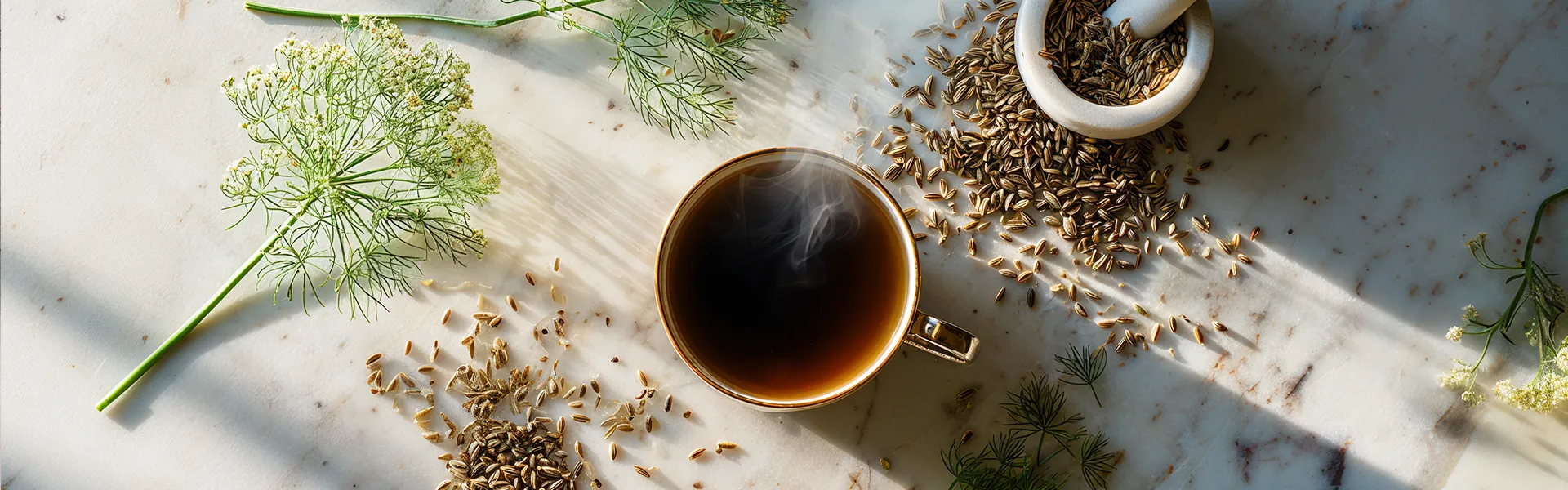
The classic tea for bloating combines three carminatives: 1 teaspoon each of fennel, anise, and caraway seeds. Lightly crush the seeds in a mortar beforehand to release the essential oils. Pour 250 ml of hot water over them, cover, let steep for 10 minutes, and drink in small sips.
Look for medicinal quality: The levels of essential oils in teas sold as food products in supermarkets often vary. In contrast, medicinal teas from pharmacies are standardized according to the specifications of the German Pharmacopoeia (DAB) and provide a defined active ingredient content.
Digestive Aids: Enzymes and a Healthy Microbiome
Home remedies offer temporary relief for acute symptoms. However, if you experience frequent bloating, it is worth examining the underlying causes: digestive enzymes and the microbiome (gut flora).
Targeted Supplementation of Digestive Enzymes
In cases of specific intolerances, the body may be unable to produce sufficient quantities of certain digestive enzymes. For lactose intolerance, for example, lactase supplements—available as capsules or tablets—can be taken with meals containing dairy. Lactase breaks down lactose (milk sugar) before it can ferment in the gut.
Digestive enzymes are also used in cases of impaired pancreatic function or generally reduced enzyme production; these are often formulated as combination products containing amylase (for carbohydrates), protease (for proteins), and lipase (for fats).
The specific enzymes required depend on the underlying cause. Consulting a doctor or therapist can help you identify the right supplement and dosage.
Building the Microbiome: A Long-Term Solution
The long-term goal is to actively foster a balanced gut flora—suppressing gas-producing bacteria while strengthening microbiome diversity.
The essential foundation is a high-fiber diet—specifically one rich in soluble fiber from sources like vegetables and rolled oats. It is important to choose fiber sources that are well-tolerated by your individual system. Examples include resistant (indigestible) starch—such as that found in cooled potatoes—or resistant corn dextrin. It serves as food for beneficial gut bacteria, thereby contributing to a more stable gut environment.
Researchers are also investigating ways to influence the microbiome—for instance, by introducing bacterial strains from the Lactobacillus and Bifidobacterium genera. Another area of focus is combined approaches that use probiotics alongside suitable types of fiber—known as synbiotics.
It is important to note that targeted support for the microbiome takes time, as changes to the composition of the gut flora occur only over the long term. You can learn how to implement a step-by-step gut restoration plan in the guide to gut restoration.
When to see a doctor? Warning signs to take seriously
Occasional bloating after a heavy meal or eating gas-producing foods is normal and no cause for concern. However, the situation is different if the symptoms occur regularly or severely, or are accompanied by other symptoms.
You should consult a doctor in the following situations:
- Sudden, persistent bloating with no apparent trigger – especially in people over 50
- Severe, colicky abdominal pain or cramps
- Blood in the stool
- Unexplained weight loss
- Persistent symptoms despite dietary changes and home remedies
- Sudden alternation between bloating, constipation, and diarrhea
These additional symptoms may indicate serious conditions requiring medical evaluation—such as irritable bowel syndrome (IBS), chronic inflammatory bowel diseases, or, in rare cases, bowel cancer.
Conclusion: Flatulence and Bloating – Targeted Digestive Support
Flatulence and bloating are common and often harmless. The first step is to identify the triggers—ranging from hard-to-digest foods and swallowing air while eating too quickly to enzyme deficiencies or an imbalance in gut flora. Anyone who regularly suffers from bloating after meals should pay close attention to their diet or keep a food diary.
For acute cases, proven home remedies can help, such as applying warmth to the abdomen, gentle movement, and drinking fennel-anise-caraway tea made with lightly crushed seeds. In the long term, gut flora plays a central role. Targeted fiber intake over several weeks can help stabilize the microbial balance. In cases of enzyme deficiency, it is advisable to supplement the missing enzyme—such as lactase for lactose intolerance.
By paying close attention to diet, eating habits, and gut flora, digestion can be brought back into balance step by step—leading to a much more comfortable feeling in your gut during daily life.
Frequently Asked Questions About Bloating
Furthermore, thyroid disorders can slow down bowel activity and promote bloating. Disorders of the liver, gallbladder, or pancreas also increase the tendency toward bloating.
A healthy diet does not automatically guarantee digestion free from flatulence. Foods rich in fiber—such as legumes, whole-grain products, and vegetables—provide ample material for gut bacteria to ferment. Anyone switching suddenly from a low-fiber diet to a plant-based one should increase their intake gradually to allow the gut time to adapt.
Individual intolerances or an imbalance in the gut flora (dysbiosis) can also play a role. Keeping a food diary helps narrow down potential triggers.Estrogen has the opposite effect: it increases intestinal motility. If levels drop during menopause, digestion can slow down and gas production may increase.
Stress hormones such as cortisol and adrenaline can also inhibit peristalsis, thereby contributing to bloating.
Depending on the underlying cause, missing enzymes can be specifically supplemented, or the gut flora can be supported through the intake of dietary fiber.
Fennel, anise, and caraway tea (crush the seeds beforehand) can also work quickly. Additionally, pulling your knees toward your chest while lying down or gently massaging your abdomen in a clockwise direction can help expel gas.
Suitable FormMed preparations
Ready for immediate dispatch - Delivery time approx. 1-3 days

Ready for immediate dispatch - Delivery time approx. 1-3 days

Ready for immediate dispatch - Delivery time approx. 1-3 days
Literature
Biesalski, H. K. (2024): Vitamine, Spurenelemente und Minerale. Indikation, Diagnostik, Therapie. 3. aktualisierte und erweiterte Auflage. Georg Thieme Verlag KG Stuttgart.
Fernández-Bañares, F. (2022): Carbohydrate Maldigestion and Intolerance. Nutrients. 14(9):1923. https://doi.org/10.3390/nu14091923
Ford, A. C. et al. (2018): Efficacy of prebiotics, probiotics, and synbiotics in irritable bowel syndrome and chronic idiopathic constipation: systematic review and meta-analysis. Am J Gastroenterol. 109(10):1547–1561. https://pubmed.ncbi.nlm.nih.gov/25070051/
Misselwitz, B. et al. (2019): Update on lactose malabsorption and intolerance: pathogenesis, diagnosis and clinical management. Gut. 68(11):2080–2091. https://pmc.ncbi.nlm.nih.gov/articles/PMC6839734/
Moshiree, B. et al. (2023): AGA Clinical Practice Update on Evaluation and Management of Belching, Abdominal Bloating, and Distention: Expert Review. Gastroenterology. 165(3):791–800. https://pubmed.ncbi.nlm.nih.gov/37549971/
Ringel-Kulka, T. et al. (2011): Probiotic bacteria Lactobacillus acidophilus NCFM and Bifidobacterium lactis Bi-07 versus placebo for the symptoms of bloating in patients with functional bowel disorders: a double-blind study. J Clin Gastroenterol. 45(6):518–525. https://pubmed.ncbi.nlm.nih.gov/21436726/
Šuran, J. et al. (2026): IBS and SIBO: Gut Microbiota, Pathophysiology, and Non-Pharmacological Interventions. Antibiotics (Basel). 15(3):251. https://pubmed.ncbi.nlm.nih.gov/41892413/
Teterovska, R. et al. (2025): Medicinal Plants in Food Supplements for Gastrointestinal Disorders: Critical Assessment of Health Claims on Gastric Acid Regulation. Nutrients. 17(23):3674. https://pmc.ncbi.nlm.nih.gov/articles/PMC12693992/
Wilkinson, J. M. et al. (2019): Gas, Bloating, and Belching: Approach to Evaluation and Management. Am Fam Physician. 99(5):301–309. https://www.aafp.org/pubs/afp/issues/2019/0301/p301.html