Omega-3 during pregnancy: Why DHA is so important
Table of Contents
- DHA – What Is It?
- DHA for Brain and Eyes – The Most Important Omega-3 Fatty Acid During Pregnancy
- How Much Omega-3 Is Recommended During Pregnancy and When to Start?
- Fish During Pregnancy – What Should You Be Aware Of?
- Omega-3 Capsules During Pregnancy – What Should You Look For?
- Conclusion: DHA – Essential for Mother and Child
- Suitable FormMed Supplements
- References
Pregnancy is a special time—and everything an expectant mother consumes also affects the developing baby. One nutrient is especially important: DHA, an omega-3 fatty acid derived from fish and algae. It is essential for the development of the brain and eyes. However, not every pregnant woman eats fish regularly—whether due to concerns about heavy metals like mercury or because of a vegetarian or vegan diet.
This guide will explain why DHA, as an omega-3 fatty acid, is so important during pregnancy, which types of fish are safe to eat, what alternatives are available, and how you can ensure optimal care for both yourself and your baby.
DHA – What Is It?
Docosahexaenoic acid (DHA) is a long-chain, polyunsaturated omega-3 fatty acid. Along with eicosapentaenoic acid (EPA), DHA is classified as marine omega-3. These two fatty acids are found exclusively in fatty sea fish such as salmon, mackerel, herring, and sardines, as well as in vegan algae oil.
Plant-based oils like flaxseed oil and walnuts do contain the omega-3 fatty acid alpha-linolenic acid (ALA)—a precursor to EPA and DHA—but the body converts it inefficiently. This means that flaxseed oil and walnuts alone are not sufficient to meet the body’s DHA omega-3 requirements.
DHA for Brain and Eyes – The Most Important Omega-3 Fatty Acid During Pregnancy
Omega-3 fatty acids are essential building blocks of cell membranes—especially DHA, which is found in high concentrations in the brain and the retina of the eye. There, it provides flexibility and stability to the membranes and supports signal transmission between nerve cells. DHA is therefore crucial for the healthy development of the baby’s brain and vision.
But the expectant mother also benefits: for her, DHA supports brain function and vision, and—together with EPA—contributes to a healthy heart function.
In addition, studies suggest that a good intake of omega-3 through the diet may help reduce the risk of preterm birth.
How Much Omega-3 Is Recommended During Pregnancy and When to Start?
The need for omega-3 fatty acids increases significantly during pregnancy—especially for DHA. The German Nutrition Society (DGE) recommends that pregnant and breastfeeding women consume at least 200 milligrams of DHA per day.
To meet this requirement, the DGE advises eating one to two servings of fatty fish per week—ideally salmon, herring, or mackerel. For example, 100 grams of salmon provides an average of 1,200 milligrams of DHA. However, the content may vary. Additionally, wild salmon contains more DHA than farmed salmon.
Ideally, omega-3 fatty acids should be sufficiently consumed before pregnancy to build a solid foundation. After the first trimester—from the 13th week of pregnancy onward—DHA is particularly intensively incorporated into the baby's developing tissues.
Fish During Pregnancy – What Should You Be Aware Of?
When it comes to eating fish during pregnancy, a bit of caution is advised. The type of fish you should eat depends on its content of heavy metals like mercury and the method of preparation.
Which Fish Should Be Avoided During Pregnancy?
Some fish species contain particularly high levels of mercury, which can accumulate in the body and negatively affect the baby’s development. This applies especially to large predatory fish like tuna, as they consume many smaller fish over their lifespan—accumulating their contaminants as well. For this reason, tuna should not be eaten during pregnancy.
Other fish that should be avoided during pregnancy include:
- Swordfish
- Shark
- Halibut
- Pike
- Redfish
- Eel
Smoked salmon is also problematic during pregnancy due to the possible presence of bacteria like listeria. These bacteria can be found in raw or smoked fish and may cause infections that are dangerous during pregnancy.
Therefore: Anything raw, smoked, or high in mercury should be avoided during pregnancy.
List of Fish That Are Safe to Eat During Pregnancy
Fish from aquaculture typically contains lower levels of heavy metals, but often also has lower omega-3 content. During pregnancy, it is best to choose fatty fish with low mercury content, such as:
- Salmon (not smoked)
- Herring
- Mackerel
- Sardines
The key is: they must be fresh and fully cooked. A common question—“How long should fish be cooked during pregnancy?”—can be answered clearly: Make sure to heat the fish to over 70 °C (158 °F) for several minutes. This ensures any harmful pathogens are reliably destroyed.
Omega-3 Capsules During Pregnancy – What Should You Look For?
If pregnant women avoid fish—whether due to taste preferences or a vegetarian or vegan diet—the German Nutrition Society (DGE) recommends taking DHA through a dietary supplement. There are two main sources to consider:
- Fish oil: Choose high-quality supplements that have been specially purified to ensure safe omega-3 intake during pregnancy. Be sure to read about what else to look for in fish oil quality.
- Algae oil: For vegetarians and vegans, algae oil is an ideal source of DHA. It is extracted directly from microalgae such as Schizochytrium sp., which are typically cultivated under controlled conditions. As a result, algae oil generally contains fewer contaminants than fish oil.
Conclusion: DHA – Essential for Mother and Child
DHA is the most important omega-3 fatty acid during pregnancy. It supports the development of the baby’s brain and eyes and contributes to the mother’s health. The German Nutrition Society (DGE) therefore recommends a daily intake of at least 200 milligrams of DHA.
Those who eat one to two servings per week of fatty, fully cooked sea fish such as salmon, herring, or mackerel can usually meet their needs. Important to note: fish high in mercury, like tuna, should be avoided—as well as raw or smoked products like smoked salmon.
If you rarely or never eat fish, you can choose high-quality DHA supplements made from fish or algae oil. This way, you can ensure optimal care for both yourself and your baby—for a healthy pregnancy and the best possible start in life.
Suitable FormMed Supplements
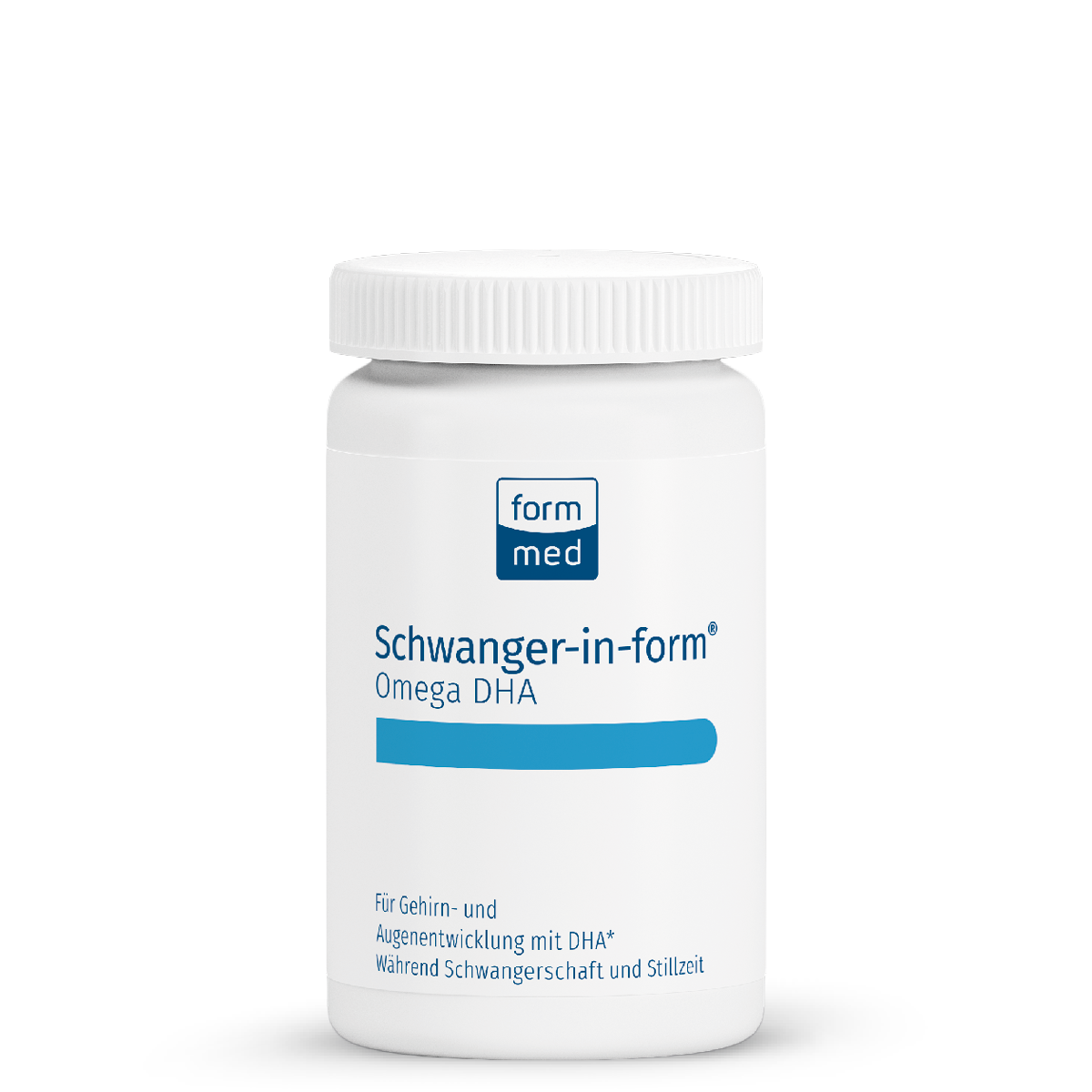
Ready for immediate dispatch - Delivery time approx. 1-3 days

Ready for immediate dispatch - Delivery time approx. 1-3 days

Ready for immediate dispatch - Delivery time approx. 1-3 days
References
Abdelrahman, M. A. et al. (2023): Impact of n-3 polyunsaturated fatty acid intake in pregnancy on maternal health and birth outcomes: systematic review and meta-analysis from randomized controlled trails. Arch Gynecol Obstet. 307(1):249-262. https://pubmed.ncbi.nlm.nih.gov/35348829/
Bundesinstitut für Risikobewertung (2024): Schwangere und Stillende sollten Fischarten mit hohen Gehalten an Methylquecksilber meiden. Presseinformationen 28.05.2024/Nr. 17/2024. https://www.bfr.bund.de/presseinformation/schwangere-und-stillende-sollten-fischarten-mit-hohen-gehalten-an-methylquecksilber-meiden/, abgerufen am: 11.07.2025.
Cetin, I. et al. (2024): Omega-3 fatty acid supply in pregnancy for risk reduction of preterm and early preterm birth. Am J Obstet Gynecol MFM. 6(2):101251. https://pubmed.ncbi.nlm.nih.gov/38070679/
Deutsche Gesellschaft für Ernährung (2000): Referenzwert Fett, essenzielle Fettsäuren. https://www.dge.de/wissenschaft/referenzwerte/fett-essenzielle-fettsaeuren/, abgerufen am: 11.07.2025.
Deutsche Gesellschaft für Ernährung (2018): Handlungsempfehlungen - Ernährung in der Schwangerschaft. DGEinfo. 12:183-189. https://www.dge.de/gesunde-ernaehrung/gezielte-ernaehrung/ernaehrung-in-schwangerschaft-und-stillzeit/handlungsempfehlungen-ernaehrung-in-der-schwangerschaft, abgerufen am: 11.07.2025.
Eckert, N. (2017): Die Dosis macht das Gift: FDA gibt Liste für Schwangere zur Quecksilberbelastung von Fischen heraus. https://deutsch.medscape.com/artikelansicht/4905741, abgerufen am: 11.07.2025.
Firouzabadi, F. D. et al. (2022): The effects of omega-3 polyunsaturated fatty acids supplementation in pregnancy, lactation, and infancy: An umbrella review of meta-analyses of randomized trials. Pharmacol Res. 177:106100. https://pubmed.ncbi.nlm.nih.gov/35104631/
Serra, R. et al. (2021): Supplementation of Omega 3 during Pregnancy and the Risk of Preterm Birth: A Systematic Review and Meta-Analysis. Nutrients. 13(5):1704. https://pubmed.ncbi.nlm.nih.gov/34069867/