
Creatine in Micronutrient Medicine: The Cellular Energy Store Beyond Sports
Table of Contents
- The ATP Engine: How Creatine Supplies Cells with Energy
- Creatine in the Brain: Energy for Concentration and Cognitive Performance
- Sarcopenia in Older Age: Maintaining Muscle Mass from Age 55
- Creatine in a Plant-Based Diet: Lower Stores, Greater Potential for Replenishment
- Forms and Quality: Why Creatine Monohydrate Is the Gold Standard
- Proper Dosing and Intake of Creatine: Two Proven Methods
- Tolerability and Side Effects of Creatine
- Conclusion: Creatine as an Energy Reserve for Muscles and the Brain
- Frequently asked questions about creatine
- Well-supplied with creatine
- Literature
For most people, the term "creatine" is associated with gyms, muscle building, and sports nutrition. However, this purely athletic categorization is far too narrow. Creatine is a substance produced by the body itself and a key component of cellular energy metabolism—found in virtually every cell in the body. Maintaining adequate creatine stores is also important for the brain and nervous system, as well as for preserving muscle mass in later life and for individuals who follow a plant-based diet.
Learn how creatine regenerates ATP—the body’s "energy currency"—what role it plays in the brain, and how targeted supplementation can support muscle strength as you age. Discover, too, what you should look for when selecting and dosing creatine supplements.
The ATP Engine: How Creatine Supplies Cells with Energy
Every cell in the body uses ATP (adenosine triphosphate) as a universal energy currency. ATP consists of a basic building block (adenosine) and three phosphate groups linked together. Between the second and third phosphate group lies a high-energy bond; when this bond is broken, that very energy is released, powering the cell's activities. What remains is the lower-energy molecule ADP (adenosine diphosphate), which contains only two phosphate groups.
For the cell to continue functioning, ADP must be constantly regenerated back into ATP. This is precisely where creatine comes into play. Within cells, it exists primarily as creatine phosphate—a storage form containing a high-energy phosphate group. The enzyme creatine kinase rapidly transfers this phosphate group from creatine phosphate to ADP, instantly producing new ATP. This creatine phosphate system operates without the need for the slower process of energy production in the mitochondria, providing energy within fractions of a second.
However, this reserve is limited: after just a few seconds of intense exertion, the cell's creatine phosphate stores are depleted.
For continued energy supply, the body then relies once again on the mitochondria, which produce ATP more slowly but can provide it over a significantly longer period.Consequently, this rapid creatine buffer is particularly important in tissues with high and highly fluctuating energy demands: in the muscles, the heart, the retina of the eye—and especially in the brain.
The body produces its own creatine in the liver, kidneys, and pancreas, using the amino acids arginine, glycine, and methionine. Any additional requirement is met through the consumption of animal-based foods, such as meat and fish.
Creatine in the Brain: Energy for Concentration and Cognitive Performance
The body’s own creatine phosphate system provides cells with energy at lightning speed—a process primarily associated with muscles, though the brain also benefits from it significantly.
Although the brain accounts for only about two percent of total body weight, it consumes roughly one-fifth of the body’s total energy expenditure while at rest. Nerve cells require not only a continuous baseline supply of energy—provided largely by their numerous mitochondria—but also experience sharp, short-term spikes in energy demand whenever they transmit a signal and subsequently return to their initial state. It is precisely for these short-term surges in demand that the rapid-acting creatine buffer is essential.
Consequently, scientific research is exploring whether increasing the availability of creatine in the brain can enhance cognitive performance. In one frequently cited, placebo-controlled study, researchers examined individuals who follow a vegetarian diet—a group whose creatine stores are typically lower due to the absence of meat. Participants in the creatine-supplemented group showed improvements in both working memory and performance on intelligence tests.
Furthermore, researchers are investigating whether creatine can help combat mental fatigue during periods of sleep deprivation or when performing demanding cognitive tasks—situations in which nerve cells require a sudden, substantial increase in energy.
Sarcopenia in Older Age: Maintaining Muscle Mass from Age 55
As we age, the body continuously loses muscle mass and strength—a process known as sarcopenia, which is associated with a significantly higher risk of falls and fractures. Since the majority of the body’s creatine is stored in the muscles, the amount of creatine stored in the body naturally decreases as muscle mass is lost. Consequently, ensuring an adequate supply of creatine becomes increasingly important in later life.
Studies show that a daily intake of 3 grams of creatine, combined with regular strength training, can increase muscle strength in adults over the age of 55.
Creatine does not replace exercise; rather, it supports its effects on the musculature.Furthermore, research is being conducted into whether creatine supplementation in older age can help with fall prevention and address elevated inflammatory markers, which are linked to age-related muscle loss.
Menopause: Why creatine plays a special role here
In women, this age-related muscle loss is compounded by another factor: the significant decline in estrogen levels during menopause.
Since estrogen is involved in both the synthesis of muscle protein and the maintenance of bone density, this hormonal shift further accelerates the loss of both muscle and bone tissue.
For this reason, research is also exploring the role that targeted creatine supplementation—combined with strength training—can play specifically for women during and after menopause.
Creatine in a Plant-Based Diet: Lower Stores, Greater Potential for Replenishment
The body produces about 1 to 2 grams of creatine daily from the amino acids arginine, glycine, and methionine; creatine is not classified as an essential nutrient. This endogenous production covers the basic requirement, provided there is an adequate intake of the corresponding amino acids. In a balanced, protein-rich plant-based diet, these amino acids are generally not a limiting factor. However, dietary sources of creatine itself are limited exclusively to meat and fish, which typically serve to further fill the body’s creatine stores.
Consequently, vegans and vegetarians rely entirely on their body’s own production. While this prevents a deficiency in the traditional sense, it results in measurably lower creatine concentrations in the muscles and brain compared to individuals who consume a mixed diet: total creatine content in the thigh muscle is, on average, 10 to 15 percent lower, while differences of 35 to 50 percent have been observed in the blood.
Research has also examined how this disparity affects the outcome of targeted creatine supplementation. After five days of supplementation, muscle creatine levels in vegetarians increased by approximately 20 percent, compared to only about 10 percent in those who consume a mixed diet. Thus, lower baseline levels translate into a greater potential for replenishment.
For vegans and vegetarians, targeted creatine supplementation can therefore be a useful strategy to raise stores—which are lower due to a plant-based diet—to levels comparable to those found in individuals who consume a mixed diet.
Forms and Quality: Why Creatine Monohydrate Is the Gold Standard
Numerous versions are available on the market—ranging from creatine HCl and buffered creatine to liquid formulations. They differ in terms of factors such as solubility and tolerability.
However, the body of scientific research is based almost entirely on creatine monohydrate. For alternative forms, there is currently no evidence of superior efficacy or bioavailability—the proportion that the body can actually absorb and utilize. A frequently cited review article addressing common questions about creatine supplementation also takes a cautious stance regarding these other forms.
Furthermore, the body absorbs creatine monohydrate almost completely; less than 1 percent is converted into the breakdown product creatinine during digestion. The remainder either enters the tissues or is excreted via the kidneys. As a powder, creatine monohydrate is also chemically exceptionally stable, remaining virtually unchanged for years, even when exposed to heat. Liquid formulations, by contrast, have a disadvantage: in a solution, creatine gradually converts into creatinine—a process that is further accelerated by higher temperatures and lower pH levels.
The compound itself does not vary based on the intended area of use. Creatine monohydrate is a scientifically sound choice for all applications—there is no such thing as a specific version tailored exclusively for sports, brain health, or menopause.
FormMed Tip – Purity as a Quality Benchmark
For a single, clearly defined ingredient such as creatine monohydrate, purity and analytical verification are of paramount importance. High-purity creatine is the result of a specialized manufacturing process that prevents the formation of unwanted by-products, such as dihydrotriazine.
Q360+—FormMed’s commitment to holistic quality—includes rigorous testing by the independent GBA Group. Every batch of every product is screened for heavy metals and microorganisms; this provides an essential safeguard, especially when an ingredient is consumed regularly over extended periods.
Proper Dosing and Intake of Creatine: Two Proven Methods
Two approaches have become established for daily creatine supplementation:
- Loading phase: approximately 20 grams per day, divided into several smaller doses, over a period of 5 to 7 days—followed by a maintenance dose of 3 to 5 grams daily.
- Continuous intake: 3 to 5 grams daily without a loading phase—in this case, muscle stores will simply take a few weeks longer to become fully saturated.
Whether you take it before, during, or after a workout is of minor importance. The crucial factor is consistent, daily intake to ensure that your muscle stores remain filled.
Tolerability and Side Effects of Creatine
In general, creatine is considered to be well-tolerated. When you first start taking it, you may experience a slight increase in weight, which is due to greater water retention within the muscle cells. In some cases, mild gastrointestinal discomfort may also occur—especially if a large amount is consumed at once during a loading phase.
If you have a kidney condition or other pre-existing medical issues, are pregnant or breastfeeding, or are taking any medications, it is advisable to consult with your doctor or healthcare provider beforehand.
Are elevated creatinine levels in the blood caused by creatine supplementation dangerous?
No, a slightly elevated creatinine level resulting from creatine intake is harmless in healthy individuals. Creatinine is the natural breakdown product of creatine and is excreted via the kidneys; a slight increase simply indicates that the muscle creatine stores are well-stocked—it is not a sign of impaired kidney function.
Nevertheless, if you have upcoming blood tests, it is advisable to inform your doctor that you are taking creatine so that your kidney function markers can be interpreted correctly.
Conclusion: Creatine as an Energy Reserve for Muscles and the Brain
The significance of creatine extends well beyond its common association with strength training. As a key component of the creatine phosphate system, it plays a vital role in the rapid regeneration of ATP—the universal energy currency—which is particularly important for the brain, the nervous system, and the muscles. For adults over the age of 55, as well as for women going through menopause, creatine—when combined with strength training—can help maintain muscle strength. Targeted supplementation may also be beneficial for vegans and vegetarians, as their natural bodily stores tend to be lower on average.
Quality is crucial here. Scientific evidence relates almost exclusively to pure creatine monohydrate, which is also considered to be well-tolerated. However, individuals with pre-existing kidney conditions should consult a physician before beginning supplementation. Depending on one’s life stage and dietary habits, a targeted intake of pure creatine monohydrate can help supplement the body’s own internal supply.
Frequently asked questions about creatine
In healthy adults, the consumption of creatine at typical daily doses of 3 to 5 grams is considered safe, according to current research. Creatine is a substance produced by the body that is essential for cellular energy metabolism. For individuals with pre-existing kidney disease, it is advisable to consult a physician beforehand.
Yes, there is an extensive body of scientific data regarding the effects of creatine. In addition to its well-documented role in energy metabolism, it has been shown to enhance physical performance during short-term, high-intensity exercise; it also has a documented effect on muscle strength in adults over the age of 55 when combined with resistance training.
One of the most common side effects is a slight increase in body weight when first starting use. This is caused by increased water retention within the muscle cells, rather than an gain in body fat.
In some cases, mild gastrointestinal discomfort may occur—particularly if a large amount is consumed at once. No other side effects are known to occur in healthy adults when taken at standard dosages.
Slightly elevated creatinine levels in the blood are often misunderstood. Creatinine is a normal metabolic byproduct and, in healthy individuals, is not a cause for concern.
Creatine does not increase blood pressure when taken at standard dosages. However, since high blood pressure can impair kidney function over time, individuals with existing hypertension should consult a doctor before using it.
No, based on current data, there is no link between creatine intake and dizziness. An analysis of 684 randomized controlled trials involving over 12,800 participants found no statistically significant evidence of this. Overall, neurological side effects or issues affecting balance were reported in only 2.5 percent of the studies on creatine.
Creatine should not be taken by individuals with existing kidney disease, nor during pregnancy or breastfeeding, without first consulting a physician.
In cases of kidney disease, the kidneys are responsible for excreting creatinine, a breakdown product. Supplementing with creatine leads to an increase in the production of this substance, which could place additional strain on kidneys that already have impaired function.
Furthermore, there is currently insufficient research regarding the safety of creatine use in humans during pregnancy and breastfeeding. For healthy adults, however, creatine supplementation is generally considered well-tolerated.
Creatine monohydrate replenishes the body’s own creatine stores, thereby contributing to the rapid regeneration of ATP—the universal energy carrier in cells. This has been shown to, among other things, enhance physical performance during short-term, high-intensity exercise and—when combined with strength training—support muscle strength in adults over the age of 55.
Within the body, the vast majority of ingested creatine is stored in the muscles in the form of creatine phosphate—a high-energy compound that can rapidly provide energy for muscle contractions whenever needed. A smaller portion reaches the brain—an aspect currently being scientifically investigated in relation to cognitive performance.
Creatine is a substance produced by the body itself. Creatine monohydrate is the most common form in which it is offered as a dietary supplement: creatine chemically bonded with water.
Other commercial forms, such as creatine HCl, are instead bonded to a different acid; compared to creatine monohydrate, they lack an equally extensive body of research.
Well-supplied with creatine
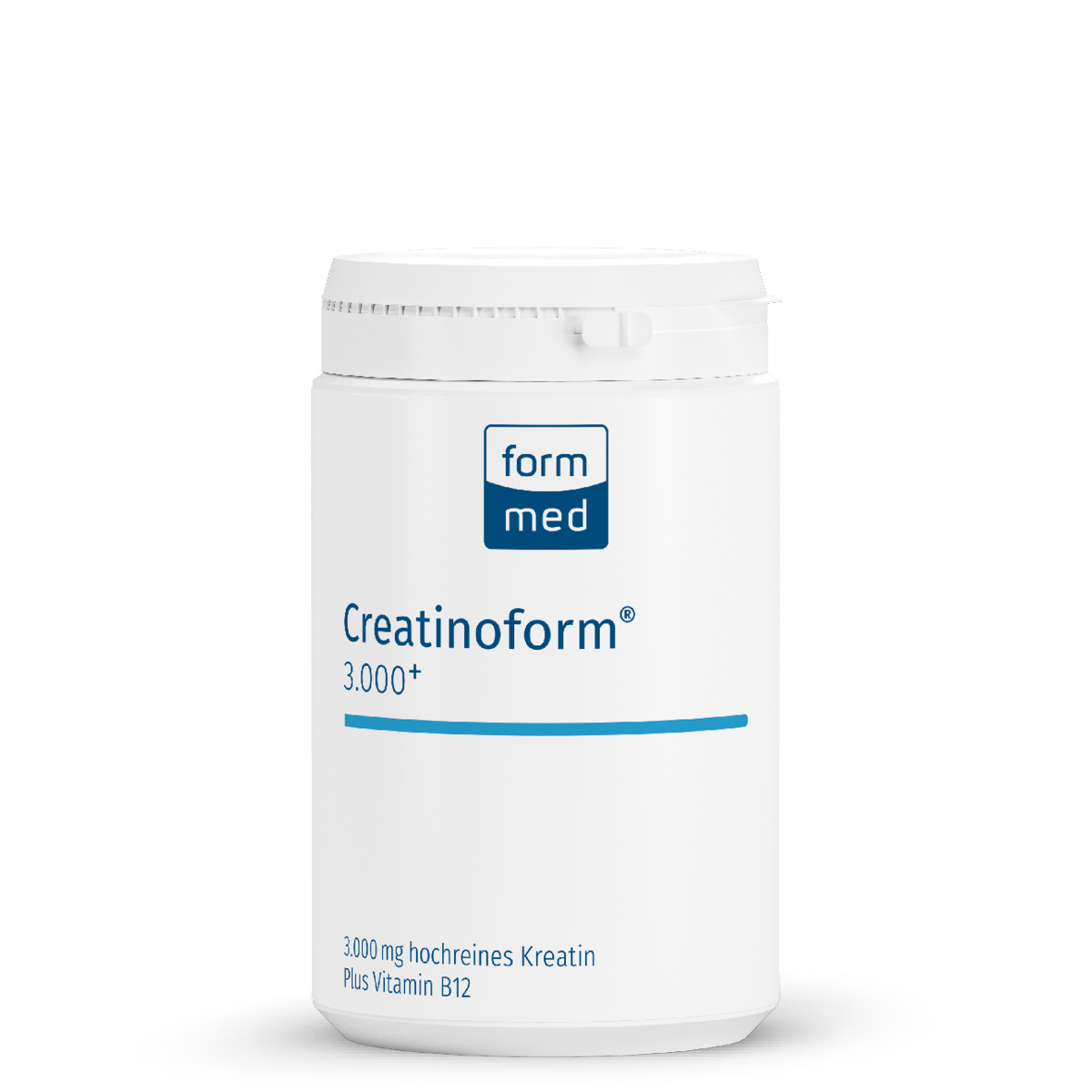
High-purity premium Creatine plus Vitamin B12
Ready for immediate dispatch - Delivery time approx. 2-5 days

Ready for immediate dispatch - Delivery time approx. 2-5 days
Literature
Antonio, J. et al. (2021): Common questions and misconceptions about creatine supplementation: what does the scientific evidence really show? J Int Soc Sports Nutr. 18:13. https://pmc.ncbi.nlm.nih.gov/articles/PMC7871530/
Candow, D. G. et al. (2019): Effectiveness of Creatine Supplementation on Aging Muscle and Bone: Focus on Falls Prevention and Inflammation. J Clin Med. 8(4):488. https://pubmed.ncbi.nlm.nih.gov/30978926/
Candow, D. G. et al. (2024): Does one dose of creatine supplementation fit all? Adv Exerc Health Sci. 1(2):99-107. https://www.sciencedirect.com/science/article/pii/S2950273X24000249
EFSA NDA Panel (2011): Scientific Opinion on the substantiation of health claims related to creatine and increase in physical performance during short-term, high intensity, repeated exercise bouts, pursuant to Article 13(1) of Regulation (EC) No 1924/2006. EFSA Journal. 9(7):2303. https://efsa.onlinelibrary.wiley.com/doi/10.2903/j.efsa.2011.2303
Gonzalez, D. E. et al. (2026): Creatine Supplementation Dose and Duration Are Not Associated with Increased Side Effects: A Structured Review and Study-Level Dose–Response Analysis of Randomized Controlled Trials. Sports. 14(4):137. https://pmc.ncbi.nlm.nih.gov/articles/PMC13120166/
Gutiérrez-Hellín, J. et al. (2025): Creatine Supplementation Beyond Athletics: Benefits of Different Types of Creatine for Women, Vegans, and Clinical Populations—A Narrative Review. Nutrients. 17(1):95. https://pubmed.ncbi.nlm.nih.gov/39796530/
Kaviani, M. et al. (2020): Benefits of Creatine Supplementation for Vegetarians Compared to Omnivorous Athletes: A Systematic Review. Int J Environ Res Public Health. 2020 Apr 27;17(9):3041. https://pubmed.ncbi.nlm.nih.gov/32349356/
Kreider, R. B. et al. (2017): International Society of Sports Nutrition position stand: safety and efficacy of creatine supplementation in exercise, sport, and medicine. J Int Soc Sports Nutr. 14:18. https://pubmed.ncbi.nlm.nih.gov/28615996/
Kreider, R. B. et al. (2022): Bioavailability, Efficacy, Safety, and Regulatory Status of Creatine and Related Compounds: A Critical Review. Nutrients. 14(5):1035. https://pubmed.ncbi.nlm.nih.gov/35268011/
Longobardi, I. et al. (2023): Is It Time for a Requiem for Creatine Supplementation-Induced Kidney Failure? A Narrative Review. Nutrients. 15(6):1466. https://pubmed.ncbi.nlm.nih.gov/36986197/
Rae, C. et al. (2003): Oral creatine monohydrate supplementation improves brain performance: a double-blind, placebo-controlled, cross-over trial. Proc Biol Sci. 270(1529):2147-2150. https://pubmed.ncbi.nlm.nih.gov/14561278/
Ribeiro, F. et al. (2021): Timing of creatine supplementation around exercise: a real concern? Nutrients. 13(8):2844. https://pmc.ncbi.nlm.nih.gov/articles/PMC8401986/
Smith-Ryan, A. E. et al. (2021): Creatine Supplementation in Women's Health: A Lifespan Perspective. Nutrients. 13(3):877. https://pmc.ncbi.nlm.nih.gov/articles/PMC7998865/
Turck, D. et al. (EFSA NDA Panel) (2016): Creatine in combination with resistance training and improvement in muscle strength: evaluation of a health claim pursuant to Article 13(5) of Regulation (EC) No 1924/2006. EFSA Journal. 14(2):4400. https://efsa.onlinelibrary.wiley.com/doi/10.2903/j.efsa.2016.4400
Xu, C. et al. (2024): The effects of creatine supplementation on cognitive function in adults: a systematic review and meta-analysis. Front Nutr. 11:1424972. https://pubmed.ncbi.nlm.nih.gov/39070254/