
Joint wear and morning stiffness: When every movement requires an effort
Table of Contents
- The Vicious Cycle of Avoiding Movement
- Collagen and Vitamin C – Essential for the Structural Framework of Joints
- The Body’s Own Building Blocks: Glucosamine, Chondroitin, and Hyaluronic Acid
- Nutritional support for joint inflammation
- Was ist der Unterschied zwischen Arthrose und Arthritis?
- Conclusion: Preserving structure rather than renewing cartilage
- Frequently asked questions about joint wear
- Well-supplied with micronutrients
- Literature
Giving up gardening, the pain of climbing stairs, or the feeling of having “stiff” or “rusted” joints in the morning—joint wear (osteoarthritis) often robs those affected of a significant degree of their quality of life and independence. The constant fear of the next bout of pain frequently leads people to avoid physical activity, which only makes the problem worse. In this guide, learn why movement is essential for healthy joints and how you can support cartilage structures from within through a balanced diet and specific nutrients.
The Vicious Cycle of Avoiding Movement
Those suffering from joint pain due to osteoarthritis instinctively reduce the strain on their joints. From a physiological perspective, however, this is counterproductive: this very avoidance of movement actually accelerates the wear-and-tear process.
The reason lies in the structure of articular cartilage: unlike almost every other tissue in the body, it contains no blood vessels. It receives its supply of nutrients almost exclusively via the synovial fluid (joint fluid), which—with every movement—is pressed into and out of the cartilage like a sponge. It is precisely this interplay of loading and unloading that allows nutrients to penetrate the deeper layers of the cartilage, reaching cells that would otherwise be cut off from their supply.
A lack of movement caused by joint pain disrupts this pumping mechanism. Consequently, cartilage cells receive an inadequate supply of nutrients. The cartilage’s ability to regenerate itself then declines: over time, the cartilage surface becomes increasingly rough, leading to greater friction within the joint and, typically, an increase in pain.
A randomized, controlled study involving patients who had undergone meniscus surgery demonstrated that a four-month, moderate exercise program led to a measurable increase in glycosaminoglycan—a key building block of cartilage—compared to an untreated control group. This indicates that moderate physical activity provides articular cartilage with essential nutrients. Therefore, one should not forgo regular exercise. The key is finding the right level of strain: the joint benefits from continuous, steady use—not from brief, intense spikes of overload. Jumping, heavy lifting, or sudden, jerky movements are among the common causes of joint pain, as they place an excessive, short-term strain on the joint.
Collagen and Vitamin C – Essential for the Structural Framework of Joints
Movement delivers nutrients to the cartilage, which uses them to build its stable structural framework. This framework consists primarily of a highly resilient network of collagen fibers, which make up about half of the cartilage. These collagen fibers provide the tissue with tensile strength and elasticity.
To build this collagen network, the body requires vitamin C. It contributes to normal collagen formation: vitamin C acts as a cofactor for enzymes that modify collagen molecules, enabling individual collagen strands to bind together and form stable, three-dimensional fibrous structures. Without sufficient vitamin C, newly formed collagen is less stable.
Since the body cannot store vitamin C, a regular intake through one’s diet is essential—for example, by consuming bell peppers, citrus fruits, blackcurrants, or sea buckthorn.
The Body’s Own Building Blocks: Glucosamine, Chondroitin, and Hyaluronic Acid
In addition to collagen, cartilage contains other building blocks produced by the body: glucosamine, chondroitin, and hyaluronic acid.
Chondroitin and hyaluronic acid belong to the group of glycosaminoglycans. They bind large amounts of water—which gives healthy cartilage its function as an elastic shock absorber. At the same time, hyaluronic acid is a primary component of synovial fluid (joint fluid), which ensures the smooth movement of joint surfaces.
Glucosamine and sulfur, among other substances, serve as the starting materials for the production of chondroitin and hyaluronic acid. The body produces most of its glucosamine itself, using glucose (blood sugar). Sulfur, however, must be obtained through one’s diet. The main sources are sulfur-containing amino acids, such as methionine and cysteine, found in protein-rich foods. Organically bound sulfur—in the form of MSM (methylsulfonylmethane)—is also present in sulfur-rich vegetables like onions, leeks, and broccoli, as well as in certain animal-based foods.
As we age, or when joints are subjected to heavy stress, the body produces smaller quantities of chondroitin and hyaluronic acid, and the quality of these substances may also decline. This can affect the body’s ability to bind water, thereby impacting the elasticity of the cartilage. Researchers are conducting extensive studies into the role that supplemental intake of glucosamine and chondroitin, as well as MSM, may play in addressing symptoms of osteoarthritis.
Nutritional support for joint inflammation
Joint wear-and-tear often involves more than just the gradual degradation of cartilage. In addition to common complaints such as morning stiffness or pain during physical activity, other symptoms may arise: the joint may become warm, swollen, or painful even at rest. Medical professionals refer to this as "activated osteoarthritis"—a condition where the initial degenerative (breakdown) process is compounded by inflammation. This leads to an increase in free radicals and oxidative processes within the tissue, which further accelerates tissue destruction.
An anti-inflammatory diet can help the body manage such joint pain. The body possesses its own internal antioxidant defense systems to combat free radicals; these systems require specific cofactors—including selenium and zinc—to function effectively. Both minerals help protect cells from oxidative stress. Vitamin C is also a vital antioxidant, acting directly to neutralize free radicals.
Beyond these micronutrients, the type of dietary fats consumed also plays a role: Long-chain omega-3 fatty acids—found in fatty saltwater fish and algae—are currently being studied for their potential impact on inflammatory processes. In contrast, processed foods typically contain omega-6 fatty acids. They can promote pro-inflammatory processes—learn more in the guide on omega-3 deficiency.
Phytochemicals (secondary plant compounds) are also a subject of research in the context of inflammation. A plant-forward, varied diet—rich in fruits, vegetables, and herbs—provides an abundance of these substances. Two compounds, in particular, are the focus of current research: boswellic acids (from frankincense) and curcumin (from turmeric root).
What is the difference between osteoarthritis and arthritis?
Although both conditions cause joint pain, their underlying causes are fundamentally different: Osteoarthritis is primarily a mechanical wear-and-tear of the joint cartilage, usually resulting from aging, improper loading, or excess weight. Arthritis, by contrast, is an inflammatory joint disease—triggered, for example, by autoimmune reactions (such as rheumatism) or infections.
The progression of these conditions also differs: Osteoarthritis typically advances slowly and often manifests initially as "start-up" pain—a characteristic morning stiffness that eases with movement. Arthritis is generally more severe, presenting with pain at rest, swelling, warmth, and redness in the joint.
However, the two conditions can overlap: in advanced stages of osteoarthritis, inflammation may develop (a condition known as "activated osteoarthritis").
Conclusion: Preserving structure rather than renewing cartilage
Once cartilage has worn away, it cannot be fully regenerated—not even with the best possible supply of nutrients. However, the remaining structures can be protected, with the goal of maintaining joint function for as long as possible.
The key lies in the interplay of several factors: regular, moderate physical activity—avoiding sudden, intense strain—ensures that the cartilage continues to receive nutrients such as chondroitin and sulfur. An anti-inflammatory, plant-forward diet further supports the body’s natural protective mechanisms. Equally important is an adequate intake of specific micronutrients—whether through diet or targeted supplementation: for instance, vitamin C supports the development of the collagen network, while selenium and zinc strengthen the body’s defenses against free radicals. In this way, daily life with joint wear and tear can gradually become more manageable and carefree.
Frequently asked questions about joint wear
The reason for this is that, during periods of rest, the synovial fluid (joint fluid) is no longer evenly distributed, causing the rough surface of the cartilage to generate more friction. Movement redistributes the fluid, which in turn alleviates the discomfort.
Certain medications can also be a cause—for example, aromatase inhibitors, statins, some antibiotics, or drugs used to treat osteoporosis. These may cause joint pain as a side effect, which typically subsides once the medication is discontinued. A medical evaluation can help narrow down the actual cause.
During the physical examination, the orthopedist assesses not only the affected joint but also muscle strength, ligament stability, and any potential misalignments, such as knock-knees or bow-legs. Past injuries—such as damage to the meniscus or cruciate ligaments—are also taken into account, as they increase the risk of developing osteoarthritis later on.
If the initial suspicion is confirmed, imaging procedures follow: X-rays reveal bony changes and the width of the joint space, while an MRI provides additional information if there is a suspected injury to the cartilage or soft tissue.
Additionally, it is important to stay active even in cool weather and to keep your joints warm; cold temperatures can cause synovial fluid (joint lubricant) to become more viscous, which promotes stiffness.
The reason for morning stiffness is that, during the period of rest at night, the synovial fluid (joint fluid) becomes more viscous and is less evenly distributed. Movement helps to remedy this, and the stiffness typically subsides within about 30 minutes.
Well-supplied with micronutrients

Ready for immediate dispatch - Delivery time approx. 2-5 days

375 mg purest Omega-3 fatty acids rich in EPA – particularly bioavailable from certified sustainable wild catch
Ready for immediate dispatch - Delivery time approx. 2-5 days
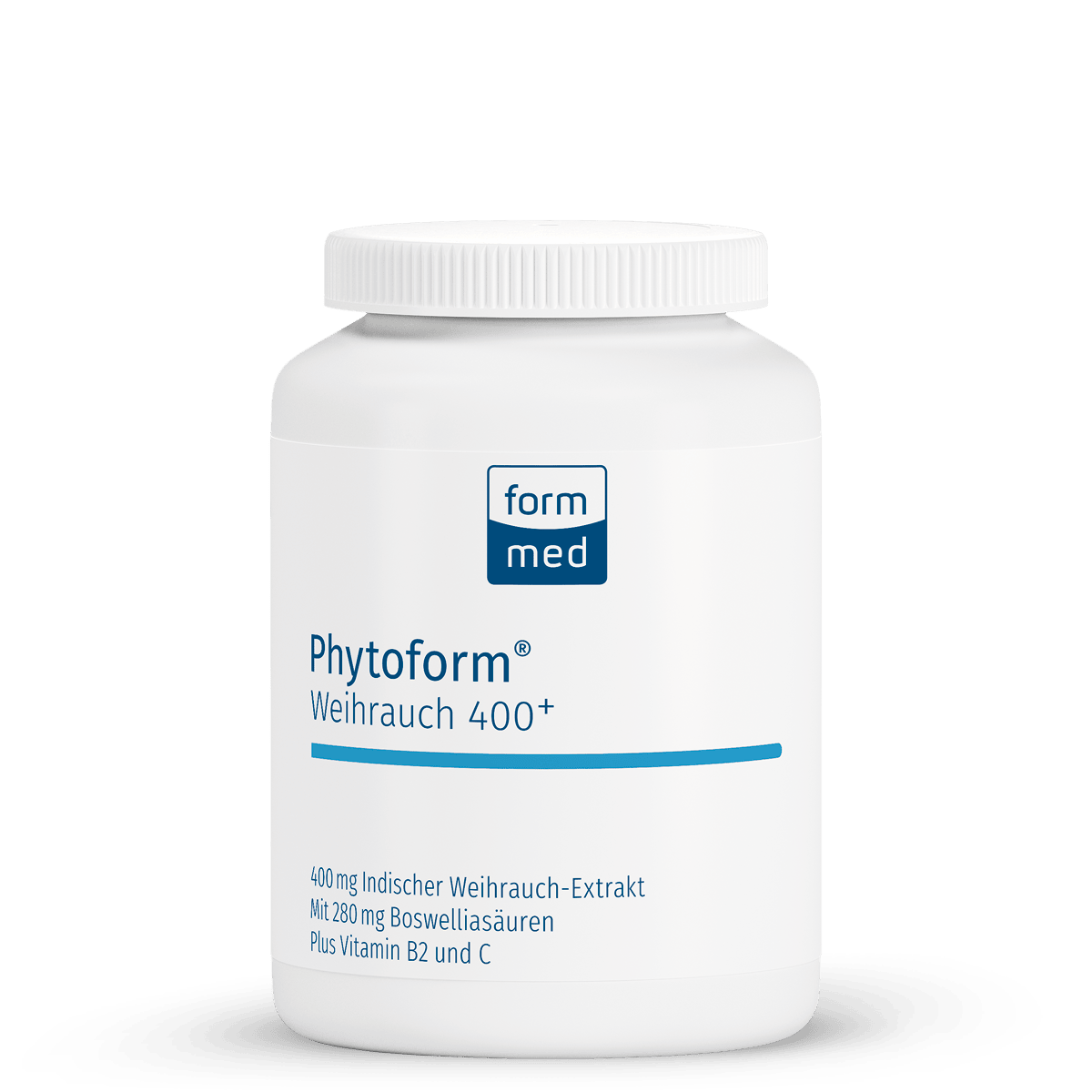
400 mg Indian frankincense extract
Currently not available
Literature
Bora, F. W. (1987): Joint physiology, cartilage metabolism, and the etiology of osteoarthritis. Hand Clin. 3(3):325-336. https://pubmed.ncbi.nlm.nih.gov/3308909/
Buck, A. N. et al. (2023): Evidence-Based Dietary Practices to Improve Osteoarthritis Symptoms: An Umbrella Review. Nutrients. 15(13):3050. https://pubmed.ncbi.nlm.nih.gov/37447376/
Čeh, T. und Šarabon, N. (2023): Effects of adding glucosamine or glucosamine combined with chondroitin to exercise on pain and physical function in adults with knee osteoarthritis: a systematic review and meta-analysis. Eur J Transl Myol. 33(4):12013. https://pubmed.ncbi.nlm.nih.gov/37997783/
Deng, W. et al. (2023): Effect of omega-3 polyunsaturated fatty acids supplementation for patients with osteoarthritis: a meta-analysis. J Orthop Surg Res. 18(1):381. https://pubmed.ncbi.nlm.nih.gov/37226250/
DePhillipo, N. N. et al. (2018): Efficacy of Vitamin C Supplementation on Collagen Synthesis and Oxidative Stress After Musculoskeletal Injuries: A Systematic Review. Orthop J Sports Med. 6(10):2325967118804544. https://pubmed.ncbi.nlm.nih.gov/30386805/
Loeser, R. F. (2009): Aging and osteoarthritis: the role of chondrocyte senescence and aging changes in the cartilage matrix. Osteoarthritis Cartilage. 17(8):971-979. https://pubmed.ncbi.nlm.nih.gov/19303469/
Maldonado, D. C. et al. (2013): The effects of joint immobilization on articular cartilage of the knee in previously exercised rats. J Anat. 222(5):518-525. https://pmc.ncbi.nlm.nih.gov/articles/PMC3633341
Oesser, S. et al. (1999): Oral Administration of 14C Labeled Gelatin Hydrolysate Leads to an Accumulation of Radioactivity in Cartilage of Mice (C57/BL). J Nutr. 129(10):1891-1895. https://doi.org/10.1093/jn/129.10.1891
Rabade, A. et al. (2024): Evaluation of efficacy and safety of glucosamine sulfate, chondroitin sulfate, and their combination regimen in the management of knee osteoarthritis: a systematic review and meta-analysis. Inflammopharmacology. 32(3):1759-1775. https://pubmed.ncbi.nlm.nih.gov/38581640/
Radu, A. F. et al. (2026): Osteoarthritis and rheumatoid arthritis: A comparative review of pathophysiology, diagnosis and evolving management. https://pubmed.ncbi.nlm.nih.gov/42206288/
Roos, E. M. und Dahlberg, L. (2005): Positive effects of moderate exercise on glycosaminoglycan content in knee cartilage: a four-month, randomized, controlled trial in patients at risk of osteoarthritis. Arthritis Rheum. 52(11):3507-3514. https://pubmed.ncbi.nlm.nih.gov/16258919/
Setnikar, I. et al. (1986): Pharmacokinetics of glucosamine in the dog and in man. Arzneimittelforschung. 36(4):729-735. https://pubmed.ncbi.nlm.nih.gov/3718596/
Yu, G. et al. (2020): Effectiveness of Boswellia and Boswellia extract for osteoarthritis patients: a systematic review and meta-analysis. BMC Complement Med Ther. https://pmc.ncbi.nlm.nih.gov/articles/PMC7368679
Zeng, L. et al. (2021): The efficacy and safety of Curcuma longa extract and curcumin supplements on osteoarthritis: a systematic review and meta-analysis. Biosci Rep. 41(6):BSR20210817. https://pubmed.ncbi.nlm.nih.gov/34017975/