
Leaky Gut: When the intestinal lining becomes permeable
Table of Contents
- The Intestinal Barrier: What Does "Leaky Gut" Mean?
- L-Glutamine: The Key Fuel for Intestinal Cells
- Zinc: Key to Cell Renewal and Immune Defense
- The Difference: Why the Intestinal Mucosa and Gut Flora Go Hand in Hand
- Conclusion: Treating Leaky Gut – The Path to an Intact Intestinal Lining
- Frequently Asked Questions About Leaky Gut
- Well-supplied with micronutrients
- Literature
Recurring bloating after meals, abdominal cramps, or sudden intolerances—such symptoms can impair quality of life, even when standard medical tests show no abnormalities. A possible explanation lies at the microscopic level: a permeable intestinal barrier, also known as "leaky gut." In this guide, you will learn about the structure of the intestinal barrier, why L-glutamine plays a key role, and the contribution zinc can make.
The Intestinal Barrier: What Does "Leaky Gut" Mean?
The intestinal barrier is a multi-layered protective system: on the outermost level lies a protective layer of mucus, which keeps bacteria and foreign substances at bay so they do not come into direct contact with the cells. Beneath this lies the intestinal lining itself: a single, paper-thin layer of cells. Its cells (enterocytes) are normally tightly connected to one another via structures known as tight junctions. These hold the cells firmly together, much like a zipper.
Tight junctions prevent non-specific particles or bacteria from passing between the cells and entering the body. Instead, nutrients are selectively channeled into the cells—and from there into the bloodstream—via transporters in the cell membrane. Thanks to this dual system of sealed intercellular spaces and selective transporters, substances enter the body only in a controlled manner.
Stress, an unbalanced diet, or certain medications can cause these connections to break down. This results in increased permeability of the intestinal lining—a condition known as "leaky gut." Undigested food particles, bacterial components, and harmful substances (toxins) can then pass into the bloodstream. The immune system responds with a low-grade, "silent" inflammatory reaction, which can trigger symptoms such as bloating, abdominal pain, intolerances, or fatigue.
How can I recognize a leaky gut?
A leaky gut cannot be definitively identified by specific symptoms alone, as "leaky gut syndrome" is not currently a recognized medical condition with clearly defined characteristics. Commonly reported signs include recurring bloating, non-specific abdominal pain, newly developed food intolerances, and persistent fatigue. However, since these symptoms also occur with many other conditions, they are not conclusive on their own.
Intestinal permeability can be measured more precisely using the lactulose-mannitol test: the subject drinks a solution containing two different types of sugar. A healthy intestine absorbs mannitol but hardly any lactulose. If the intestinal barrier is more permeable than normal, more lactulose enters the body; the ratio of the two values indicates the degree of intestinal permeability. Other markers include zonulin and specific bacterial components (lipopolysaccharides, or LPS).
However, neither symptoms nor test results alone allow for a definitive conclusion; the best approach is to consider both together in consultation with a doctor.
L-Glutamine: The Key Fuel for Intestinal Cells
The amino acid L-glutamine is the primary energy source for the cells of the intestinal mucosa (enterocytes) – unlike most body cells, which primarily burn glucose (sugar), enterocytes derive their energy predominantly from glutamine. The body normally produces glutamine itself – including in the muscles.
Glutamine is considered a conditionally essential amino acid: under healthy conditions, the body meets its needs solely through its own production. The cells of the intestinal mucosa are among the body's largest consumers of glutamine because they are constantly renewing themselves. However, during infections, injuries, or periods of severe stress, the demand for glutamine rises significantly because immune system cells also rely heavily on it. If the body's own production is no longer sufficient, it breaks down muscle protein to generate additional glutamine. Even so, there may be instances where the intestinal mucosa receives an insufficient supply of glutamine precisely when it is needed most.
Enterocytes require sufficient energy from glutamine – both for their constant renewal and for maintaining tight junctions. If the supply runs low during stressful situations, cell renewal slows down, and the barrier may become more permeable. Adequate glutamine levels are therefore essential for the intestinal mucosa to maintain its barrier function or to rebuild it following a disruption.
Zinc: Key to Cell Renewal and Immune Defense
The cells of the intestinal lining naturally die off and are constantly being replaced by new ones. This process requires the remaining cells to divide reliably. Zinc contributes to normal cell division—a prerequisite for the renewal of the intestinal surface.
Zinc is also essential for a functioning immune system. Phagocytes, for instance, require it to destroy invading bacteria. This is also significant for the intestinal barrier, as invading bacteria must be combated immediately.
Furthermore, zinc protects cells against oxidative stress: it is a component of an enzyme system that neutralizes free radicals before they can damage cells. If the intestinal barrier has already become permeable, an inflammatory response develops that intensifies oxidative stress. Since this stress can cause further damage to the barrier, it must be counteracted.
Thus, maintaining an intact intestinal barrier depends on the interplay of cell renewal, immune defense, and antioxidant protection—and zinc plays a role in all three of these areas.
The Difference: Why the Intestinal Mucosa and Gut Flora Go Hand in Hand
The intestinal mucosa and gut flora are often equated, but they are two distinct things: The intestinal mucosa is the body's own cellular layer, complete with its protective mucus layer. The gut flora consists of the entire population of bacteria that colonize this mucus layer. The two work in close interplay and jointly determine the integrity of the intestinal barrier.
For instance, beneficial microbes displace pathogenic microbes by competing with them for nutrients and attachment sites on the mucus layer. This is also crucial for the intestinal barrier: beneficial microbes prevent pathogens from multiplying unchecked and causing further damage to the intestinal mucosa through their metabolic byproducts or the resulting inflammatory reactions.
Certain bacteria—such as those from the genera Bifidobacterium and Lactobacillus—also produce butyric acid (butyrate). This serves as an energy source for cells in the large intestine and can promote the formation of tight junctions between cells. A healthy gut flora nourishes intestinal cells and contributes to an intact intestinal barrier.
You can learn more about building a healthy gut flora in our guide: “Gut Restoration: Building Gut Flora Naturally.”
Conclusion: Treating Leaky Gut – The Path to an Intact Intestinal Lining
In cases of leaky gut, the intestinal lining is more permeable than normal, allowing undigested food, bacterial components, and harmful substances to enter the body and trigger low-grade inflammation. This is associated with symptoms such as bloating, abdominal pain, and food intolerances.
Effective cell renewal is essential for a permeable intestinal lining to seal itself again. A balanced, high-fiber diet supports this process. Among other things, it provides the body with the building blocks needed to produce glutamine, which serves as an energy source for intestinal cells and the immune system. Furthermore, zinc supports the cell division required for regeneration. Dietary fiber, in turn, nourishes gut bacteria; a healthy gut flora helps the intestinal lining regenerate quickly and remain intact.
By supporting the intestinal lining with the right nutrients, you create the foundation for it to maintain or restore its barrier function, even when subjected to stress.
Frequently Asked Questions About Leaky Gut
Well-supplied with micronutrients
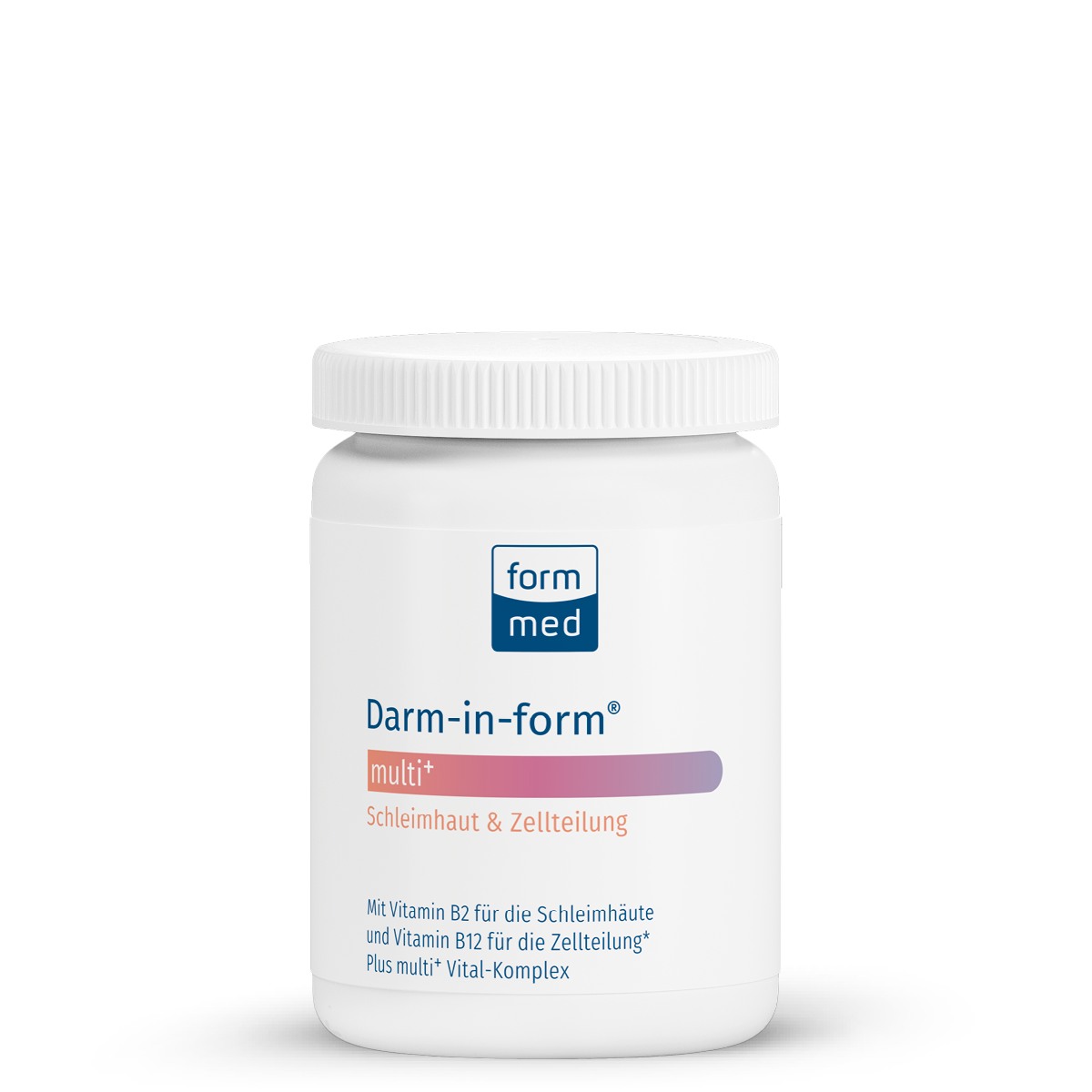
Ready for immediate dispatch - Delivery time approx. 1-3 days
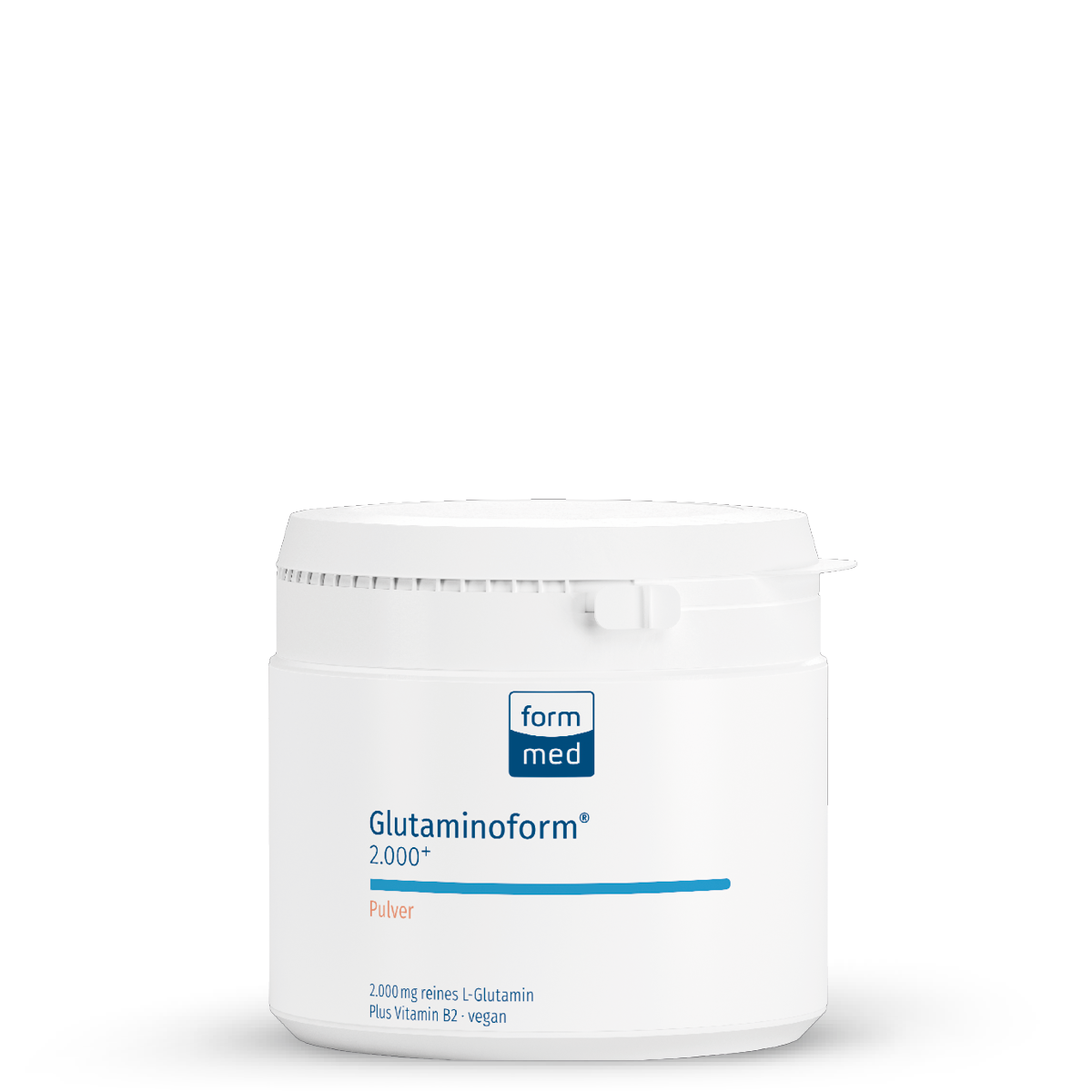
2,000 mg fermentative purest L-Glutamine plus Vitamin B2
Ready for immediate dispatch - Delivery time approx. 1-3 days

Ready for immediate dispatch - Delivery time approx. 1-3 days
Literature
Camilleri, M. (2021): What is the leaky gut? Clinical considerations in humans. Curr Opin Clin Nutr Metab Care. 24(5):473–482. https://pubmed.ncbi.nlm.nih.gov/34138767/
Cruzat, V. et al. (2018): Glutamine: Metabolism and Immune Function, Supplementation and Clinical Translation. Nutrients. 10(11):1564. https://pubmed.ncbi.nlm.nih.gov/30360490/
Darwich, A. S. et al. (2014): Meta-analysis of the turnover of intestinal epithelia in preclinical animal species and humans. Drug Metab Dispos. 42(12):2016–2022. https://pubmed.ncbi.nlm.nih.gov/25233858/
Ghorbani, Z. et al. (2025): Reinforcing gut integrity: A systematic review and meta-analysis of clinical trials assessing probiotics, synbiotics, and prebiotics on intestinal permeability markers. Pharmacol Res. 216:107780. https://pubmed.ncbi.nlm.nih.gov/40378939/
Haase, H. und Rink, L. (2013): Zinc signals and immune function. Biofactors. 40(1):27–40. https://pubmed.ncbi.nlm.nih.gov/23804522/
Khoshbin, K. und Camilleri, M. (2020): Effects of dietary components on intestinal permeability in health and disease. Am J Physiol Gastrointest Liver Physiol. 319(5):G589–G608. https://pubmed.ncbi.nlm.nih.gov/32902315/
Li, Y. et al. (2006): Oral glutamine ameliorates chemotherapy-induced changes of intestinal permeability. Tumori. 92(5):396–401. https://pubmed.ncbi.nlm.nih.gov/17168431/
Lima, A. A. M. et al. (2014): Effects of glutamine alone or in combination with zinc and vitamin A on growth, intestinal barrier function, stress and satiety-related hormones in Brazilian shantytown children. Clinics (Sao Paulo). 69(4):225–233. https://pubmed.ncbi.nlm.nih.gov/24714829/
Lin, P.-Y. et al. (2022): Redox and Metabolic Regulation of Intestinal Barrier Function and Associated Disorders. Int J Mol Sci. 23(22):14463. https://pubmed.ncbi.nlm.nih.gov/36430939/
Malago, J. J. (2015): Contribution of microbiota to the intestinal physicochemical barrier. Benef Microbes. 6(3):295–311. https://pubmed.ncbi.nlm.nih.gov/25273548/
Malesza, I. J. et al. (2021): High-Fat, Western-Style Diet, Systemic Inflammation, and Gut Microbiota: A Narrative Review. Cells. 10(11):3164. https://pubmed.ncbi.nlm.nih.gov/34831387/
Morifuji, M. et al. (2025): Search for new biomarkers using metabolomic analysis reflective of intestinal permeability in healthy Japanese participants. Metabolomics. 21(3):72. https://pubmed.ncbi.nlm.nih.gov/40442511/
Pothuraju, R. et al. (2021): Mucins, gut microbiota, and postbiotics role in colorectal cancer. Gut Microbes. 13(1):1974795. https://pubmed.ncbi.nlm.nih.gov/34586012/
Prasad, A. S. (2013): Discovery of human zinc deficiency: its impact on human health and disease. Adv Nutr. 4(2):176–190. https://pubmed.ncbi.nlm.nih.gov/23493534/
Pugh, J. N. et al. (2017): Glutamine supplementation reduces markers of intestinal permeability during running in the heat in a dose-dependent manner. Eur J Appl Physiol. 117(12):2569–2577. https://pubmed.ncbi.nlm.nih.gov/29058112/
Wessells, K. R. et al. (2013): Associations between intestinal mucosal function and changes in plasma zinc concentration following zinc supplementation. J Pediatr Gastroenterol Nutr. 57(3):348–355. https://pubmed.ncbi.nlm.nih.gov/23689263/
Wessels, I. et al. (2017): Zinc as a Gatekeeper of Immune Function. Nutrients. 9(12):1286. https://pubmed.ncbi.nlm.nih.gov/29186856/
Zheng, Y. et al. (2023): Probiotics fortify intestinal barrier function: a systematic review and meta-analysis of randomized trials. Front Immunol. 14:1143548. https://pubmed.ncbi.nlm.nih.gov/37168869/