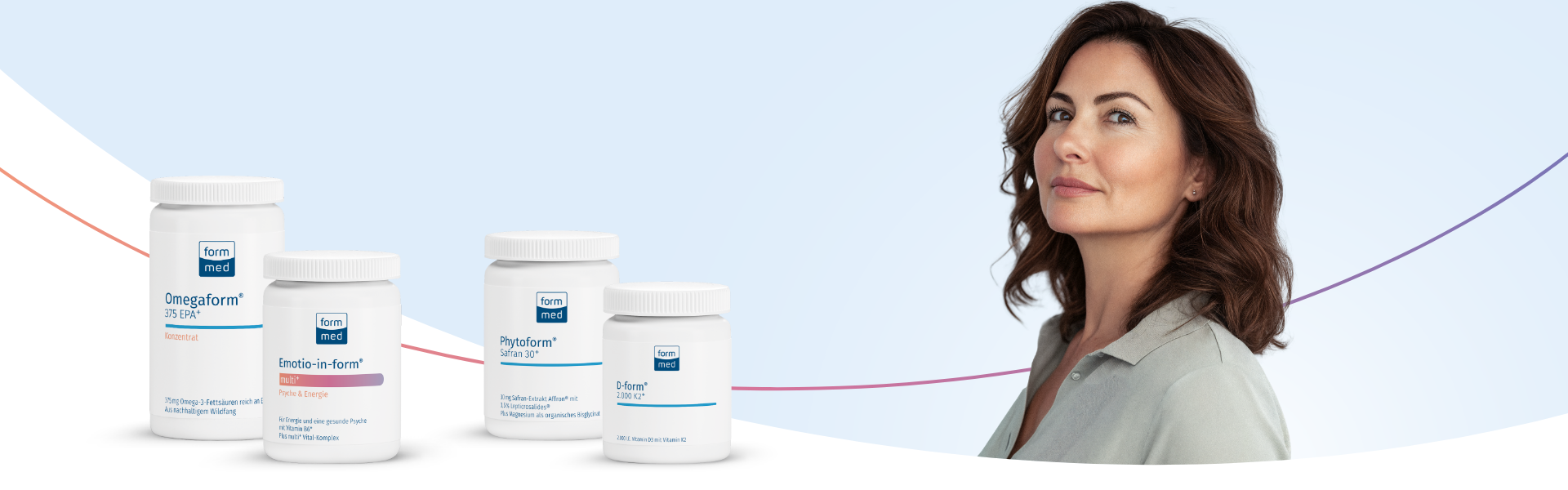
Winter Blues: Support When the Darker Months Affect Your Mood
As the days grow shorter, many people feel more tired, less motivated and simply not as cheerful as usual – typical signs of the ‘winter blues’. This is not uncommon during autumn and winter. And it's hardly surprising: the nervous system undergoes certain adjustments as the seasons change.
An adequate supply of micronutrients can help support normal psychological function, nervous system function and energy metabolism, even during the darker months. Read on to discover which micronutrients and plant compounds may also be of interest during this time of year.
Important: If low mood persists for several weeks or becomes more severe, you should consult a doctor.
By the way: Our free FormMed Select Benefits Programme provides you with regular updates on micronutrients and many other valuable benefits.
Always the Right FormMed Supplement
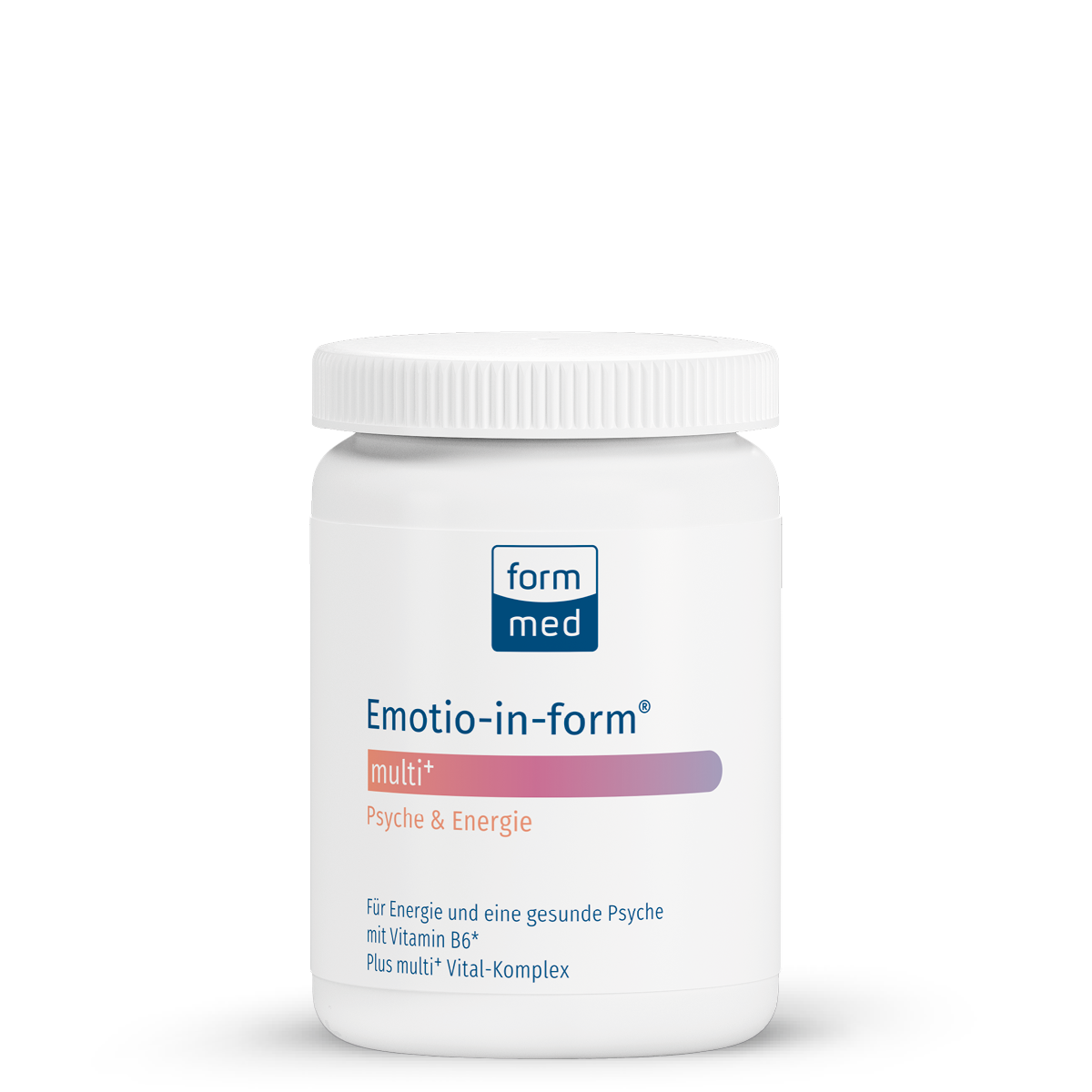
Ready for immediate dispatch - Delivery time approx. 1-3 days

2,000 I.U. (50 µg) natural Vitamin D3 with Vitamin K2 plus Pantothenic acid
Ready for immediate dispatch - Delivery time approx. 1-3 days

375 mg purest Omega-3 fatty acids rich in EPA – particularly bioavailable from certified sustainable wild catch
Ready for immediate dispatch - Delivery time approx. 1-3 days
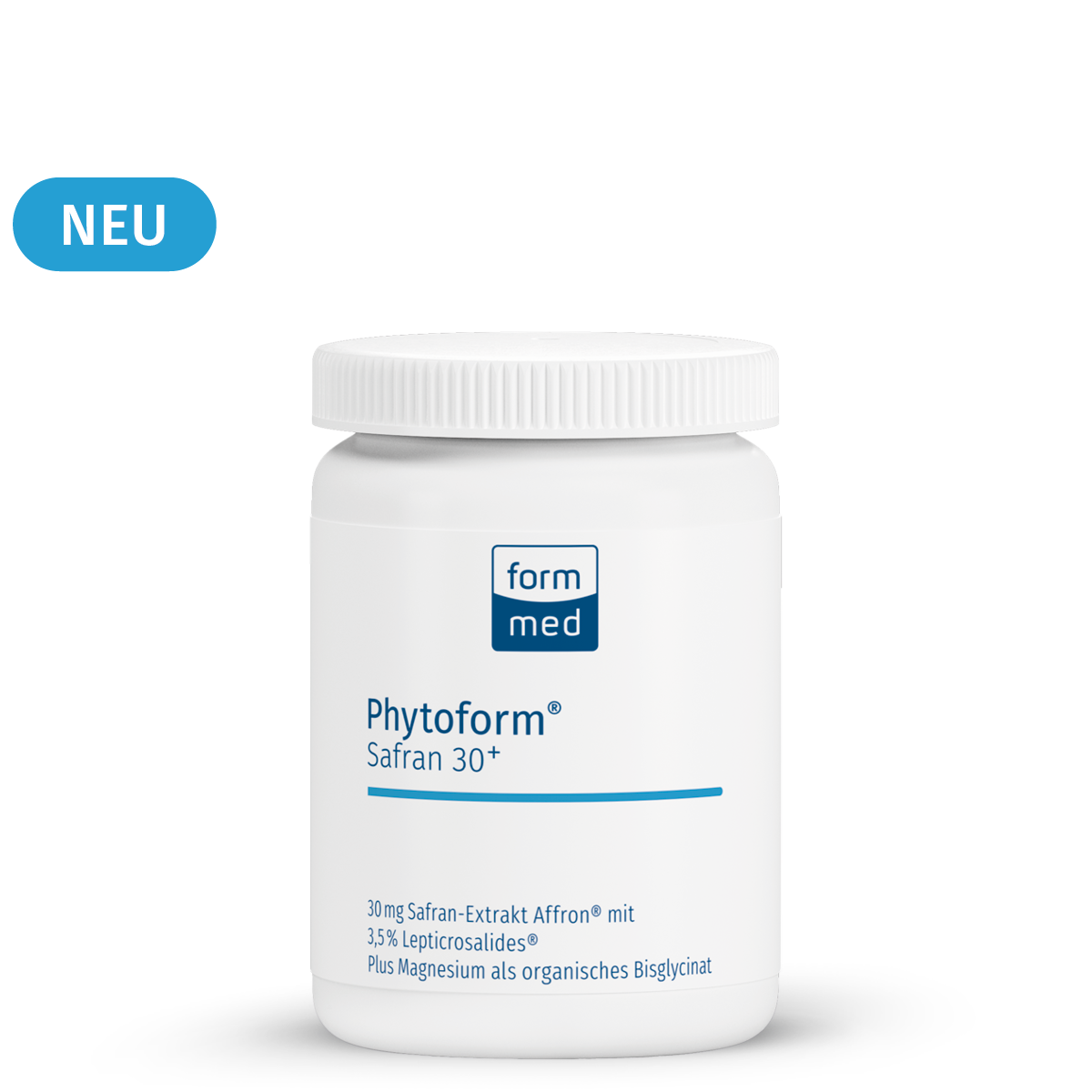
Ready for immediate dispatch - Delivery time approx. 1-3 days
Micronutrients for the Nervous System and Psychological Function: Vitamins B6, B12, Folic Acid and Magnesium
A complex interplay of processes within the nervous system enables us to become active or return to a state of calm. Micronutrients help keep this system in balance:
- Vitamin B6, B12 and folic acid contribute to normal psychological function by playing a role in nerve cell metabolism and the production of chemical messengers.
- Magnesium plays an important role in nerve signal transmission. It acts as a natural antagonist to calcium, which activates nerve cells. Magnesium is also essential for normal energy metabolism and contributes to the reduction of tiredness and fatigue.
- Tryptophan – found in protein-rich foods – is a building block of serotonin, often referred to as the ‘feel-good hormone’, and is therefore important for mood.
Vitamin D During the Darker Months – Levels Decline
Reduced daylight affects the sleep-wake cycle. As a result, many people feel less energetic during autumn and winter. At the same time, sunlight is too weak for the skin to produce sufficient vitamin D – causing vitamin D levels to decline. Ensuring an adequate supply of vitamin D may therefore be particularly worthwhile when experiencing the winter blues.
Omega-3 in Winter: The Role of DHA in the Nervous System
Omega-3 fatty acids such as EPA and DHA are structural components of every nerve cell: DHA accounts for approximately 30 to 40% of the fatty acids in the brain. Its concentration is particularly high at the connections between nerve cells (synapses), where nerve signals are transmitted. DHA therefore contributes to the normal functioning of the nervous system. Researchers are investigating the role omega-3 fatty acids may play in low mood and depressive symptoms.
The Plant Compounds Saffron, Rhodiola, Hops and Lemon Balm
Hops, lemon balm, rhodiola and saffron have been used in many cultures for centuries. Today, scientists are also studying their active compounds. For example, researchers are investigating how salidroside from rhodiola and crocin from saffron interact with chemical messengers in the nervous system.
References
Akhondzadeh Basti, A. et al. (2007): Comparison of petal of Crocus sativus L. and fluoxetine in the treatment of depressed outpatients: A pilot double-blind randomized trial. Prog Neuropsychopharmacol Biol Psychiatry. 31(2):439-442. https://pubmed.ncbi.nlm.nih.gov/17174460/
Al Maruf, A. et al. (2022): Systematic Review and Meta-Analysis of L-Methylfolate Augmentation in Depressive Disorders. Pharmacopsychiatry. 55(3):139-147. https://pubmed.ncbi.nlm.nih.gov/34794190/
Awad, R. et al. (2009): Bioassay-guided fractionation of lemon balm (Melissa officinalis L.) using an in vitro measure of GABA transaminase activity. Phytother Res. 23(8):1075-1081. https://pubmed.ncbi.nlm.nih.gov/19165747/
Benkherouf, A. Y. et al. (2020): Humulone Modulation of GABAA Receptors and Its Role in Hops Sleep-Promoting Activity. Front Neurosci. 14:594708. https://pubmed.ncbi.nlm.nih.gov/33177986/
Cavanah, A. M. et al. (2025): The Impact of Green Tea and Its Bioactive Compounds on Mood Disorder Symptomology and Brain-Derived Neurotrophic Factor: A Systematic Review of Randomized Controlled Trials. Biomedicines. 13(7):1656. https://pmc.ncbi.nlm.nih.gov/articles/PMC12292568/
Cropley, M. et al. (2015): The effects of Rhodiola rosea L. extract on anxiety, stress, cognition and other mood symptoms. Phytother Res. 29(12):1934-1939. https://pubmed.ncbi.nlm.nih.gov/26502953/
Kikuchi, A. M. et al. (2021): A systematic review of the effect of L-tryptophan supplementation on mood and emotional functioning. J Diet Suppl. 18(3):316-333. https://pubmed.ncbi.nlm.nih.gov/32272859/
Mocking, R. J. T. et al. (2016): Meta-analysis and meta-regression of omega-3 polyunsaturated fatty acid supplementation for major depressive disorder. Transl Psychiatry. 6:e756. https://pubmed.ncbi.nlm.nih.gov/26978738/
Noorbala, A. A. et al. (2005): Hydro-alcoholic extract of Crocus sativus L. versus fluoxetine in the treatment of mild to moderate depression: a double-blind, randomized pilot trial. J Ethnopharmacol. 97(2):281-284. https://pubmed.ncbi.nlm.nih.gov/15707766/
Sublette, M. E. et al. (2011): Meta-analysis of the effects of eicosapentaenoic acid (EPA) in clinical trials in depression. J Clin Psychiatry. 72(12):1577-1584. https://pubmed.ncbi.nlm.nih.gov/21939614/
Tanaka, K. et al. (2012): Effects of Docosahexaenoic Acid on Neurotransmission. Biomol Ther (Seoul). 20(2):152–157. https://pmc.ncbi.nlm.nih.gov/articles/PMC3792211/
Young, L. M. et al. (2019): A Systematic Review and Meta-Analysis of B Vitamin Supplementation on Depressive Symptoms, Anxiety, and Stress: Effects on Healthy and 'At-Risk' Individuals. Nutrients. 11(9):2232. https://pubmed.ncbi.nlm.nih.gov/31527485/
 10 % Rabatt auf Ihre nächste BestellungImmer gratis VersandPersönliche Vergünstigungen und AngeboteExklusive Inhalte
 10 % Rabatt auf Ihre nächste BestellungImmer gratis VersandPersönliche Vergünstigungen und AngeboteExklusive Inhalte